Ask GRAI Anything
Your Real Estate Questions, Answered Instantly via Chat

Help us make GRAI even better by sharing your feature requests.
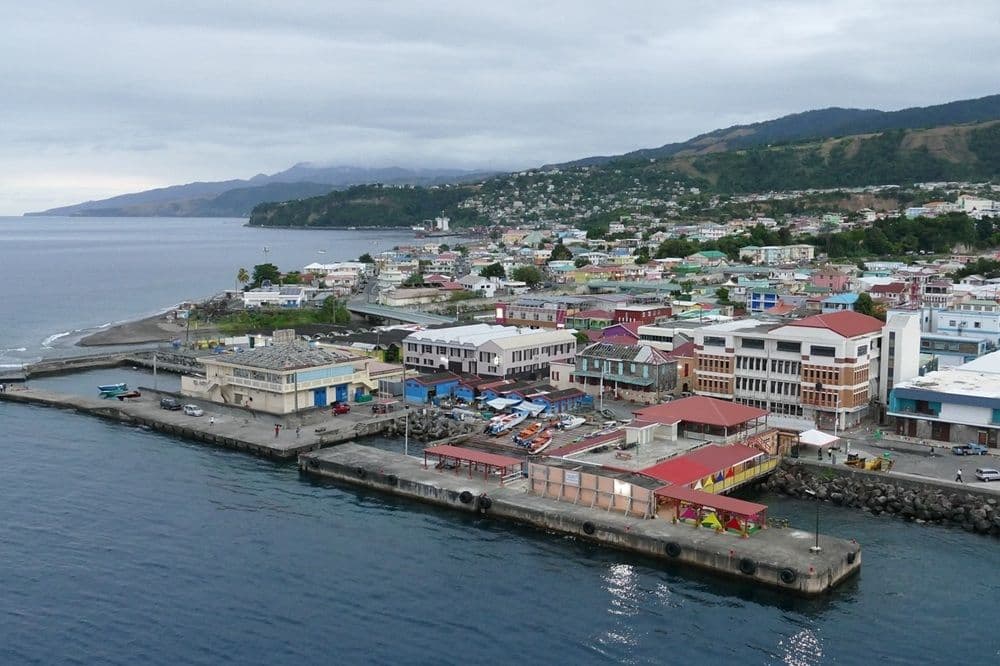
Dominica remains one of the Caribbean’s longest-running citizenship by investment programs, first introduced in 1993. In 2026, applicants can qualify through either a contribution to the Economic Diversification Fund or an approved real estate investment. The official minimum investment is US$200,000 under either route, or applications must be submitted through an authorised agent. The program continues to appeal to globally mobile investors because of its relatively efficient processing, family inclusion options, dual citizenship framework, and no residency requirement before or after citizenship is granted.
Second citizenship is no longer viewed only as a travel convenience. For many global investors, it is part of a broader resilience strategy tied to mobility, family security, jurisdictional flexibility, and long-term wealth planning. Dominica’s programme stands out because it is established, government-administered, and structured around two clearly defined investment routes rather than a vague or informal residency pathway.
For international investors, the real value is not just obtaining citizenship. It is combining mobility with disciplined capital allocation. That is where GRAI fits naturally into the narrative: citizenship can expand strategic flexibility, while data-led market analysis helps investors decide where, when, and how to deploy capital with greater confidence.
| Feature | Official position |
|---|---|
| Programme launch | 1993 |
| Main routes | Economic Diversification Fund or approved real estate |
| Minimum investment | US$200,000 |
| Application route | Through an Authorised Agent only |
| Residency requirement | None before or after citizenship |
| Interview | Mandatory for applicants aged 16+ |
| Dual citizenship | Allowed |
| Processing expectation | Generally, at least 3 months (3-6 months) to approval in principle |
Dominica’s official programme materials present a straightforward structure: two investment options, no pre-approval residency obligation, and a process that is designed to be handled through licensed intermediaries rather than by direct applicant filing. The government also highlights that citizenship is for life and that applicants may hold multiple citizenships
Dominica’s Citizenship by Investment Programme allows eligible investors and qualifying family members to obtain citizenship by making a qualifying economic contribution under the country’s legal framework. The two official routes are a direct contribution to the Economic Diversification Fund (EDF) or the purchase of pre-approved real estate.
That distinction is important. This is not a residency-by-investment route that may or may not lead to naturalisation years later. It is a defined citizenship programme with its own rules, documentation requirements, due diligence procedures, and approval pathway
The official government site now states that the EDF route starts at US$200,000 for a main applicant, while the real estate route requires a minimum US$200,000 investment in approved real estate.
1) Economic Diversification Fund route
| Applicant type | Minimum contribution |
|---|---|
| Main applicant | US$200,000 |
| Main applicant + up to 3 qualifying dependants | US$250,000 |
| Each additional dependant under 18 | US$25,000 |
| Each additional dependant 18 or older | US$40,000 |
Additional official fees for the EDF route include a US$1,000 processing fee per application, US$7,500 due diligence fee for the main applicant, US$4,000 for each dependant aged 16+, US$500 certificate of naturalisation fee per person, and a US$1,000 interview fee for each applicant aged 16+.
2) Approved real estate route
| Cost item | Amount |
|---|---|
| Minimum approved real estate investment | US$200,000 |
| Government fee: main applicant | US$75,000 |
| Government fee: main applicant + up to 3 dependants | US$100,000 |
| Each additional dependant under 18 | US$25,000 |
| Each additional dependant 18 or older | US$40,000 |
The real estate route also carries the same processing, due diligence, naturalisation, and interview fees listed by the CBIU.
Applicants must be at least 18 years old, be in good health, have no criminal record, be able to make the required investment, and demonstrate good character and repute. The official FAQ also makes clear that certain applicants may be refused if they have serious criminal issues, undisclosed investigations, prior citizenship denials, certain visa denials, or are deemed security risks.
Core eligibility snapshot
| Requirement | Official standard |
|---|---|
| Minimum age | 18+ |
| Health | Must be in good health |
| Criminal background | No disqualifying criminal record |
| Funds | Must have legal ability to make the investment |
| Character | Must demonstrate good character and repute |
| Submission method | Through an Authorised Agent only |
Family inclusion is one of the reasons the programme remains attractive. Official materials confirm that qualifying dependants can be included, though exact dependency treatment should always be reviewed with an authorised agent before publication or transaction advice.
Required documents for a Dominica CBI application
The CBIU publishes a detailed required-documents list. At a high level, applicants should expect identity, civil status, background, source-of-funds, medical, and address documentation.
| Document type | Examples from official list |
|---|---|
| Core forms | D1, D2, D3, D4 |
| Identity | Passport copies, ID documents, driver’s licence |
| Civil documents | Birth certificate, marriage or dissolution certificate |
| Background | Police records from relevant jurisdictions |
| Financial | Source-of-funds documents |
| Address | Title deed or lease agreement and utility bill |
| Photos | Eight passport-size photographs |
| Real estate route only | Sale and Purchase Agreement |
Applications must be submitted in English, with proper notarisation and legalisation where required.
| Step | What happens |
|---|---|
| 1. Choose an Authorised Agent | The applicant cannot file directly |
| 2. Prepare documents | Forms, medicals, supporting documents, English legalisation |
| 3. Submit application | Agent files and handles correspondence |
| 4. Due diligence and interview | Background checks plus mandatory interview for 16+ |
| 5. Approval in principle | Government issues decision |
| 6. Make investment | Min. $200,000 (Donation or Real Estate) |
| 7. Receive citizenship documents | Certificate of Naturalisation and passport eligibility |
Official guidance states that only authorised agents can manage applications, and that all applicants aged 16 and over must attend a mandatory interview, which is usually conducted virtually.
The official FAQ says applicants are generally expected to wait at least three months from submission to approval in principle. Other official materials describe the process as typically taking three to six months, assuming documentation is complete and due diligence does not create delays.
The official programme materials emphasize several recurring benefits: enhanced global mobility, the ability to hold dual citizenship, no requirement to live in Dominica before or after citizenship, and a tax environment with no wealth, gift, inheritance, foreign income, or capital gains tax in Dominica for citizens who are not tax resident there.
| Benefit | What it means for you |
|---|---|
| Dual citizenship | Investors do not need to renounce existing nationality |
| No residency requirement | Lower operational friction |
| Family inclusion | Can support multi-generational planning |
| Efficient processing | Faster than many alternative pathways |
| Tax framework | No wealth, inheritance, gift, foreign income, or capital gains tax in Dominica |
| Enhanced mobility | Useful for globally active entrepreneurs and investors |
A careful editorial note: official Dominica materials emphasize mobility benefits, but the government also restricts how promoters describe visa-free access to specific countries and regions. For a compliance-safe article, it is better to say enhanced international mobility rather than over-optimise with hard country-count claims unless you are citing a current official government list.
The real estate option is often the more interesting route for globally minded investors because it can align citizenship planning with hospitality, resort, or approved development exposure. The official CBIU real estate page highlights approved projects including luxury and eco-resort style developments.
That does not automatically make every project a strong investment. Citizenship qualification and investment quality are not the same thing. This is exactly where a platform-led strategy strengthens the article.
For investors considering the real estate route, the decision should go beyond citizenship eligibility alone. The more important question is whether the underlying asset makes sense from an investment standpoint.
An approved project may satisfy programme rules, but investors still need to assess pricing, future resale potential, rental demand, tourism strength, legal clarity, and broader market conditions. That is where a data-driven platform like GRAI becomes useful. It helps move the conversation from simply qualifying for citizenship to making a more informed capital decision.
Which Dominica CBI property gives me the best balance of citizenship eligibility and investment value?
Help me compare Dominica CBI real estate projects before I commit capital.
What are the biggest risks in Dominica CBI real estate, and which project looks safest?
Explore Smarter Dominica CBI Decisions with GRAI: https://internationalreal.estate/chat
Dominica’s citizenship by investment programme can offer meaningful advantages, but it should still be approached with the same discipline as any cross-border investment decision.
Rules can evolve, international scrutiny can influence programme positioning, and not every approved real estate asset will perform equally well from a liquidity or resale perspective. Applicants also need to be precise with documentation, disclosures, and source-of-funds evidence, since compliance errors can lead to delays or refusals.
| Risk | Why it matters |
|---|---|
| Regulatory changes | Programme terms, fees, or eligibility rules may change over time |
| International policy pressure | External scrutiny can affect perception and programme dynamics |
| Real estate liquidity | Some approved projects may be harder to resell or exit profitably |
| Documentation issues | Incomplete or inconsistent paperwork can delay processing |
| Compliance risk | Errors or omissions in disclosures can jeopardize approval |
The strongest approach is to treat second citizenship as one part of a broader international planning strategy, not as an isolated transaction. When mobility goals and investment decisions are evaluated together, the outcome is usually more resilient and better aligned with long-term objectives.
Dominica citizenship by investment is best suited to people who are not simply looking for a second passport, but for greater long-term flexibility in how they live, travel, structure wealth, and plan for their families.
It can make sense for globally active entrepreneurs who need smoother international mobility, high-net-worth families seeking a broader security and legacy strategy, and cross-border investors who want to diversify both personal exposure and capital allocation. It may also appeal to digital business owners looking for more jurisdictional optionality, as well as individuals focused on asset protection and geopolitical risk management.
In practical terms, the programme is most relevant for applicants who value mobility, family inclusion, and strategic optionality - and who want those benefits to sit within a wider international investment plan rather than as a standalone transaction.
Plan Your Dominica CBI Property Strategy with GRAI: https://internationalreal.estate/chat
The official minimum threshold is US$200,000 for a single applicant under the EDF route, and US$200,000 as the minimum approved real estate investment under the property route, with additional government and due diligence fees depending on the application structure.
No. The official FAQ states there is no requirement to reside in Dominica before or after citizenship is granted.
No. Applications must be submitted through an Authorised Agent. The CBIU does not accept direct submissions from applicants.
Yes. All applicants aged 16 and over must attend a mandatory interview, and the official fee is US$1,000 per interview. It is usually conducted virtually.
Yes. Qualifying dependants can be included, subject to the programme’s dependency rules and documentation requirements.
Yes. Dominica allows dual citizenship, so investors are not generally required to renounce their original nationality.
Dominica continues to stand out in 2026 because it offers a clearly defined citizenship-by-investment framework in a market where many alternatives are either less established or less transparent. But the best way to evaluate it is not simply as a citizenship purchase. It should be assessed as a broader strategic decision involving mobility, family planning, capital allocation, and long-term flexibility.
When approached with that level of discipline, Dominica can be more than a second-passport option. It can become part of a wider global positioning strategy built around resilience, optionality, and better-informed investment decisions.


