Ask GRAI Anything
Your Real Estate Questions, Answered Instantly via Chat

Help us make GRAI even better by sharing your feature requests.

The March 2026 escalation has introduced a regional risk premium that will show up first in transaction liquidity, then in pricing dispersion, then in operating costs such as insurance and security. Oil and gas markets reacted immediately, Brent spiked above $82 and settled near $78, and European gas and Asian LNG surged over 39%. Gulf equity markets sold off sharply, the UAE shut its exchanges for March 2 and 3, and Qatar’s market saw its steepest one day drop since 2020.
For real estate, the critical question is not “up or down.” It is which segments remain liquid, which segments face forced sellers, how financing and insurance reprice, and whether energy prices stay elevated long enough to feed inflation and policy rates.
This analysis starts with the market signals that tend to lead real estate by weeks or months.
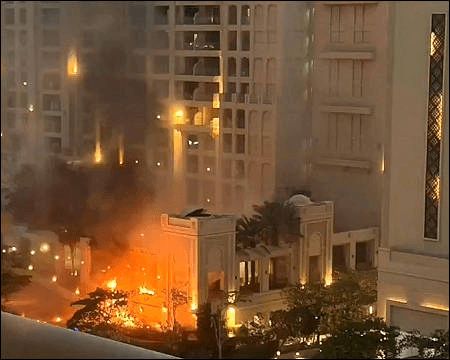
Following Iranian missile and drone strikes across Gulf targets, the UAE Capital Markets Authority announced a two day closure of Abu Dhabi Securities Exchange and Dubai Financial Market on March 2 and March 3, 2026.
Other regional markets reacted with sharp declines, including Qatar down over 4% and Kuwait halting trading during the session.
Real estate takeaway:
When public markets freeze or gap down, property liquidity typically softens next, because buyers pause and lenders tighten.
Reuters reported oil jumped around 7% amid disruptions, Brent hit a high of $82.37 before settling around $77.79, and US crude peaked near $75.33.
Natural gas also spiked, with the Dutch TTF and Asian LNG index both rising over 39%.
Reuters also reported operational disruptions, including Qatar halting LNG production and Saudi Arabia shutting its largest domestic refinery in that immediate window.
Real estate takeaway:
If oil and LNG stay elevated, the impact can spill into inflation expectations, interest rates, construction costs, and consumer confidence, which all feed directly into real estate pricing and absorption.
Real estate does not reprice from fear alone. It reprices through specific mechanisms.
What tends to happen first
Transactions slow, not necessarily prices
Bid ask spreads widen, sellers anchor to last month, buyers demand discounts
The market splits into cash buyers and leveraged buyers, with leveraged demand more sensitive to uncertainty
Practical implication
Sellers who must exit, due to refinancing, job relocation, or developer payment schedules, set the new comps
Everyone else “waits,” which reduces volume and creates noisy price discovery
In risk events, insurance reprices faster than rents.
What to watch
Premium increases
Higher deductibles and exclusions
Longer underwriting cycles for high value assets, hospitality, and certain commercial categories
Security costs, especially for trophy assets and high footfall retail and hospitality
Real estate takeaway:
Net yields can compress even if nominal rents hold, because costs rise first.
If energy prices remain high, imported inflation can rise, and central banks may pause easing or tighten financial conditions.
How this hits property
Higher mortgage rates reduce buyer affordability
Higher discount rates push cap rates up, especially in income assets
Development feasibility worsens, which can reduce future supply but can also delay projects
Real estate takeaway:
The key variable is duration. A one week spike is a headline, a multi month elevated regime is a valuation input.
The GCC has a unique counterbalance. Higher oil and LNG can increase fiscal revenues for exporters, which can support
Public projects
Hiring
Infrastructure pipelines
Broader confidence
Real estate takeaway:
In the GCC, energy price strength can support mid market rental demand and public linked employment, even while risk premium pressures luxury liquidity.
In shocks, capital often rotates within the region.
Common patterns
From speculative off plan to completed units
From fringe to prime districts
From second tier developers to established names
From tourism dependent submarkets to business core submarkets
Real estate takeaway:
The “GCC market” becomes a collection of micro markets with very different liquidity profiles.
Model GCC Property Risk Scenarios with GRAI: https://internationalreal.estate/chat
The correct approach is scenario underwriting, because the range of outcomes is wide.
What you typically see
Transaction pause for 2 to 8 weeks
Limited price changes, mostly incentives in new builds and off plan
Rents remain stable in core employment districts
Some luxury and discretionary second home demand delays purchases
Who wins
Buyers with cash, who can negotiate motivated sellers
High quality assets in prime districts, because liquidity returns fastest
What you typically see
Inflation expectations rise, rates stay higher
Financing becomes more conservative
Cap rates rise, valuations soften in leveraged segments
Operating expenses rise, insurance becomes a real drag
Construction costs and timelines worsen, which can support rents later but hurts developers now
Who wins
Assets with stable tenancy and low leverage
Landlords who can pass through costs or hold through volatility
Logistics and necessity driven segments
This is the stress case. Reuters cited analysis that a prolonged blockage of Strait routes could push Brent above $100.
What you typically see
Abrupt inflation spike
Risk assets sell off
Tourism declines materially
Real estate volumes freeze, forced sellers dominate comps
Who wins
Only the most liquid prime assets and the strongest balance sheets
Buyers who can wait and pick assets from distressed situations
Real estate takeaway:
Most mistakes come from underwriting the base case without modeling the stress case exit.
Different GCC markets react differently because their demand drivers differ.
What matters most
Dubai is highly transaction driven and sentiment sensitive, volumes can swing quickly
Abu Dhabi is often more institutionally anchored, but also reacts to risk premium
What to expect in 2026 under volatility
Off plan becomes incentive driven, payment plan sweeteners, fee waivers, upgrade packages
Completed units in prime districts hold better than fringe stock
Short stay and hospitality linked units face higher near term volatility
Net yields get pressured if insurance and service charges rise
Saudi demand has a strong domestic pillar, and in the immediate window Reuters noted Saudi Aramco rose while the broader region fell, reflecting oil revenue expectations.
What to expect
If oil remains elevated, public spending capacity can remain supportive
Residential demand in core employment zones may stay resilient
Transaction volumes can still slow if regional risk premium stays high
Reuters reported Qatar halted LNG production during the initial shock window, and LNG benchmarks spiked over 39%.
What to expect
If LNG disruptions persist, the macro impacts can be meaningful for trade and energy markets
In the short term, Qatar real estate tends to be more sensitive to headline risk and corporate travel patterns
Smaller markets can see larger liquidity swings, and investors tend to become more selective.
What to expect
Prime assets may hold, secondary assets can become illiquid quickly
Yield chasing investors demand higher risk premiums
Decision cycles lengthen
Buyers with stable employment and lower leverage can still transact
Price discovery happens through motivated sellers
Core mid market rentals tend to be more resilient than luxury rentals
Net yield compression is the risk, due to insurance, maintenance, and vacancy in discretionary demand pockets
Expect incentives and slower absorption
Construction costs may rise if shipping and materials reprice
Financing terms can tighten, increasing developer execution risk
Highest sensitivity to perception, flight patterns, and corporate travel
Recovery tends to be uneven, business core recovers faster than pure leisure nodes in stress cases
Can be relatively resilient if domestic consumption and supply chain demand remain stable
Still sensitive to credit conditions and tenant expansion plans
If you invest or plan to invest in GCC property, use a disciplined sequence.
How long to sell in your micro market in a risk off quarter
What discount clears in a 90 day forced sale
Who the marginal buyer is for your unit type
Insurance up 15% to 30% scenarios
Service charge increases
Maintenance and security line items
Vacancy and rent discounting under weaker tourism scenarios
Rates hold higher longer
Refinancing spreads widen
Conservative bank underwriting and lower LTV
Track weekly
Oil and LNG levels and volatility
Shipping disruption headlines and physical impacts
Central bank stance and inflation prints
Local transaction volumes and developer incentives
This conflict has created a market where narrative investing gets punished.
The difference between a strong GCC property investment and a bad one in 2026 will be
How liquid the asset is when confidence drops
How well net yield survives cost shocks
Whether you can hold through a longer exit window
This is exactly where a real estate AI platform becomes a competitive edge, because it lets you model the scenario tree quickly, and compare micro markets without relying on one broker narrative.
Use these prompts inside GRAI to build a decision grade underwriting view.
“Build a GCC real estate risk model for March 2026 onward, include oil and LNG scenarios, inflation and rate paths, and show what it does to prices, rents, and liquidity in Dubai, Abu Dhabi, Riyadh, Doha.”
“Stress test my specific property, assume resale takes 12 months, forced sale discount 8% to 15%, insurance up 20%, vacancy up 5%, does the deal still clear my hurdle.”
“Compare completed vs off plan in my target city, quantify incentives, liquidity risk, and downside exit discounts under a risk off scenario.”
“If oil stays above $75 versus spikes above $100, model inflation and rate implications, then show which property sectors perform best and worst in each case.”
Try it here: https://internationalreal.estate/
The March 2026 escalation introduced a regional risk premium that first impacts transaction liquidity, then pricing dispersion. In cities like Dubai, Abu Dhabi, Riyadh, and Doha, prime completed assets tend to hold better, while off-plan and highly leveraged segments face wider bid-ask spreads and potential discounting. Price corrections, if any, usually follow volume declines rather than precede them.
Yes, if elevated oil and LNG prices persist for several months. When Brent remains above $75 - $80 or spikes toward $100, inflation expectations rise, which can delay rate cuts or tighten financial conditions. Higher mortgage rates reduce affordability, widen cap rates, and pressure leveraged buyers. The key variable is duration, not just the headline spike.
Historically, the most resilient segments include:
Prime completed residential in core employment zones
Mid-market rental housing
Logistics and necessity retail
Low-leverage income assets
Luxury second homes, hospitality-linked units, and speculative off-plan projects are typically more sensitive to liquidity freezes and sentiment swings.
In many cases, yes. For exporters like Saudi Arabia, United Arab Emirates, and Qatar, sustained oil and LNG strength can increase fiscal capacity, public spending, infrastructure pipelines, and employment stability. This can offset some downside risk in mid-market residential demand even when investor sentiment softens.
Investors should shift from pure price forecasting to liquidity and downside modeling:
Assume longer resale timelines (9 - 12 months)
Model forced-sale discounts of 8% -15%
Stress insurance costs up 15% -30%
Test vacancy increases of 3% -5%
Evaluate refinancing under tighter LTV and higher spreads
Using a scenario framework rather than a single base case is critical in 2026. Platforms like GRAI help compare micro-markets and quantify stress-case outcomes before capital is deployed.
The March 2026 escalation does not create one GCC property outcome. It creates dispersion.
Oil and LNG prices reacted immediately, equity markets sold off, and transaction confidence is likely to soften next. Prime, liquid submarkets tend to hold better, while speculative and highly leveraged segments face the most repricing risk. Investors who underwrite scenarios, especially liquidity and net yield under cost shock, can still find opportunity. Investors who assume the base case will discover what the risk premium really means.


