Ask GRAI Anything
Your Real Estate Questions, Answered Instantly via Chat

Help us make GRAI even better by sharing your feature requests.
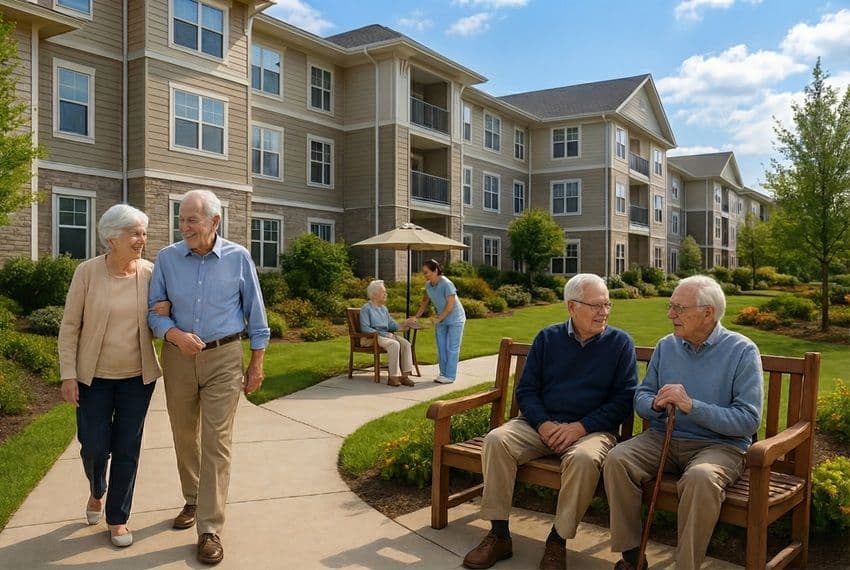
Across the world a structural real estate theme is forming. It is quiet, consistent and completely grounded in demographic reality. The rise of senior living and assisted care communities is not simply a healthcare story. It is a major real estate transformation that touches residential design, medical service delivery, hospitality standards and long term urban planning.
This is a category that many investors have overlooked for years. Yet it carries one of the strongest demand outlooks of any modern real estate segment. Population ageing is accelerating everywhere and it is reshaping how societies think about housing, independence, care and community.
Ageing is a universal trend. It does not follow economic cycles. It does not slow during rate hikes or recessions. Countries with rising median age create natural demand for specialised housing and support services.
Japan and South Korea are among the most advanced ageing societies with a growing share of citizens above sixty five. Europe follows closely with Italy, Germany, France and Spain experiencing steady increases in dependency ratios. The United States is entering its largest retirement wave on record as the baby boomer generation transitions into new living arrangements. Singapore and Australia are preparing for their own demographic shifts with a rise in senior community projects.
This shared pattern creates a consistent need for living formats that offer comfort, safety, independence and care access.
Related: How Aging Populations Will Reshape Real Estate Returns
Senior living is no longer defined by traditional care homes. The shift in expectations has created three major categories.
For individuals who want a private home with community support, lifestyle amenities and a socially engaging environment.
For seniors who require daily support, basic medical monitoring and structured assistance while remaining active and independent.
For residents who need specialised cognitive support and professionally supervised environments.
Each format carries its own demand curve, cost structure and revenue model. In many countries supply has not kept pace with need, which is why occupancy levels remain high across multiple regions.
Senior living is both a real estate business and a service business. Buildings alone do not create lasting value. Residents and families look for reliability, safety, community culture and medical partnership quality.
Investors who focus only on construction cost or land value overlook the operational engine that drives long term cash flow. The best performing communities combine real estate fundamentals with strong service models. Predictable occupancy, long stay durations and consistent monthly fees create stability that few other real estate segments can match.
The most visible demographic pressure with established demand across independent living and full care services.

Growing requirements across Sun Belt regions such as Florida, Arizona, Texas and the Carolinas where climate comfort and retirement migration increase long term occupancy.

High interest in Spain, Portugal, the United Kingdom and Germany. Many of these countries have underdeveloped supply pipelines relative to future demand.

Active development of new integrated senior communities that combine private living, medical support and hospitality services.
Different countries show different investment barriers. Some restrict foreign ownership of care facilities. Others have regulatory frameworks that encourage private development. Understanding these local conditions is essential for long term decision making.

This category requires insight across demographics, regulation, pricing structures, care operations and long horizon property trends. GRAI helps investors by combining market data, demographic projections, supply analysis and demand modelling in a single conversation.
Here are useful prompts that provide clarity when studying senior living and assisted care real estate as follows:
Compare long term demand for senior living across Japan, Germany and the United States and identify regions with the strongest supply constraints.
Evaluate the financial structure of assisted living facilities and outline the variables that influence investor returns including staffing, service fees and occupancy patterns.
Identify the most attractive cities for senior living development based on healthcare quality, retirement migration and cost of land.
Build a ten year investment comparison between senior living communities and traditional multifamily housing and highlight the risk profile of each category.
These prompts help investors see senior living not as a niche segment but as a major structural theme that deserves detailed evaluation.
Get a custom senior living forecast from GRAI : https://internationalreal.estate/chat
Population ageing is not a forecast. It is a measurable reality. Every country that crosses a certain median age will require more senior friendly housing, more care infrastructure and more community based support. This creates a real estate opportunity with deep visibility into the future.
Senior living and assisted care communities will become one of the most important pillars of global property markets over the next twenty years. Investors who begin studying this category early will be better positioned to identify cities, regions and formats where demand significantly exceeds supply.


