Ask GRAI Anything
Your Real Estate Questions, Answered Instantly via Chat

Help us make GRAI even better by sharing your feature requests.
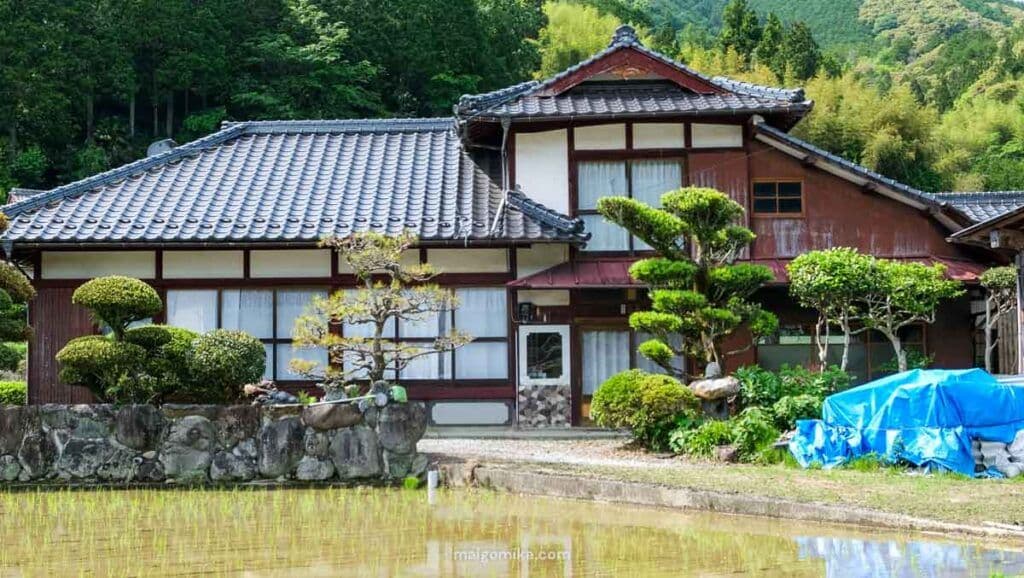
Japan now has one of the highest housing vacancy rates in the developed world, and the story is no longer a niche curiosity.
The government’s 2023 Housing and Land Survey counted about 9.0 million vacant homes nationwide, out of 65.05 million total dwellings. That is a vacancy rate of 13.8%, roughly one in seven homes, and it has doubled from 4.5 million vacant units in 1993.
At the same time, nationwide land prices rose 2.7% as of January 2025, the fastest increase in 34 years, with residential land up 2.1% and commercial land up 3.9%, driven by strong demand in major cities and resort areas.
So investors face an apparent contradiction. Japan looks “cheap” when you see distressed rural houses advertised for the price of a used car, but prime land and income assets in major metros are rising in value and attracting global funds.
This article is for serious investors and long stay buyers who are curious about akiya, want to understand the structural picture, and need a disciplined way to test specific opportunities. GRAI’s role is to turn the romance of a cheap house in Japan into a transparent financial and design decision.
Akiya simply means vacant houses. It does not mean “beautiful old farmhouse at a giveaway price”. The latest detailed survey by Japan’s Ministry of Land, Infrastructure, Transport and Tourism (MLIT) shows how skewed the stock really is.
From a 2024 MLIT survey of more than 6,000 akiya owners:
Around 60% of akiya are inherited properties, often where the heirs already live elsewhere and have little intention of returning.
More than 70% of those inherited akiya were built before 1980.
More than 60% of all surveyed akiya showed visible decay or damage.
Separate research and press coverage reinforce the same picture. Roughly three out of four vacant houses were built before the 1980s, and older wooden structures are especially vulnerable to earthquakes and weather.
In other words, “vacant” in the statistics often means “very old, under maintained and structurally questionable,” not “move in ready with a little dust.”
For positioning your strategy, it helps to treat most akiya as raw material for a construction or redevelopment project, not as finished product.
The national vacancy rate of 13.8% hides big regional differences.
Japan has 65.05 million dwellings. Of these, 8.99 million were counted as vacant in 2023, the highest number ever recorded.
Some prefectures already exceed 20% vacancy, including Yamanashi at about 21%, Wakayama at about 20% and Nagano at about 19.5%, all well above the national average.
Tokyo has roughly 900,000 vacant homes, but because the total housing stock is large and demand remains strong, its vacancy rate is lower than the national figure.
At the same time, Japan’s population is shrinking and ageing. An OECD long horizon projection noted that with fertility around 1.3 and stable net immigration, the population could decline from about 125 million to around 96 million by 2050.
Nomura Research Institute has warned that, without strong countermeasures, Japan’s vacancy rate could exceed 30% by around 2033.
For investors, this means the akiya issue is not a temporary blip. It is tied to long term demographics and uneven regional economic strength.
The akiya story sits inside a very different story about land prices.
Government and independent analyses show:
Average land prices across Japan rose 2.7% as of January 2025, the fourth consecutive year of increase and the fastest pace since 1991, before the asset bubble fully burst.
Commercial land values rose 3.9%, supported by inbound tourism, redevelopment and strong demand for logistics and data center sites.
Industrial land increased by about 4.8%, helped by e commerce logistics and semiconductor investment in regional areas.
Global capital has noticed. One example is a Japan focused real estate fund being raised by Morgan Stanley at roughly 100 billion yen (about $680 million) to target offices, multifamily, logistics and hotels, amid rising land prices and Japan’s first interest rate hikes in 17 years.
This is an important framing point. Akiya exist in a country where prime land and institutional grade assets are gaining value and attracting sophisticated capital. The vacant house problem is mainly about mismatch and geography, not about a collapse of national demand.
Japan remains one of the more open markets for foreign ownership of real estate.
Under current law, foreign individuals and companies are generally free to buy and own land and buildings in Japan with the same property rights as Japanese nationals.
There is no blanket prohibition on foreigners owning akiya, condos or houses, whether or not they live in Japan.
Since 2021, the Act on the Review and Regulation of Land Use in National Security Areas allows the government to monitor and potentially restrict purchases of land near military facilities, coast guard bases and key infrastructure, and there is ongoing debate in 2025 about tightening oversight of foreign buyers in sensitive zones.
Ownership does not equal residence status. Buying a house will not, by itself, grant you a long stay visa. You still need to qualify through work, business, family, study or other immigration categories.
Policy direction is subtle but important. Japan is happy to attract capital into normal residential and commercial markets, but it is paying more attention to foreign acquisitions of farmland and land in national security related areas.
For akiya in typical villages or towns, the main constraints are practical rather than legal.
If millions of homes are vacant, you might assume it is easy for newcomers to pick one and move in. Researchers who study rural migration say it is not that simple.
Field work on rural housing in 2024 and 2025 points to several blockers.
Many akiya have multiple heirs and unclear ownership records, so local officials cannot easily match a buyer to a seller.
Surveys rely heavily on exterior observation, which means some vacant homes remain “invisible” to outsiders and to new residents who do not have local connections.
Even when a property is clearly vacant, local owners may be emotionally attached and reluctant to sell to strangers, or they may not have the cash or knowledge to navigate legal cleanup.
Some rural municipalities lack the administrative capacity to actively broker transactions between elderly owners and newcomers.
The result is paradoxical. Newcomers to the countryside often report that they struggle to find a suitable house for sale or rent, even in places where vacant houses are clearly visible.
This friction is slowly easing as more municipalities build formal akiya banks and as private agencies specialise in vacant house brokerage, but it is an important reminder that “plenty of supply” does not equal “easy to buy.”
From a GRAI vantage point, most credible akiya strategies fall into three broad categories. Each has very different economics and risk.
This is the most honest use case for many foreign buyers.
Profile:
Income and primary home are elsewhere.
The goal is a place to spend part of the year, host family and friends, and slowly restore a property.
Rental income is secondary or optional.
Key requirements:
Choose regions you actually want to visit regularly, for example Niigata for snow, Nagano for mountains, Setouchi for inland sea views or certain onsen towns.
Focus on access, especially rail and winter roads, and proximity to basic medical care.
Treat renovation as a multi year project and budget accordingly.
Financially, this is closer to a passion project or second home strategy than a pure yield play. It can still be smart, but the return is measured partially in life quality.
Here the house is intended to work for visitors as well as for you.
Profile:
Target use as a small guesthouse, creative retreat or occasional holiday rental.
Aim to recover some or all of operating costs through income.
Key requirements:
Understand national and municipal short stay regulations. Some cities and prefectures have specific minpaku rules, registration requirements and limits on days of operation.
Be realistic about demand. Few rural towns have year round visitor flows strong enough to support hotel like occupancy.
Build trust with neighbours. In a small community, one noisy weekend can undo months of goodwill.
The economics will depend heavily on micro location and how much time and capital you are willing to invest in building a brand, not just a room.
This strategy assumes you want both income and some capital appreciation.
Profile:
Focus on smaller regional cities or secondary neighbourhoods in large metros where population decline is slower or where new infrastructure and tourism are improving fundamentals.
Use akiya selectively, for example acquiring an older building with the intention to renovate multiple units or replace the structure while retaining the land.
Key requirements:
Align with macro trends, such as new shinkansen stops, growing university towns, or areas that benefit from inbound tourism and domestic relocation.
Respect zoning and seismic codes. In some cases it is more efficient to demolish and rebuild than to upgrade an old structure to current standards.
Think in decades. Population and perception shifts are slow.
Nomura’s projection that vacancy could exceed 30% by around 2033 is a reminder that you are investing into a headwind in many rural locations. The goal is to pick the few areas that can swim against that current.
A frequent misconception is that a $10,000 purchase means a $10,000 project. In practice, acquisition is usually the smallest part of the budget.
Real world patterns from documented akiya projects and cost guides:
Purchase prices in akiya bank listings for rural or semi rural homes commonly fall in the $5,000 to $50,000 range.
Initial cleanup, basic repairs, pest control and utility reconnection can quickly push all in cost to $20,000 to $80,000 even before major upgrades.
Full renovation of a pre 1980 wooden house that needs modern insulation, new plumbing, electrical work, seismic reinforcement and updated interiors can easily add $50,000 to more than $150,000, especially if you hire professional contractors rather than doing most of the work yourself.
There is no single standard per square metre number because the variation in condition is huge. Academic work on abandoned property in Japan emphasises that many akiya are effectively “abandoned assets,” not simply under used ones, and require intervention on structure, legal status and surrounding land.
From an investor standpoint, an akiya is closer to a value add or opportunistic deal than to a core asset. It needs a renovation or rebuild pro forma, not just a simple rental yield calculation.
GRAI, the world’s smartest global real estate AI advisor, is built for exactly this kind of mixed decision. There is a macro layer, a property layer and a design layer.
Here is how to think about using GRAI if you are considering akiya.
Before you fall in love with a listing, ask GRAI to help you choose the right geography.
Examples of prompts:
Compare these three prefectures or cities in Japan for an akiya project, for example Niigata, Hiroshima and Wakayama. Rate each for population trend, age structure, access, tourism demand, climate risk and long term resale potential.
Show me how land prices and transaction volumes have behaved over the last decade in this specific city, and how that compares with the national 2.7% average land price increase in 2025.
This keeps you from buying into an area where demand is evaporating faster than you can renovate.
Once you have candidate properties, you can ask GRAI to build serious financial scenarios that include all the hidden costs.
Useful prompts:
For this akiya listing, estimate total project cost across three scenarios, basic repair, moderate renovation and deep upgrade, including reasonable ranges for construction, legal clean up, taxes and annual holding costs.
Build a 10 year cash flow model if I use the property for blended personal and rental use, with realistic assumptions for nightly rates, occupancy, maintenance and local tax obligations.
GRAI will help you see whether your expected income stream bears any resemblance to the capital you plan to invest.
Most akiya are not designed for modern heating, cooling, work from home patterns or international buyer expectations. This is where GRAI’s design capabilities matter.
Prompts that make this concrete:
Given a 70 to 90 year old wooden house of this approximate size and shape, generate two different renovation design schemes. One minimal scheme focused on making it safe and usable on weekends, and one fully upgraded scheme suitable for year round living, with layout, insulation and heating approaches.
Take this floor plan and design a layout that supports a remote worker couple, including a quiet workspace, storage, and a comfortable sleeping area, and suggest a furniture plan that fits Japanese building norms.
You can then share these ideas with local architects and builders, rather than starting from a blank sheet of paper.
Akiya projects are illiquid and exposed to demographic risk. Planning for exit in advance is essential.
You might ask GRAI to:
Outline realistic exit paths for this akiya investment over a 15 year horizon. Include resale to locals, sale to other foreign buyers, conversion to different uses and the possibility that the land is more valuable than the structure.
Stress test my project under scenarios where population decline accelerates and land prices stop growing at 2.7% per year. Show how sensitive my equity outcome is to those changes.
This is the kind of analysis that helps you distinguish an emotional dream project from a viable long term investment.
Test your akiya ownership opportunity with proper financial modeling - Ask GRAI now: https://internationalreal.estate/chat
Japan’s 9 million vacant homes are the visible tip of a much deeper shift. The country has an ageing, shrinking population, regional economies moving at very different speeds and a property market where prime land is rising in value while older housing stock in some areas decays and empties out.
For investors and long stay buyers, akiya are neither a universal bargain nor a universal trap. They are a category of complex, often beautiful but sometimes very fragile assets that can make sense if you combine clear motives, realistic budgets and a careful choice of location.
GRAI exists to help you do that work with more clarity. Instead of guessing based on a listing price and a few photos, you can test full cost scenarios, compare regions and generate real design options before you commit.
If you use akiya to buy into a place you truly want to be, on numbers that survive scrutiny, you are no longer chasing a viral headline. You are making a considered move into one of the most interesting real estate stories on the planet.
Q1: What is akiya in Japan?
Akiya are vacant homes, often inherited properties built before 1980, many requiring structural repairs or full renovation.
Q2: Why does Japan have so many vacant houses?
Population decline, ageing owners, inheritance issues and weak rural demand drive vacancy rates past 13% nationally.
Q3: Can foreigners buy property in Japan?
Yes. Foreign buyers can freely purchase land and buildings, but ownership does not provide a visa or residency rights.
Q4: Are akiya cheap to renovate?
No. Purchase prices are low, but repairs, seismic upgrades and utilities can push total costs above ¥5M-¥20M.
Q5: Are akiya good investments?
They can be if buyers model renovation, income and exit risks, target stronger regions and treat old homes as value-add projects.
Q6: How does GRAI help evaluate akiya?
GRAI compares regions, models renovation budgets and cashflows, designs layouts and stress-tests long-term exit risk.


