Ask GRAI Anything
Your Real Estate Questions, Answered Instantly via Chat

Help us make GRAI even better by sharing your feature requests.
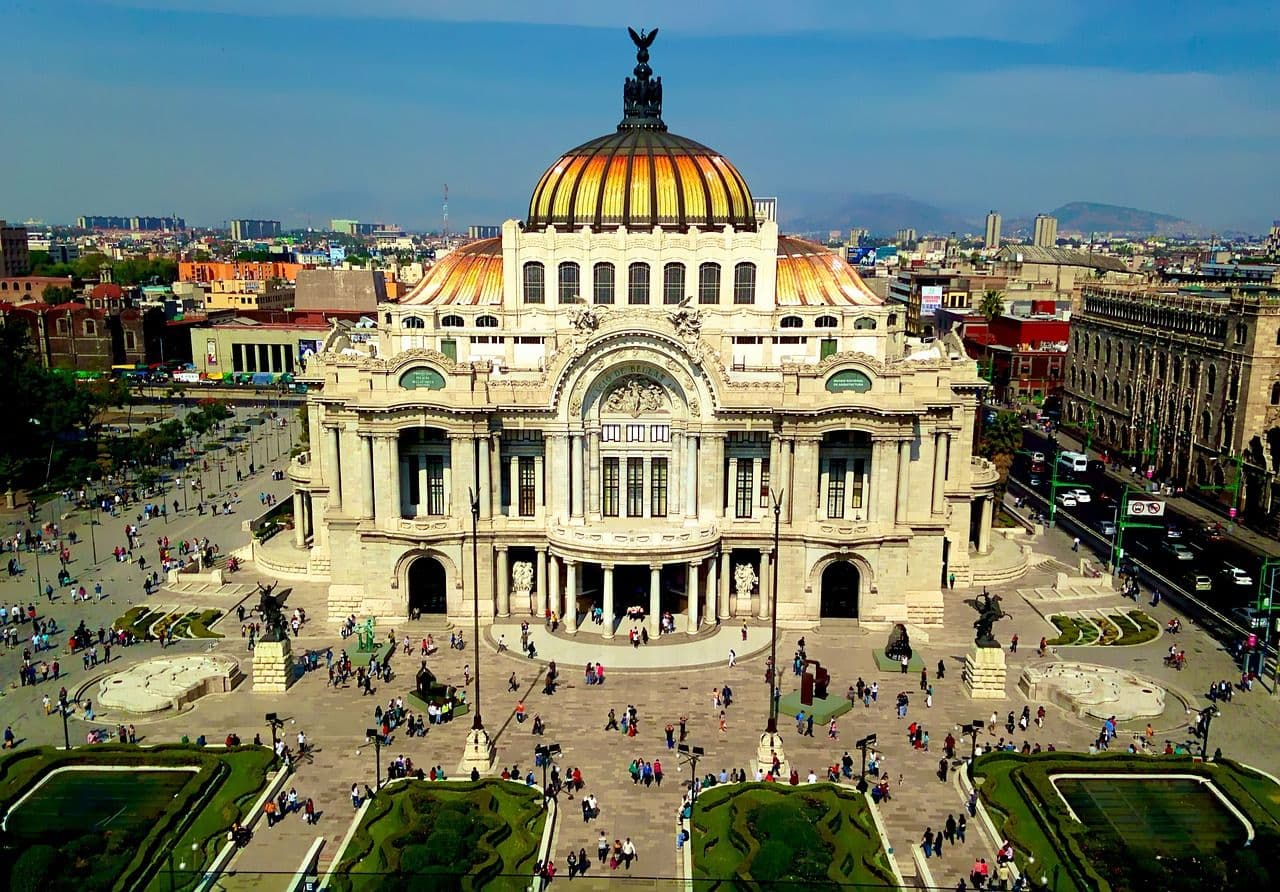
Mexico City has become a global reference point for the collision of mobility, culture and housing. It is a city where you can still eat well, meet interesting people and live a rich urban life at a lower cost than in New York or London. It is also a city where renters are protesting in the streets as housing costs rise sharply.
For anyone thinking of living in or investing in Mexico City, the story in 2025 is not “cheap city, full stop.” It is a story of accelerating rents, new regulations, and a housing system under strain.
This article uses fresh numbers and concrete examples to help you make sense of the market and shows how GRAI can help you analyse both returns and design choices with more precision.
The headline statistic for 2025 is stark.
A major rental platform projects that the average apartment rent in Mexico City will reach about 21,000 pesos per month by the end of 2025, roughly $1,130 at recent exchange rates. This represents an expected increase of about 12% to 15% over 2024.
The same platform reports that monthly rents currently span from about 2,700 pesos at the very low end to over 125,000 pesos for top tier units in the most desirable buildings.
Cost of living trackers place a typical one bedroom apartment in the city centre at about 20,800 pesos per month, with similar one bedroom units outside the centre around 12,200 pesos.
House prices are moving as well.
Some local reporting and academic work frame things even more sharply, citing rent increases on the order of 30% for one bedroom units in central neighborhoods over a recent multi year period and broad rent jumps of close to 50% across the city since 2020.
Taken together, these numbers mean that the city is not just catching up with inflation. Housing costs are rising much faster than many local incomes.
Mexico City’s international magnetism shows up in migration statistics.
Fewer than 1.2 million people born abroad live in Mexico, under 1% of the population, yet the number of residency permits has grown quickly over the last decade.
Between 2018 and 2024, authorities issued roughly 239,667 residency permits in Mexico City alone, with annual issuances swinging from about 58,000 in 2018 to about 47,700 in 2023 and about 27,900 in the first eleven months of 2024.
Americans are now the single largest group of foreign residents in Mexico, and US citizens dominate temporary and permanent resident card statistics, followed by Colombians and a growing number of Chinese citizens.
For housing, the key point is that migration is real but still small relative to the total population. The pressure comes from the combination of limited new affordable housing, strong internal migration into the city and a segment of foreigners and wealthy domestic buyers with higher purchasing power concentrating in a few central neighbourhoods.
Also Read: How Digital Nomads Build Wealth Through Global Real Estate
The social response has been visible.
Protests in 2025 in neighbourhoods such as Roma and Condesa highlighted anger over rising rents, overtourism and the spread of short term rentals. Demonstrators complained that locals were being priced out while entire buildings turned into tourist accommodation.
Journalistic and academic accounts point out that between 2010 and 2020 Mexico City had one of the lowest rates of new housing construction among major Mexican cities, which amplified the impact of new demand.
In response, Mexico City’s congress approved a reform in 2024 that limits short term rental listings on platforms such as Airbnb to 180 days per year and incorporates a registry of hosts, part of a broader attempt to make short stay rentals subject to tighter rules.
These measures are still working through legal challenges, but they signal a clear direction of travel. The city wants to slow speculative use of housing and keep more units for longer term tenants.
For an investor or long stay renter, this means that you should expect tighter regulation going forward, not looser.
Demand is not evenly spread.
Central boroughs such as Cuauhtémoc and Miguel Hidalgo, which include Roma, Condesa, Juárez and Polanco, are at the heart of the digital nomad and tourism narrative, with high concentrations of cafes, coworking spaces and cultural venues.
Local data on price per square metre suggests that areas such as Polanco, Roma and Lomas de Chapultepec sit at the top of the ownership price scale, with some reports citing average asking prices around 100,000 pesos per square metre for prime Polanco units.
Other relatively central neighbourhoods still have lower absolute prices but are seeing faster rent growth as tenants are priced out of the most fashionable streets.
For long stay renters, the trade off is between being in the most hyped neighbourhoods with higher prices and exploring slightly less famous districts that still have excellent food, transit and safety but have been under less international pressure.
From a legal structure standpoint, Mexico City is simpler than coastal resort towns.
Mexico’s constitution defines a restricted zone that includes land within 50 kilometres of the coastline and 100 kilometres of international borders. In that zone foreigners typically must hold coastal or border property through a bank trust known as a fideicomiso or through Mexican companies.
Mexico City lies outside the restricted zone, so foreign buyers can own property directly in their own name under standard rules, subject to using a local notary and complying with Mexican tax and anti money laundering requirements.
This does not mean the process is trivial. Buyers still need careful due diligence, title review, and advice on capital gains rules in both Mexico and their home jurisdiction.
For investors, the key question is whether you can construct a strategy that respects social context and still delivers acceptable returns.
Strategies that tend to be more resilient:
Buying well built apartments in established multifamily buildings rather than speculative off plan units in fringe locations
Targeting mid level rents affordable to local professionals, rather than relying entirely on short term tourist demand
Investing in districts that have good transit and services but are slightly outside the highest intensity tourist zones
Using moderate leverage and running scenarios that include higher property taxes, stricter rental rules and peso volatility
Given that national house prices are still rising at close to 8% to 9% per year, yet local anger at housing access is growing, any plan that assumes indefinite double digit rent growth in the most contested areas is vulnerable.
What you buy or design matters as much as the street address. For GRAI, the best performing long stay units in Mexico City tend to share several traits.
They have strong natural light and ventilation, often on corners or with internal courtyards.
They include a defined workspace or the ability to carve out one without sacrificing living comfort.
They have reasonably quiet interiors, either because they face inner courtyards or because windows are specified to manage street noise.
They are in buildings with good basic maintenance and reliable water pressure and electrical systems.
Their interior design balances character and practicality instead of leaning only on “Instagram moments.”
These are exactly the attributes we target when generating design options inside GRAI for a Mexico City floor plan, because they matter both for your experience and for tenant retention.
GRAI is built for questions that mix macro trends, local nuance and interior design. Instead of piecing together forum anecdotes, you can give GRAI a neighbourhood, a price, a plan and let it respond with structured analysis.
Here are prompts that make that concrete:
For this specific neighbourhood in Mexico City, show me realistic 2026 rent ranges for a 1 bedroom and 2 bedroom apartment, expected vacancy, and a 5 year base case and downside case cash flow in pesos and in my home currency.
Take this floor plan and generate three complete interior schemes that would appeal to long stay tenants, including a remote worker couple, a single professional and a small family, and explain how each scheme changes rent potential.
Build a checklist for buying as a foreigner in Mexico City, covering legal structure, notary steps, taxes, short term rental limits and likely future regulation trends.
Compare investing the same budget in Mexico City, Lisbon and Mexico’s second tier cities such as Guadalajara or Monterrey, and show how rent, regulation, and price growth scenarios differ over 10 years.
These conversations give you a level of clarity that is hard to get from scattered online sources.
Analyze Mexico City Real Estate With GRAI: https://internationalreal.estate/chat
Mexico City in 2025 is vibrant, contested and in motion. It is at once an extraordinary place to live and work and a city grappling with a housing deficit, underbuilt affordable stock and a new wave of higher income residents.
For serious investors and long stay residents, the respectful approach is to move from vibes to analysis. Understand the numbers. Understand the regulations. Understand the social context. Then make choices that work for you and do not ignore the community you are entering.
GRAI exists to make that kind of decision making easier, so that when you decide to rent or buy in Mexico City you do it with a clear picture of the trade offs, not just a folder of pretty photos.


