Ask GRAI Anything
Your Real Estate Questions, Answered Instantly via Chat

Help us make GRAI even better by sharing your feature requests.
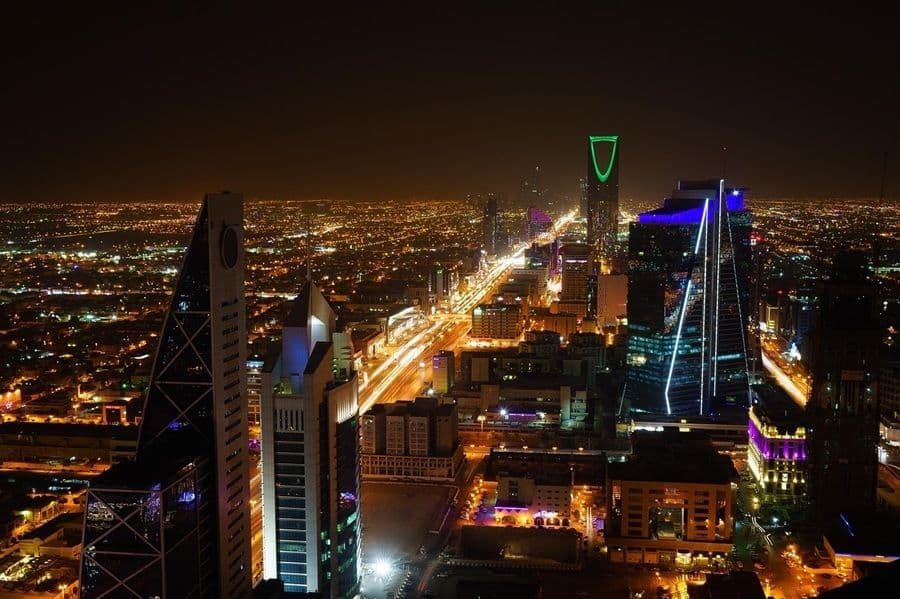
Saudi Arabia is not “opening the gates” to foreign buyers. It is doing something more consequential for investors.
It is turning foreign property ownership into a regulated, mapped, and enforceable framework, built around designated geographic scopes, mandatory registration, and defined fees and penalties.
For 2026, this creates a new category of Gulf real estate opportunity, and a new category of mistakes for buyers who act on headlines instead of controls.
Saudi Arabia’s updated Law of Real Estate Ownership by Non Saudis is designed to regulate how foreign individuals, companies, and entities can acquire property and other in rem rights in the Kingdom. It replaces the earlier regime from 2000, and it is expected to become effective in January 2026, based on the publication date and the stated 180 day timeline.
The market impact is not just “more buyers.” It is pricing dispersion.
In 2026, the investable Saudi market is likely to split into two layers
Assets inside permitted geographic scopes, which can become more globally liquid
Assets outside those scopes, which remain locally constrained and can behave very differently in price and exit velocity
Saudi’s official Q and A lists the categories that can own under the updated law. The categories include:
A non Saudi natural person, whether residing in the Kingdom or not
Non Saudi companies, whether operating within the Kingdom or not
Non Saudi non profit entities
International missions and organizations, based on reciprocity and with Ministry of Foreign Affairs approval
Saudi companies with non Saudi shareholders
Special purpose vehicles, funds, or entities with non Saudi equity holders
Investor Takeaway: this is not only for residents. The framework contemplates ownership by non residents too, subject to the controls and the geographic scope document.
The updated framework is not limited to one narrow property type. The official Q and A states that types of real estate available for ownership will be specified in the geographic scopes document.
It also clarifies that foreign participation can include
Full ownership rights
Other in rem rights, such as usufruct and easement
Investor Takeaway: this is not only a freehold conversation. Rights based investment structures may become more common, especially for investors optimizing risk, duration, or compliance.
A critical control is registration. The official Q and A states that the property must be in kind registered in the Real Estate Registry, and ownership and other in rem rights must be documented through that system.
In practical terms, this matters because it shapes
Legal enforceability
Financing readiness
Dispute risk and title clarity
Exit process, because buyers value clean registries
If you are underwriting a deal, the first filter is not yield. It is whether the asset sits inside the in kind registration system and whether the pathway to register your right is clear.
This is the part that will create the biggest winners and losers.
Saudi’s framework relies on a Geographic Scope Document for Non Saudi Real Estate Ownership. The official Q and A says this document, approved by the Council of Ministers and published by REGA, will outline
Areas where non Saudis may own in cities such as Riyadh, Jeddah, Makkah, and Madinah, and other regions
Maps of specific locations
Ownership limits and maximum ownership percentages within the scope
The types of rights granted and allowed durations, including maximum permitted durations for usufruct rights
Regulatory controls designed to consider security, economic, and social factors
What is investable now, in practical terms
Ownership is stated as available in Riyadh and Jeddah within specific areas, under a defined methodology aimed at maintaining market balance
Makkah and Madinah have special restrictions, ownership is restricted to Muslim individuals, and Saudi companies with non Saudi shareholders, and only within specific areas as detailed by the implementing regulation and geographic scope document
Investor Takeaway: in 2026, “Saudi” is not the location. The zone is the location.
Check Saudi Foreign Ownership Zones and Returns Instantly: https://internationalreal.estate/chat
Saudi’s official Q and A spells out a combined fee concept that matters directly to your net returns.
It states a total real estate fee for non Saudi ownership of 10%, which includes
5% real estate disposition tax
An additional fee for real estate disposition for non Saudis, not exceeding 5%
Separately, Saudi’s Real Estate Transaction Tax is described as a 5% tax on real estate transactions by ZATCA.
Investor Takeaway: if you ignore transaction friction, your model is wrong. In many deals, entry and exit costs decide whether you beat a safer market like Dubai, or simply take more risk for similar returns.
The updated law includes a violations regime overseen by specialized committees within REGA, with judicial objection procedures.
Key penalty concepts called out in the official Q and A include:
General violations can escalate up to a fine not exceeding 5% of the value of the in rem right subject to the violation, capped at SAR 10,000,000
Violations involving misleading information regarding ownership can trigger a fine up to SAR 10,000,000 and the sale of the property by public auction
Investor Takeaway: this is not a loose market opening. It is designed to be enforceable. That is good for serious investors, and dangerous for buyers who plan to improvise later.
Saudi’s opening creates a capital allocation question.
If Saudi offers a credible and liquid foreign ownership pathway in key zones, then global buyers who previously treated Dubai as the default GCC choice now have another contender.
Potential second order effects to watch, framed as scenarios not certainties
Prime zone repricing in Saudi, with premiums for clarity and proximity to mega projects and business districts
Product reorientation, more developments designed around international buyer expectations, governance, and property management standards
Competitive pressure on Dubai developer marketing and incentives, because some demand will cross shop Riyadh or Jeddah with Dubai
Larger dispersion inside Saudi, where zone eligible assets attract deeper demand and non eligible assets do not reprice the same way
The opportunity is real, but it will not be evenly distributed.
Also Read: Dubai Real Estate Market in 2025: The Ultimate Investor's Guide with GRAI
When a market changes its rules, the biggest edge is speed with precision.
This is where a real estate AI platform can be more than a research tool. It becomes an underwriting workflow.
Use GRAI, your real estate AI advisor to force clean answers early, then validate with your lawyer and broker.
High impact prompts to run in GRAI:
“Summarize the Saudi foreign ownership framework in 2026, list who can buy, what rights exist, and which documents and registrations are mandatory.”
“Build a Saudi foreign buyer due diligence checklist, including geographic scope verification, in kind registry checks, taxes and fees, and red flags that trigger penalties.”
“Model the total cost of this deal including a 10% fee structure, then show my break even rent and the minimum hold period required to hit my target IRR.”
“Compare Riyadh zone eligible assets versus Dubai freehold assets for 2026 to 2030, rank by liquidity, regulatory clarity, and downside risk under flat price growth.”
“If the implementing regulation delays clarity on zone maps for 6 to 12 months, show how that impacts my exit liquidity and resale discount risk.”
This is the mindset shift. You are not buying a country narrative. You are buying a legally permitted zone, with a clear fee stack, and a defensible exit.
Underwrite Saudi Property Deals with Full Fee Clarity: https://internationalreal.estate/chat
REGA’s official Q and A states implementation begins 180 days after publication in the Official Gazette, which points to January 2026.
The official Q and A includes non Saudi natural persons whether residing in the Kingdom or not, subject to the controls and geographic scope document.
REGA’s Q and A states ownership is available in Riyadh and Jeddah within specific areas.
Ownership in Makkah and Madinah is restricted to Muslim individuals and to Saudi companies with non Saudi shareholders, and is permitted only in specific geographic areas as detailed by the implementing regulation and scope document.
REGA’s Q and A describes a total fee of 10% for non Saudi ownership, consisting of a 5% real estate disposition tax and an additional disposition fee not exceeding 5%.
The Q and A states this can trigger a fine up to SAR 10,000,000 and the sale of the property by public auction.
REGA’s Q and A says the updated law repeals the prior law once it enters into force.
Saudi’s 2026 foreign ownership framework is one of the most important Gulf real estate developments in years, not because it is permissive, but because it is structured.
For investors, the game is simple
Buy only where ownership is clearly permitted
Model the full fee stack, not just headline yields
Treat compliance as part of return, because enforcement is built into the system
Use a real estate AI platform like GRAI to move fast on the right deals, and avoid expensive mistakes on the wrong ones
If you want to underwrite Saudi in minutes, build scenarios, and compare Riyadh and Jeddah zones with Dubai and other GCC markets, you can use GRAI here: https://internationalreal.estate/


