Ask GRAI Anything
Your Real Estate Questions, Answered Instantly via Chat

Help us make GRAI even better by sharing your feature requests.
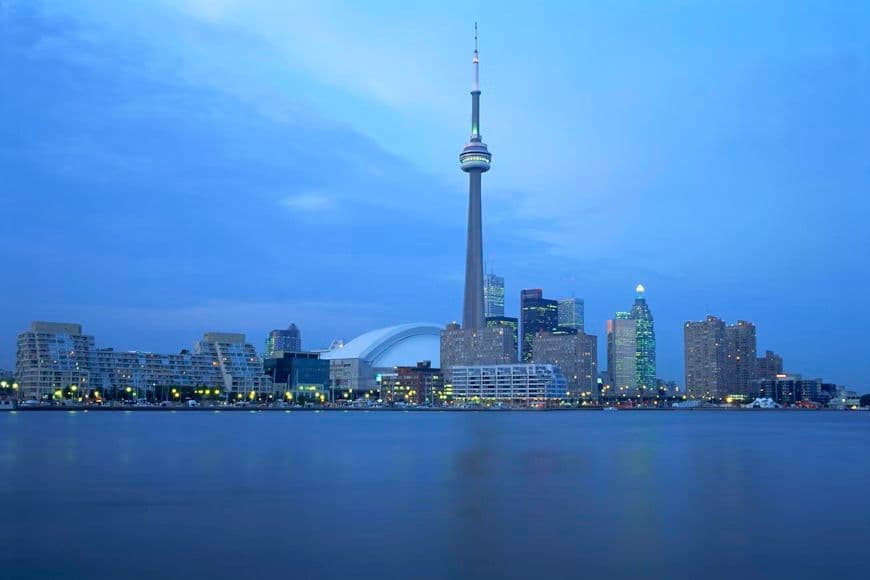
Toronto, Canada real estate in 2026 is a market reset, not a simple rebound. Prices remain below prior highs, condo inventory is still shaping buyer leverage, rents have softened, and neighborhood-level performance matters more than citywide averages. This guide explains where Yorkville, The Annex, Downtown Core, and Etobicoke stand today, what current data says about pricing and rental strategy, and how GRAI helps investors and buyers make faster, sharper decisions with real-time market intelligence.
Toronto’s housing story in 2026 is more nuanced than many headlines suggest. The Toronto Regional Real Estate Board reported that the GTA average selling price in February 2026 was CAD 1,008,968, down 7.1% year over year. Sales were down 6.3%, while new listings fell 17.7%. That combination matters because it suggests demand is still soft, but fresh supply is tightening even faster.
CMHC’s 2026 Housing Market Outlook adds a second layer. It expects Toronto housing starts to remain weak in 2026, especially in condominiums, while rental starts stay stronger. It also says housing demand and construction in Toronto will remain weaker than long-run averages. That does not describe a broken market. It describes a market that has repriced and become more selective.
That is why the right question is not, “Is Toronto up or down?” The right question is, “Which submarket, asset type, and rental strategy gives the strongest risk-adjusted return in this version of Toronto?” That is exactly where AI in real estate becomes useful.
| Metric | 2025 / latest 2025 reading | Early 2026 / outlook | What it means |
|---|---|---|---|
| GTA average selling price | CAD 1,067,968 for 2025 | CAD 1,008,968 in Feb 2026 | Prices remain below prior highs; buyers still have leverage |
| Home sales | Weak through 2025 | 3,868 sales in Feb 2026, down 6.3% YoY | Demand is still cautious |
| New listings | Elevated through much of 2025 | 10,705 in Feb 2026, down 17.7% YoY | Supply is tightening faster than demand recovery |
| Condo market | Q4 2025 sales down 15% YoY | Inventory still high entering 2026 | Buyers have negotiating power in condos |
| Condo average price | GTA condos CAD 652,945 in Q4 2025 | City of Toronto average CAD 690,607 in Q4 2025 | Condo weakness creates selective entry points |
| Rental market | Q4 2025 condo rental transactions up 16% YoY | Rents softer and tenants have more choice | Rental demand is real, but pricing power is weaker |
| Rental vacancy | GTA purpose-built vacancy 3.0% in 2025 | Higher vacancy challenges future rental supply | Better renter leverage, less easy upside for landlords |
| New housing starts | Weak in 2025 | CMHC expects low 2026 starts, especially condos | Weak future supply may matter later, but near term stays soft |
Toronto does not behave like one market. Yorkville, The Annex, Downtown Core, and Etobicoke serve different buyers, different tenants, and different return profiles.
| Neighborhood | Core thesis | Best fit | Main risk |
|---|---|---|---|
| Yorkville | Luxury scarcity and prestige support long-term desirability | High-net-worth buyers, capital preservation, prime condos | Expensive entry; mispricing is costly |
| The Annex | Stable demand driven by centrality, walkability, and University of Toronto influence | Long-term rental investors, end users, family buyers | Lower “headline upside” than more speculative pockets |
| Downtown Core | Better condo negotiation conditions plus stronger office-market relevance | Urban investors, mixed-use thinkers, value buyers | Condo oversupply and softer near-term pricing |
| Etobicoke | Broader household demand and more practical value spectrum | Families, balanced investors, space-led buyers | Less prestige appeal than central luxury districts |
Yorkville remains one of the clearest expressions of Toronto luxury real estate. It benefits from brand value, elite retail, hospitality, and a buyer profile that is less exposed to broad affordability strain. In a softer market, those characteristics can help prime property preserve value better than generic stock. The trade-off is simple: when entry is expensive, mistakes are expensive too.

The Annex continues to stand out because it offers lasting utility, not just market fashion. Its proximity to the University of Toronto, strong walkability, mature residential fabric, and recurring rental demand gives it more resilience than neighborhoods driven mainly by short-term investor enthusiasm.
Downtown Core deserves more attention than many residential-only articles give it. The condo market has been soft enough to improve buyer leverage, but the broader core is not deteriorating as an urban employment zone. CBRE said downtown Toronto vacancy fell to 15.0% in Q4 2025, with 2.6 million square feet of annual absorption, the strongest annual absorption since 2016. That matters because strong core employment supports long-term residential demand even when condo sentiment is temporarily weak.

Etobicoke is often undercovered in Toronto investor content. That is a mistake. In 2026, practical demand matters. More family-oriented housing, a wider value range, and real household demand make Etobicoke more balanced than many trend-led submarkets.
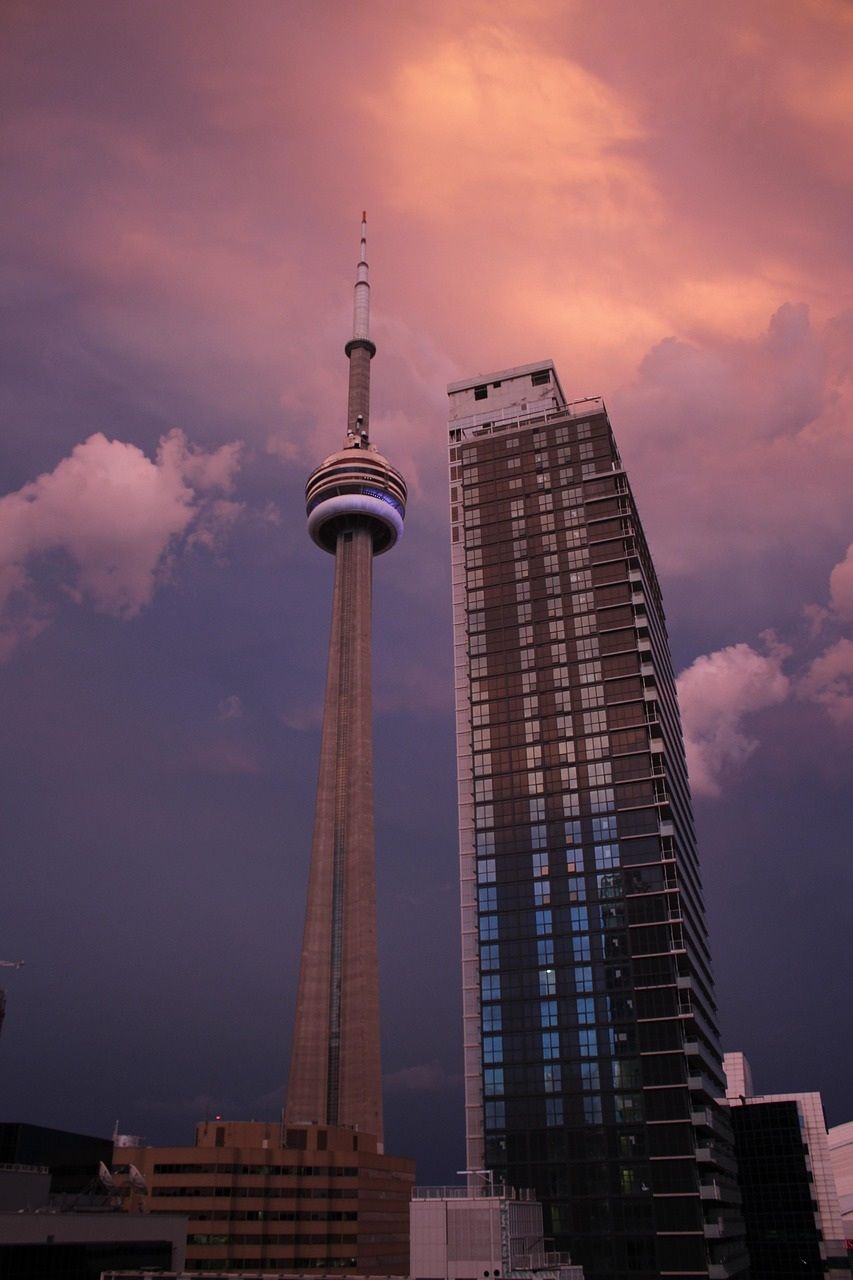
Use GRAI to Compare Toronto Neighborhoods Before You Buy: https://internationalreal.estate/chat
This is where many outside investors misread Toronto.
Toronto’s short-term rental rules are stricter than many assume. The city says short-term rentals are only permitted in a host’s principal residence, and operators must register. The city also temporarily raised the Municipal Accommodation Tax from 6% to 8.5% from June 1, 2025, through July 31, 2026. That makes conventional investor-owned Airbnb strategies much harder to justify.
Meanwhile, the long-term rental market is still active, but no longer easy. TRREB reported that Q4 2025 condo rental transactions rose 16% year over year, while listings rose 8.5% and average rents fell across all major unit types. One-bedroom average condo rent was CAD 2,313, down from CAD 2,421 a year earlier. That tells investors something important: rental demand remains, but tenant pricing power has improved.
| Rental strategy | 2026 Toronto reality | Better use case |
|---|---|---|
| Short-term rental | Heavily constrained by principal-residence rule and MAT increase | Owner-occupiers using part of a primary residence |
| Long-term rental | More viable, but rents are softer and competition is stronger | Investors focused on honest underwriting and durable tenant demand |
This is one of the most commercially important questions in the topic cluster.
Canada’s Prohibition on the Purchase of Residential Property by Non-Canadians Act remains in force. The law restricts non-Canadians from purchasing residential property unless specific exceptions apply. The legislation also notes repeal language as an amendment not yet in force, which means readers should not assume the restriction has ended. Buyers need case-specific legal verification based on residency status, property type, and transaction purpose.
For international readers, this is where GRAI fits naturally. A cross-border buyer usually needs more than a headline summary. They need current law, risk flags, and document-level interpretation in context.
| Action | Best fit in 2026 | Why |
|---|---|---|
| Buy | High-quality assets in strong neighborhoods with corrected pricing | Better entry conditions than peak-cycle buying |
| Hold | Well-located Yorkville, Annex, Etobicoke, and select Downtown assets | Toronto still looks more repriced than structurally broken |
| Sell selectively | Undifferentiated condos with weak rental economics or financing pressure | Condo inventory and softer rents may weigh on some assets longer |
Toronto in 2026 is not a market where one average price or one headline can guide a smart decision. A luxury buyer looking at Yorkville, an investor comparing Downtown Core condos, and a family weighing value in Etobicoke are all entering very different market realities. The advantage now goes to the buyer who can read those differences early, test scenarios fast, and separate noise from real opportunity.
That is where GRAI becomes genuinely useful.
Instead of forcing users to piece together scattered listings, outdated articles, and fragmented market opinions, GRAI helps turn complexity into clear action. Its strongest value in Toronto comes from combining real-time market intelligence, AI-powered property valuation, predictive economic forecasting, legal and regulatory review, portfolio scenario modeling, multilingual contextualization, sentiment analysis, and environmental risk awareness into one sharper decision layer.
In practical terms, that means a user can go beyond asking whether Toronto is a good market.
The better questions are the ones that actually shape returns:
Which neighborhood has the strongest long-term demand?
Which property type is overpriced?
Is long-term rental smarter than a short-term strategy here?
How do foreign ownership rules change the path for international buyers?
Where does the real risk sit, and where is the hidden upside?
That is the real edge. In a market as layered as Toronto, clarity is more valuable than volume, and speed only matters when it is backed by intelligence. GRAI gives buyers, investors, and global property seekers a faster and more informed way to evaluate Toronto with precision instead of guesswork.
Which Toronto neighborhood offers the best risk-adjusted property investment in 2026?
Should I buy, hold, or wait in Toronto real estate in 2026?
Can I still generate strong rental returns in Toronto in 2026?
Use GRAI to Analyze Toronto Deals with More Precision: https://internationalreal.estate/chat
Toronto can still be a strong long-term market, but 2026 favors selective buying over broad optimism. Neighborhood choice, asset type, and rental strategy matter more than they did during the easy-growth phase.
TRREB reported a GTA average selling price of CAD 1,008,968 in February 2026. That is a regional figure, so readers should not treat it as a uniform Toronto neighborhood price.
The market could stabilize later in 2026 if supply keeps tightening and confidence improves, but CMHC still expects Toronto activity and construction to remain weak relative to long-run averages.
For most investors, Toronto is not an easy short-term rental market because short-term rentals are limited to principal residences and the MAT is temporarily 8.5% through July 31, 2026.
Some buyers may qualify under exceptions, but Canada’s federal restrictions on non-Canadian purchases of residential property remain in force. Buyers should verify their exact legal status and transaction type before proceeding.
Yorkville is strongest for luxury and capital preservation, The Annex for resilient long-term demand, Downtown Core for negotiated value and urban relevance, and Etobicoke for practical family-led demand.


