Ask GRAI Anything
Your Real Estate Questions, Answered Instantly via Chat

Help us make GRAI even better by sharing your feature requests.
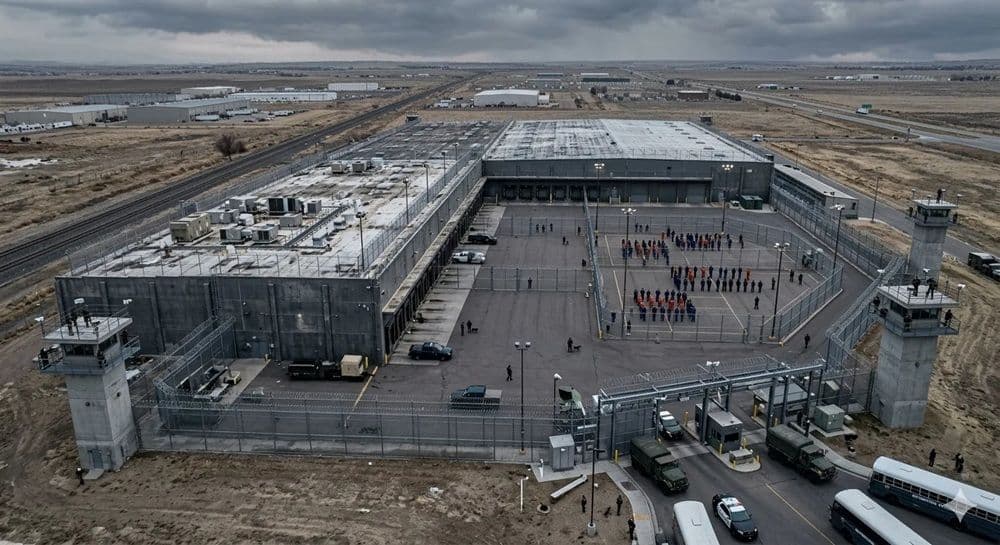
One of the strangest real estate stories of 2026 is not about offices, apartments, or data centers. It is about warehouses being acquired and converted into immigration detention facilities. Reporting from AP and The Wall Street Journal shows federal immigration authorities moving to expand detention capacity aggressively, with at least 11 warehouse acquisitions already identified, more than two dozen additional purchases planned, and a broader detention expansion target of roughly 92,600 beds backed by tens of billions in federal spending.
This is not just a policy story. It is a state backed real estate demand shock. It introduces a new bid into selected industrial markets, can push pricing above normal warehouse values, and creates unusual conflicts between owner economics, local politics, reputational risk, and civic capacity. The broader lesson is larger than detention. Governments can create entirely new real estate demand pockets much faster than markets expect, and investors need a framework for judging when that demand is durable, distortive, or dangerous.
Most real estate analysis assumes demand comes from households, employers, retailers, manufacturers, or investors. That assumption is usually safe. But sometimes the state becomes the buyer, the user, or the force that redefines highest and best use - something modern real estate decision support systems are increasingly designed to analyze.
That is what makes this story important. The warehouse to detention shift is unusual, but it is not random. It shows how government backed demand can suddenly change what a building is worth, who will bid for it, and what kinds of risks matter most. AP reported that federal immigration officials planned to spend $38.3 billion to support a huge expansion in detention capacity, including conversion of industrial and warehouse properties in multiple states. The Journal separately reported that the Department of Homeland Security and Immigration and Customs Enforcement had already bought at least 11 warehouses and planned to buy more than two dozen more.
For real estate investors, that means a warehouse is no longer always competing only on logistics, e-commerce, or light industrial demand. In some places, it may also be competing for a politically charged, state backed, premium paying buyer.
The first and most important lens is demand shock. In volatile policy-led markets, scenario-based real estate analysis becomes essential to test how sudden institutional or government demand can distort pricing, liquidity, and future exits.
If a federal buyer appears with urgency, scale, and budget, the economics of an otherwise weak or awkward industrial asset can change quickly. The Journal reported that in at least some cases, the government was willing to pay above market value to secure warehouse properties for detention conversion. That matters because industrial pricing usually depends on tenant quality, logistics utility, replacement cost, and market rents. A state buyer changes that equation.
This is why the shift deserves to be treated as a real estate story, not only a political controversy. A new demand source can create:
Pricing support for hard to lease or special case warehouse stock
Faster transaction velocity for otherwise overlooked assets and
A new shadow bid under selected industrial properties
Those effects can be very real even if the underlying use remains politically contested.
From a seller’s perspective, the appeal is obvious.
A government backed acquirer can mean:
A large check
Faster certainty of closing
Less dependence on normal market demand
And a buyer motivated by policy urgency rather than pure yield discipline
That can be especially attractive for owners of warehouses in submarkets where conventional logistics demand is weaker or where assets are functionally inferior for mainstream industrial tenants.
Communities, however, often experience the opposite side of the equation. AP reported that local officials in multiple states said they were surprised by warehouse acquisitions or potential conversions, and raised concerns about water, sewage, power, emergency services, environmental effects, and local governance strain. In several places, towns or states sued, protested, or pushed back hard enough that projects were delayed, reviewed, or canceled.
That asymmetry is the heart of the story. What looks like a good liquidity event for an owner can look like a long term burden for a municipality.
It would be a mistake to generalize this into a broad industrial bull case.
The right way to think about it is:
Not all warehouses benefit
Not all submarkets are exposed and
Not all government demand is durable
This is a highly specific repricing effect inside industrial real estate. This kind of distortion often creates hidden exit liquidity risk in real estate, where assets priced on unusual demand become difficult to resell under normal market conditions.A property may gain value not because its logistics utility improved, but because it became suitable for a politically driven special use. That distinction matters because it changes the underwriting questions.
The old industrial underwriting model asks:
What are market rents
Who are the likely tenants
What is the logistics value
What is replacement cost
The new model, in a case like this, also asks:
What is the probability of government demand
What political or legal opposition might arise
How durable is the use
What happens if policy changes
What does exit liquidity look like after conversion and
What reputational or community risk now attaches to the asset
That is a very different investment problem.
Any state backed demand wave creates a critical question: is this a durable repricing, or a temporary distortion?
Any state backed demand wave creates a critical question: is this a durable repricing, or a temporary distortion - something that often reflects broader long-term vs temporary real estate demand cycles.
If demand depends heavily on one administration’s priorities, one funding package, or one enforcement posture, then investors should be cautious about treating today’s premium as permanent. The AP reporting on the expansion effort and lawsuits shows that even where federal intent is aggressive, execution can still be slowed by litigation, local opposition, infrastructure burdens, and practical implementation problems.
That means owners and investors need to distinguish between:
A temporary opportunistic sale premium
A durable new use category and
A politically fragile special use that may be hard to finance, refinance, or resell later
This is why the topic belongs in a serious real estate conversation. It is not enough to know that government demand exists. The investor needs to know whether it survives court challenges, policy changes, and community resistance.
When pricing depends on policy, instinct is not enough. Test whether this demand is durable, temporary, or distorted: https://internationalreal.estate/chat
Industrial property owners are used to thinking in financial terms. This use case forces a different variable into the model: reputational risk.
A warehouse sold for detention conversion may attract:
Public protests
Activist attention
Municipal resistance and
Scrutiny from lenders, partners, or future buyers
That is not a moral observation. It is a market one. “Reputational risk can affect”: a dimension that reflects how modern investors evaluate hidden risks when dealing with politically sensitive or non-traditional real estate uses.
Deal execution
Financing
Partnership alignment and
Future exit options
This matters especially for funds, institutional investors, or family offices that care about public perception, tenant branding, or ESG related positioning. A premium price today may not fully compensate for harder fundraising, community hostility, or lower buyer depth tomorrow.
One of the more important AP themes is that warehouse to detention conversion is not simply a change of occupant. It can be a change in civic burden.
Local officials cited concerns about:
Water demand
Wastewater load
Electricity
Roads
Emergency response and
Strain on municipal systems
These concerns matter because they can create friction that normal industrial users may not. They can also trigger additional permitting, legal conflict, and operational uncertainty. In other words, local infrastructure burden is not only a political talking point. It is also part of the true cost of property valuation, especially in policy-driven or non-traditional use cases.
This article is about detention warehouse conversions, but the deeper lesson is broader.
Governments can create or reshape real estate demand in many ways:
Detention capacity
Public health infrastructure
Defense and logistics sites
Emergency housing
Energy resilience assets
Border and customs facilities
Administrative or judicial real estate
The common pattern is that policy creates a new buyer or tenant class faster than the market expects. When that happens, pricing can move before investors fully understand the risks. The warehouse to detention story is especially sharp because the demand source is both large and controversial, but the underlying principle applies far beyond this one use case.
That is why this belongs on a real estate strategy radar. It is a case study in how the state can distort market pricing and redefine highest and best use.
If you are looking at an industrial asset that may attract state backed special use demand, the right framework is not simply “government buyer equals safety.” The right framework is five layered.These layers mirror advanced real estate due diligence frameworks used to evaluate complex, non-traditional investment risks.
Is the government bid above what the normal market would pay?
Does the use depend on short term policy, or does it have multi year structural backing?
What legal, political, zoning, and community opposition risks could delay or block the deal?
Does the use create branding, lender, or future exit problems?
If the policy environment changes, who buys the asset next, and at what discount?
That last question is critical. A warehouse with a politically sensitive use may not have the same buyer depth later as a conventional logistics facility.
Industrial real estate has been one of the clearest winners of the last cycle. But this story is a reminder that industrial is no longer a simple “e commerce and logistics” asset class. It is increasingly a platform for multiple competing uses, some commercial, some political, some state driven.
That makes underwriting more complex.
In some cases, government demand can act like a floor under pricing. In other cases, it can create a temporary spike that later proves illiquid or controversial. The smart move is not to ignore that demand. It is to separate normal market value from state distorted value. Ignoring that distinction is how investors underestimate broader structural risks in commercial real estate.
This is exactly the kind of unusual real estate problem where structured scenario analysis helps.
Useful prompts:
“Explain how a new government backed use case can reprice an otherwise weak warehouse market.”
“Compare warehouse values under normal logistics demand versus federal detention conversion demand.”
“Stress test this industrial asset for political, legal, and reputational risk if its highest bidder is a government detention buyer.”
“Tell me whether this warehouse has real multi use value or is mainly gaining from a temporary state demand distortion.”
“Model exit liquidity if a warehouse is sold into a politically sensitive special use and policy later changes.”
Want to know if a property’s value is real - or driven by temporary policy demand?
Ask GRAI to break down pricing, risk, and exit scenarios instantly: https://internationalreal.estate/chat
It refers to underused or suitable warehouse properties being acquired and converted into immigration detention facilities as part of expanded federal detention capacity. Recent reporting identified multiple warehouse acquisitions and a much larger pipeline of planned purchases.
Because it creates a new source of demand for industrial assets, can push pricing above normal market levels, and changes how owners, investors, and communities value warehouse property.
In some cases, reporting indicates the government has been willing to pay premiums above market value for certain warehouse acquisitions. That is a sign of policy urgency affecting pricing.
No. This is a specific repricing effect in certain assets and locations. It is not a broad industrial market uplift.
The biggest risks are policy reversal, lawsuits, local opposition, infrastructure burden, reputational damage, and weak exit liquidity if the use becomes politically toxic or temporary.
Because detention conversions can strain water, sewer, power, roads, and emergency services, and because many local governments say they were surprised or excluded from the process.
Not always. It can create a strong short term bid, but it can also distort pricing and create future risk if the use is politically fragile or difficult to exit.
It shows that industrial is no longer only a logistics story. It is a flexible real estate category that can be reshaped by policy, state demand, and special use cases in ways many investors do not model well.
Yes. A real estate AI platform can compare ordinary industrial demand with politically driven demand, stress test legal and reputational risk, and help model whether the pricing premium is durable or temporary.
The warehouse to detention shift is one of the strangest and most revealing real estate stories of 2026.
It shows that buildings do not change value only when consumers or companies want them more. Sometimes they change value because the state wants them for a politically urgent purpose.
That can create premiums. It can create liquidity. It can also create backlash, legal friction, and long term exit risk.
That is why the right lens is not simply “government demand is good. ”It is “what kind of demand is this, how durable is it, and what does it do to the asset once the politics change.”


