Ask GRAI Anything
Your Real Estate Questions, Answered Instantly via Chat

Help us make GRAI even better by sharing your feature requests.
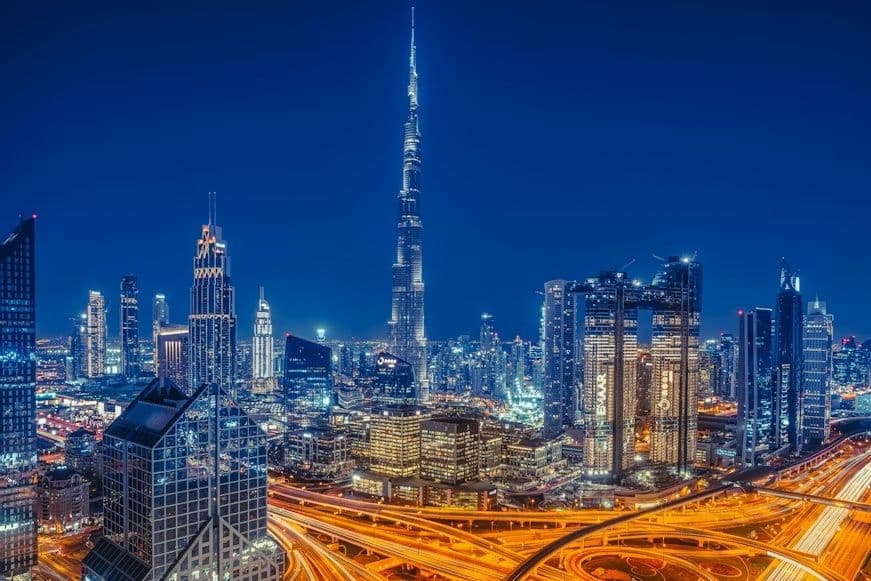
Dubai’s property market entered 2026 from a position of unusual strength. Knight Frank said 2025 was another record year, with total sales value reaching AED 544.2 billion and ultra luxury demand remaining exceptionally strong, while Savills said 2026 was likely to bring more moderate growth and greater differentiation across segments. Then the Iran war shock hit. By March 20, market data cited by major banks showed UAE real estate transaction volumes down 37% year over year and 49% month on month in the first 12 days of March, with some sellers already offering 12% to 15% discounts in prime areas.
The right way to read this is not “Dubai crash” versus “Dubai is fine.” It is a sorting process between prime completed assets with real income support and thinner, more speculative segments that depend on confidence and velocity.
Dubai has been one of the world’s most watched property markets because it combined global wealth inflows, tax efficiency, migration momentum, and a strong narrative of safety and growth. That made it easy for commentary to drift into extremes, either endless boom or imminent bust. What makes 2026 more interesting is that the market is finally under a real external stress test. The issue is not just whether prices move. The issue is whether buyer confidence, transaction depth, and off plan absorption remain as strong when the safe haven story gets challenged.
Before the March wobble, Dubai residential had already posted another record year. Knight Frank said 2025 delivered AED 544.2 billion in residential sales value, up 40.3% year on year, with transaction volumes up 18.2% to 205,400 deals. Savills also described 2025 as record breaking and said 2026 would likely be characterized by more moderate growth and sharper differentiation, which now looks especially important because not every segment is likely to react the same way to geopolitical stress.
Real estate markets rarely turn with a dramatic price headline first. They usually weaken through lower conviction. Buyers pause, lenders get more selective, and sellers quietly start cutting or negotiating harder. That is why the March transaction data matters so much. In the first 12 days of March, UAE real estate deal volumes were estimated down 37% year over year and 49% month over month. That kind of volume shock is often the first serious sign that the old market rhythm has broken, even before official indices catch up.
The market signal is stronger when discounts appear in areas that were previously treated as untouchable. Reports of 12% to 15% discounts around Burj Khalifa and Palm Jumeirah do not prove a broad repricing cycle on their own, but they do show that sellers are beginning to test a different market. Once prime district discounts become visible, the issue is no longer whether the market is hot. The issue becomes how much of prior pricing depended on momentum rather than durable end user depth.
One of Dubai’s biggest advantages in recent years was not only growth. It was legibility. For international buyers, the city offered a clear legal framework, fast execution, global connectivity, and a sense of insulation from wider regional disorder. The March shock matters because it challenged that assumption. When a market’s premium includes safety and optionality, it does not need a crash to weaken. It only needs more hesitation from mobile global capital. That is why this moment matters more than a routine seasonal slowdown.
The biggest mistake in reading the Dubai real estate market is treating it as one unified trade.
The city contains at least five very different markets:
Prime completed residential
Investor heavy apartments
Off plan stock
Trophy luxury
Rental backed mid market housing
These segments behave differently in confidence shocks. A completed, income visible apartment in a deep rental corridor is not the same trade as a paper gain off plan tower bought by globally mobile investors who can easily wait, cancel, or redirect capital. The question in 2026 is not whether Dubai works. It is which Dubai works.
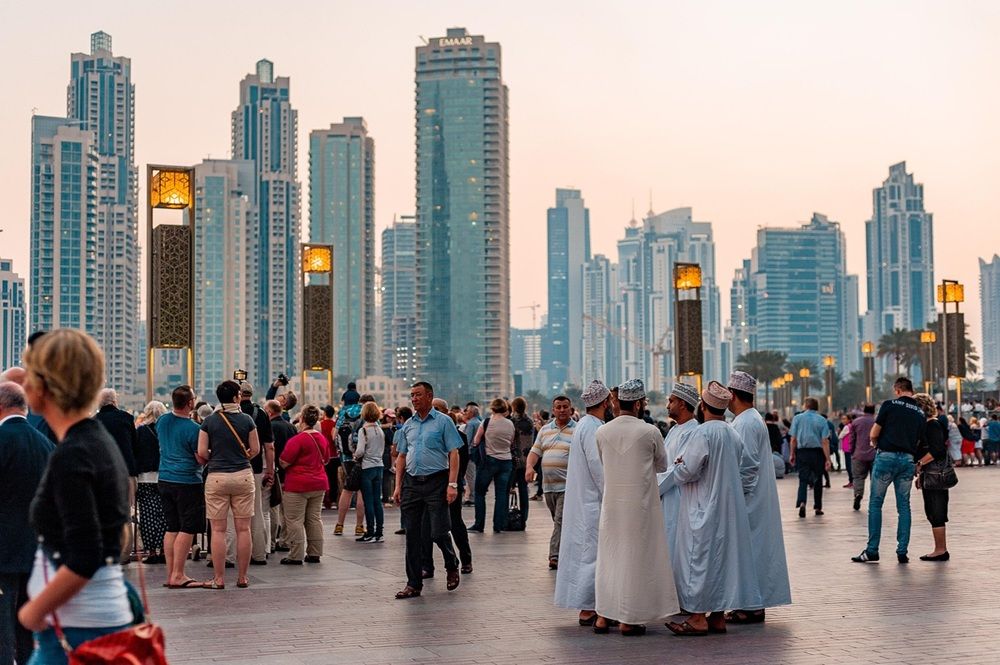
A boom market can hide a lot of fragility because off plan sales thrive on trust in future delivery, future pricing, and future buyer confidence. When confidence weakens, off plan is usually the first place where the stress shows up. This is especially relevant in Dubai because 2025 and early 2026 were heavily driven by launch momentum and investor participation. If buyers begin to demand heavier incentives, slower payment terms, or more discounts, the impact will be felt first in the segments that rely on future rather than present utility.
The part of Dubai most likely to prove durable is not simply “luxury.” It is completed, genuinely scarce, and usable product with broad enough buyer depth and rental fallback. Knight Frank’s data on ultra luxury strength in 2025 shows the city still has exceptional top end demand. But resilience in 2026 will depend less on trophy headlines and more on whether completed prime assets continue attracting buyers who are purchasing utility, residency, and long term optionality, not just momentum.
Evaluate the resilience of your property investment with GRAI: https://internationalreal.estate/chat
One useful clue comes from listed property names. Emaar’s share price had fallen more than 26% since the war began, showing how quickly public markets react when investors start discounting slower transactions and weaker confidence. Direct real estate usually adjusts with a lag because it is slower, more opaque, and more anchored to stale expectations. That is why equity moves matter here. They do not prove direct prices will follow one for one, but they often show when sentiment has already changed.
Dubai announced a AED 1 billion economic support package at the end of March, with implementation starting April 1 and lasting three to six months. That is meaningful because it shows policymakers are treating the conflict related disruption as economically relevant, especially for business, tourism, and trade linked sectors. But support measures cushion activity, they do not automatically restore investor conviction. The deeper question remains whether capital continues to see Dubai as a place where money can move quickly, live safely, and exit cleanly without requiring a larger risk premium.
Savills’ forecast that 2026 would bring more moderate growth and greater differentiation now looks particularly useful. In a market like Dubai, turning points rarely hit evenly.
The likely winners if uncertainty persists are:
Completed prime stock
Assets with real rental support
Homes in deep owner occupier or long stay expat corridors
Properties with broad resale appeal
The likely losers are:
Confidence dependent off plan
Highly investor dense towers
Units priced for quick flips
Assets with thin buyer pools and weak rental fallback
That is why a simple bull or bear call on “Dubai property” is not enough. The market is splitting, not moving in one line.
Explore how GRAI can help you identify shock proof real estate segments: https://internationalreal.estate/chat
One reason the market may avoid a broad collapse is that parts of Dubai still have strong rental logic. Yields remain attractive by global city standards in many submarkets, and deep expat and business demand can support occupancy in the right locations. In stress periods, that matters because rental support creates optionality. If resale slows, income producing assets are easier to defend than purely momentum driven purchases. This is the key distinction between a slowdown that stays selective and one that becomes more systemic.
Dubai property is being hit through confidence, but also through the broader macro chain. The conflict has already affected Gulf equities, oil, and investor sentiment, while Dubai’s main stock index ended March down 16.4% for the month, the worst regional performance. A market can survive weak sentiment if financing remains easy and buyers keep returning. It becomes more fragile when geopolitical risk, oil volatility, and macro caution all reinforce each other. That is why the next phase matters so much. If volumes rebound quickly, this was a wobble. If they remain weak and discounts spread, the market could be entering a more meaningful reset.
The best way to tell pause from turn is to watch five things:
Transaction volumes after the first shock
Whether discounts stay isolated or spread
Off plan absorption and incentives
Rental resilience in key submarkets
Buyer composition, especially internationally mobile capital
If the market stabilizes in volumes, rents hold, and prime completed assets continue clearing, Dubai may prove more resilient than feared. If transaction weakness persists and discounts expand beyond isolated prime listings, the market will look much more vulnerable.
The right framework is not “boom or bust.” It is “depth or dependence.”
Depth means:
Broad buyer appeal
Real rental support
Completed utility
Financing resilience
Strong resale liquidity
Dependence means:
Launch momentum
Future confidence
Thinner buyer pools
Easy money assumptions
The parts of Dubai that were built on depth are being tested. The parts built on dependence are being exposed. That is the most useful way to understand the market now.
Dubai in 2026 is exactly the kind of market where static calculators fall short. The question is not only affordability or yield. It is how transaction weakness, rental support, liquidity, and segment risk interact.
Useful prompts:
“Stress test this Dubai property if transaction volumes stay weak for six months and resale takes twelve months.”
“Compare completed prime Dubai assets versus speculative off plan under a weaker confidence scenario.”
“Tell me whether this property depends on rental support, end user demand, or pure market momentum.”
“Estimate buyer pool depth for this Dubai asset in a softer market and the likely discount needed for a quick sale.”
Test off plan versus completed property resale risk using GRAI: https://internationalreal.estate/chat
Not based on current evidence. What is visible so far is an early confidence shock, not a confirmed broad crash. Transactions fell sharply in early March, and discounts appeared in some prime areas, but the market remains segmented and some high value deals are still happening.
Because real estate usually weakens through activity first. Buyers pause, negotiations widen, and only later do broad price indices reflect that change. Volume is often the earliest signal that conviction has weakened.
The more exposed segments are speculative off plan, investor dense towers, momentum driven luxury, and assets with thin buyer pools or weak rental fallback. These rely most on confidence and fast turnover.
Completed prime stock, rental backed housing in deep demand corridors, and genuinely scarce assets with broad end user and expat appeal are better positioned because they have more income support and better liquidity.
It challenged Dubai’s safe haven image, which matters because part of the city’s premium is based on international confidence. That kind of confidence shock can reduce buyer urgency and widen bid ask spreads even without creating an immediate citywide price collapse.
It helps cushion the broader economy and signals that policymakers are responding to the disruption, but it does not by itself restore property market confidence. The main issues remain buyer sentiment, liquidity, and how long uncertainty lasts.
It could be, but that depends on what happens next in volumes, discounts, and off plan absorption. The market entered 2026 from a very strong base, so a pause is plausible. A broader turn would require ongoing volume weakness, wider discounting, and much weaker confidence.
Dubai property in 2026 is facing its first genuinely interesting stress test after a major boom.
The key question is not whether the market is still good in the abstract. It is whether the parts that ran hardest were supported by real depth or by easy confidence.
That is what the next few months will answer.
If transactions rebound and resilient segments hold, the market will look like it took a shock and survived. If volume weakness persists and discounts broaden, this may be remembered as the moment Dubai stopped being a one way story.


