Ask GRAI Anything
Your Real Estate Questions, Answered Instantly via Chat

Help us make GRAI even better by sharing your feature requests.
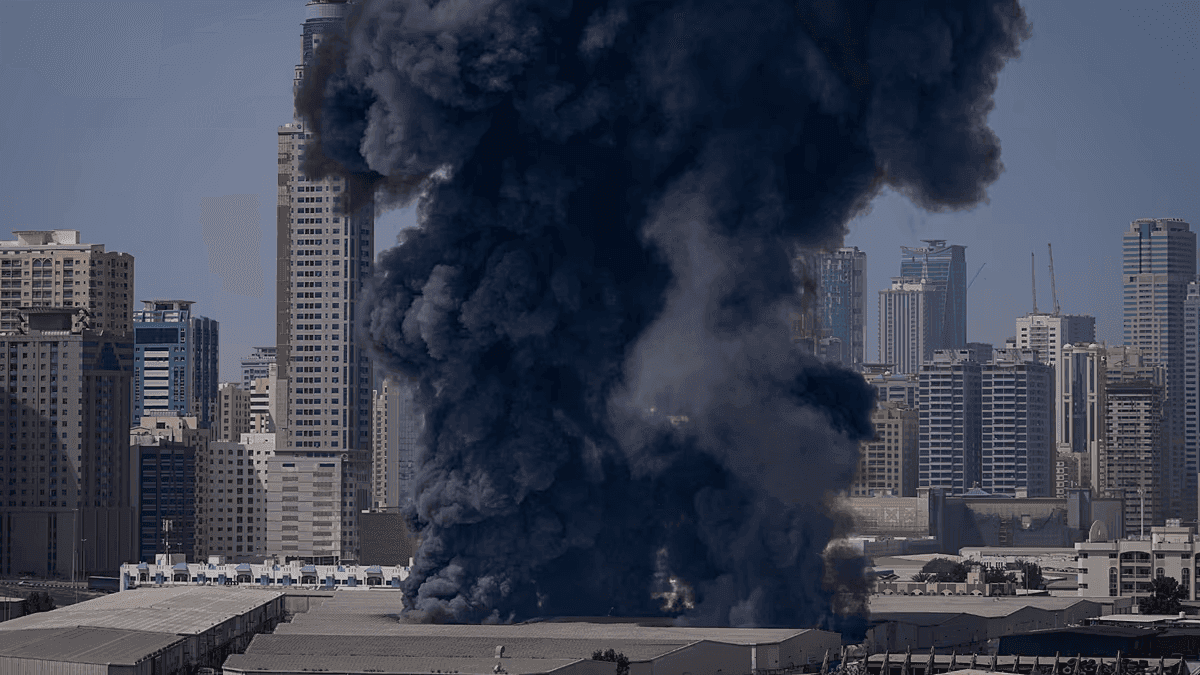
The Iran, U.S. war is not just a Middle East security story. It is now a global real estate capital flow story because it has already changed oil prices, inflation expectations, rate assumptions, safe haven behavior, and confidence in the old petrodollar framework. Reuters reporting shows the conflict disrupted energy markets, shook Gulf equities, complicated the role of traditional safe havens, and forced a rethink of how capital moves in stressed environments.
For property markets, the first effect is usually not an instant price collapse. It is hesitation, slower transactions, wider bid ask spreads, tighter underwriting, and a stronger preference for prime, liquid, income visible assets. This guide explains the transmission channels, how the capital map is shifting across the Gulf, the U.S., Europe, and Asia Pacific, where the real opportunities may emerge, and what investors need to model before making decisions.
Wars affect real estate through a different channel than they affect equities. Stocks reprice quickly. Property usually reprices more slowly through financing costs, confidence, and cross border capital behavior. That is why the current conflict matters. Reuters reported that the war triggered severe disruption around the Strait of Hormuz, removed major energy supply from the market, and forced governments and companies to scramble for substitutes. At the same time, Reuters reported that markets became highly sensitive to every sign of ceasefire progress or further escalation, with oil, bonds, currencies, and Gulf equities moving sharply in response. For property, this means the market is being hit through the channels that matter most for capital allocation, not just through headlines.
The most common mistake in reading geopolitics through a real estate lens is expecting property prices to move first. They usually do not. Volumes and confidence move first. Buyers pause. Sellers anchor to old prices. Lenders get more selective. Developers lean harder on incentives. Reuters reported that Gulf stock markets sold off heavily during escalation and then rebounded as ceasefire hopes improved. That pattern matters because real estate usually follows the same confidence curve with a lag. The implication is simple: the first effect is lower conviction and more selective capital, not uniform distress.
This is the chain that matters most for property. Reuters reported that the conflict caused a near total disruption to the Strait of Hormuz and drove a global energy crisis, with as much as 20 million barrels of oil per day affected in the most severe phase of the disruption. Reuters also reported that even after ceasefire hopes eased prices somewhat, Brent remained sharply above pre war levels, and market participants continued to warn that a renewed escalation could send prices much higher. Once energy reprices, the next steps are familiar: inflation fears rise, central banks get more cautious, and financing conditions tighten or stay tight. Real estate then feels the pain through mortgage affordability, cap rates, developer financing, and weaker transaction activity.
A ceasefire can help sentiment. It does not automatically reverse the capital flow damage. Reuters reported that ceasefire hopes pushed Gulf markets, European stocks, and U.S. futures higher, while oil fell from extreme highs. But the same reporting also stressed that markets remained skeptical of a durable resolution, that Hormuz was still not fully normalized, and that inflation and growth concerns would not disappear overnight. For property investors, this means that a ceasefire may reduce acute panic while leaving behind a higher risk premium and a more selective capital environment.
One of the most important real estate implications of this war is that traditional safe haven behavior has become less predictable. Reuters reported that old safe havens such as gold, Treasuries, and even the dollar have shown mixed and less clean behavior than in past crises, while cash and money market funds were among the clearest beneficiaries. That matters because cross border property flows often depend on the same logic that drives safe haven financial flows. If investors are less certain about the classic safe asset playbook, they may either sit in cash longer or become much more selective in property, concentrating only on prime, deeply liquid markets instead of spreading capital broadly across anything labeled stable.
Reuters’ March 25 analysis argued that the war is rattling the foundations of the petrodollar system by exposing the fragility of Gulf states’ reliance on the U.S. security umbrella and by accelerating interest in alternative geopolitical and financial alignments. This is not just a currency story. It is a capital recycling story. For decades, one pillar of the system was that Gulf oil revenues often found their way into U.S. financial assets and, indirectly or directly, into Western property markets. If Gulf capital becomes more diversified geographically, less automatically aligned with U.S. assets, or more focused on regional resilience and Asian relationships, the downstream effects on global real estate capital flows could be significant over time. This will not happen in one week, but the direction now matters more than it did before the war.
The war is not creating one simple “money leaves here and goes there” trade. It is creating layers of capital behavior. Some money is freezing in cash. Some is rotating to the most legible property markets. Some is retreating from speculative developments. Some is watching energy sensitive economies more cautiously. The result is not one new destination. It is a sharper sorting process. Prime residential, high quality rental backed assets, and institutional grade real estate in rule of law markets are likely to hold up better than speculative off plan, high leverage trades, or thin buyer pool assets. The more ambiguous and financing dependent the property story, the more vulnerable it becomes in a geopolitical shock.
The Gulf is the first place where people expect a clear real estate answer, and that is exactly why nuance matters. Reuters reported that Gulf equities fell sharply during escalation, then rebounded strongly on news of a possible ceasefire, with Emaar, Aldar, and other major names rising as sentiment improved. That tells you the market is not writing off the region. It is repricing it through confidence and timing. For property, the likely effect is a stronger split between prime, completed, income visible assets and weaker, speculative, paper gain dependent product. High oil can support state finances and long term confidence, but war risk can still damage transaction volume, tourism confidence, and willingness to buy unfinished inventory.
The stronger segments are likely to be prime, completed residential in major districts, institutional grade office or mixed use assets with visible income, and rental backed housing in deep employment corridors. These assets offer the two things capital wants most in uncertainty: clarity and optionality. If the owner needs to hold, they still generate income. If the owner needs to sell, the buyer pool is broader. This is especially relevant in Dubai and Abu Dhabi, where the market has both local and international capital and where prime assets can still serve as regional stores of value.
The weaker segments are speculative off plan, highly leveraged investor stock, towers bought primarily for quick flips, and hospitality or discretionary second home assets that depend on uninterrupted sentiment and travel confidence. These are the first places where hesitation becomes visible, because the buyer is usually more optional and the exit depends more on confidence than on income.
Must Read: GCC real estate after the March 2026 Iran escalation
Asia is exposed through energy. Reuters reported that Asia imports more than 80% of the crude that passes through Hormuz and that governments across the region were revisiting COVID era policy tools such as energy conservation measures, subsidies, and even remote work guidance as the fuel crisis hit. That immediately creates real estate risks in energy import dependent economies, especially through inflation and higher for longer rates. But it also creates selective opportunities. Capital looking for legible, rule of law, globally recognized property markets may still prefer gateway cities such as Singapore, Sydney, or Tokyo, not because they are cheap but because they remain intelligible in a fragmented world.
Prime residential and institutional grade property in cities with clear legal systems, strong currency frameworks, and stable cross border demand are likely to benefit relatively. Logistics and energy resilience related property may also gain attention, especially where tenants value continuity over pure cost minimization. Markets that can absorb global capital without looking geopolitically exposed may see disproportionate interest.
The main risks are inflation, currency weakness in more exposed economies, tighter central bank policy, and weaker household affordability. Real estate in markets where financing and household demand are more sensitive to fuel and imported inflation may struggle. In those places the war effect reaches property indirectly but powerfully through the cost of living and the cost of capital.
Europe’s real estate exposure is mostly macroeconomic. Reuters reported that European markets rallied on ceasefire hopes, but analysts still warned that energy disruption and higher oil could feed inflation and threaten growth. Reuters also cited concerns that Europe’s dependence on imported energy could make the region especially vulnerable if the conflict dragged on. In property terms, that means slower transactions, tighter financing, and renewed strain on affordability if energy driven inflation stays elevated. Europe may still attract capital into its strongest prime residential or institutional markets, but secondary assets and leverage dependent trades become much harder to defend.
Prime, liquid property in globally legible markets with strong legal frameworks may still attract capital from investors seeking hard assets in politically stable systems. In uncertain periods, “boring and liquid” often outperforms “interesting and stretched.”
The biggest risks are for assets that rely on rate cuts, cheap refinancing, or discretionary buyers. A prolonged energy shock raises the odds that policy stays tighter, which hurts leveraged real estate far more than it hurts fully capitalized ownership.
Related: Europe Short Term Rentals in 2026
The U.S. still benefits from market depth, institutional scale, and legal transparency. But this war complicates the old assumption that the U.S. automatically becomes the cleanest destination in every geopolitical shock. Reuters’ reporting on safe havens and on the petrodollar system suggests investors are becoming more selective and more open to diversified safety rather than a single reflexive U.S. bet. For real estate, this means strong U.S. property may still attract capital, especially prime residential, logistics, and data linked sectors, while weaker rate sensitive sectors may suffer if inflation remains hotter for longer.
Prime residential in the deepest cities, rental backed housing in durable labor markets, logistics, and digital infrastructure linked real estate look relatively stronger because they combine liquidity, income visibility, and institutional familiarity.
Highly leveraged multifamily, weak quality office, and assets that depend on rapid rate relief could remain under pressure if energy keeps inflation elevated and financing costs stay sticky.
In uncertain times, capital often pays up for clarity. Property that sits in a strong legal framework, has broad buyer depth, and can be resold without heroic assumptions becomes more valuable relative to speculative assets. This does not mean every prime market is a bargain. It means prime liquidity itself is being repriced upward.
If rates remain higher for longer and transactions slow, owners who relied on smoother refinancing, quick flips, or buoyant sentiment may become forced sellers. The opportunity is not in broad market collapse. It is in selective distress where equity gaps or timing pressure force price discovery. These situations tend to emerge first in off plan, hospitality, or thin buyer pool assets.
In a period of uncertainty, income visibility matters more. Assets where rents can absorb part of cost inflation, or where tenant demand remains structurally supported, look more attractive than assets dependent on capital gains alone. This is one reason rental housing, logistics, and some need driven sectors often look relatively better in risk off markets.
The war has reminded investors that energy security is no longer a background issue. Reuters reported governments scrambling to conserve fuel and source alternatives, which suggests that logistics, industrial, and some residential formats tied to energy resilience may gain attention. While this is less obvious than a prime residential safe haven story, it can be one of the most durable second order trades if the conflict changes how markets value continuity and operating resilience.
Some cities do not win because they are absolutely safe. They win because they are more legible than the alternatives. Markets with strong legal structures, transparent ownership frameworks, and deep buyer pools can benefit from capital that is no longer comfortable in more speculative or geopolitically exposed environments. That may help certain Asia Pacific and Western gateway cities even if they are not cheap.
Stress Test Global Property Risk With GRAI Before You Invest: https://internationalreal.estate/chat
Higher oil can support state revenues, but war risk can still suppress real estate confidence and transaction volume. The balance between stronger fiscal capacity and weaker sentiment is exactly why simple “oil up, property up” thinking is dangerous.
Not every market labeled safe is attractive at current pricing. If capital crowds into the same prime districts too quickly, the price of safety can itself become a risk. Liquidity helps, but overpaying for narrative safety is still overpaying.
This is the single biggest mistake in a geopolitical shock environment. If a market softens and you need to sell in 90 days, the buyer pool matters far more than brochure quality or long term macro optimism. Assets with thin demand, unusual layouts, or investor heavy competition can become very difficult to exit. That is why global capital in stressed environments often moves toward simplicity, depth, and flexibility.
Many investors focus too much on the war headline and not enough on the monetary transmission. Real estate pain often arrives through financing conditions and affordability, not directly through geopolitical fear. If oil and gas keep inflation elevated, property remains under pressure even if the military situation cools.
These are usually the first places where confidence breaks. If capital becomes more selective and lenders become less forgiving, speculative assets can reprice quickly even without a broad market downturn.
Test Your Property Thesis Against Global Risk With GRAI: https://internationalreal.estate/chat
This is not the moment to guess the next headline. It is the moment to re underwrite properties and markets through a conflict filter.
Ask:
How sensitive is this market to energy inflation
How rate dependent is this asset
How deep is the buyer pool if liquidity weakens
Could I hold this for 12 months if resale freezes
Is this return driven by income or by sentiment
Does this market benefit from flight to quality or suffer from it
What happens if ceasefire hopes fail and oil spikes again
The point is not to predict exactly which scenario will happen. The point is to know which properties survive more scenarios than others.
This is exactly the kind of market problem where a real estate AI platform becomes more useful than a static calculator. The issue is not one variable. It is the interaction of:
Oil prices
Inflation
Rates
Market confidence
Capital rotation
Resale liquidity
Regional differences
GRAI can help compare those variables across markets and stress test what they do to individual property decisions.
“Compare how a prolonged oil shock versus a rapid ceasefire would affect real estate capital flows into Dubai, Singapore, London, Sydney, and New York.”
“Stress test this property if rates stay higher for longer, oil remains elevated, and resale takes 12 months.”
“Rank global property markets by likely benefit from flight to quality capital in a geopolitical shock.”
“Model how inflation, energy costs, and slower liquidity would change returns for this property in a weaker market.”
“Show me which parts of this investment thesis rely on cheap financing and which parts rely on real rental support.”
Try it here: https://internationalreal.estate/
Mostly through oil, inflation, rates, and confidence. The war raises energy price volatility, which can worsen inflation and keep financing conditions tighter. It also changes cross border capital behavior, pushing investors toward more selective, liquid, and income visible property.
No. Prime real estate can benefit from flight to quality, but only if pricing remains sensible and the market has deep liquidity. Safety narratives can themselves become overcrowded.
Because oil affects inflation, and inflation affects interest rates, affordability, cap rates, and development costs. Property rarely moves first on war. It moves as the energy and rate effects feed through.
Usually speculative off plan, highly leveraged real estate, discretionary second homes, and thin buyer pool assets. These are the segments most dependent on confidence and easy financing.
Prime, completed, income visible assets in deep markets are usually more resilient, especially when they have broad buyer pools and rental fallback.
Neither across the board. It is becoming more segmented. Prime, completed, income visible assets may hold up relatively well, while speculative and confidence dependent segments are more exposed.
Potentially yes. Reuters reported that the war is straining the old petrodollar assumptions and may encourage Gulf states to diversify geopolitical and financial alignments, which could eventually affect how capital flows into global property markets.
The Iran, U.S. war is forcing a new round of sorting in global real estate.
Not every market will suffer.
Not every prime city will benefit.
Not every oil exporter will win.
The real pattern is more selective than that.
The strongest assets and markets are likely to be the ones that combine:
Capital legibility
Income visibility
Financing resilience
And deep enough liquidity to survive a slower, more anxious global buyer.
That is why this conflict matters to real estate. It is not simply a geopolitical headline. It is a repricing of how global capital thinks about risk, safety, and optionality.


