Ask GRAI Anything
Your Real Estate Questions, Answered Instantly via Chat

Help us make GRAI even better by sharing your feature requests.
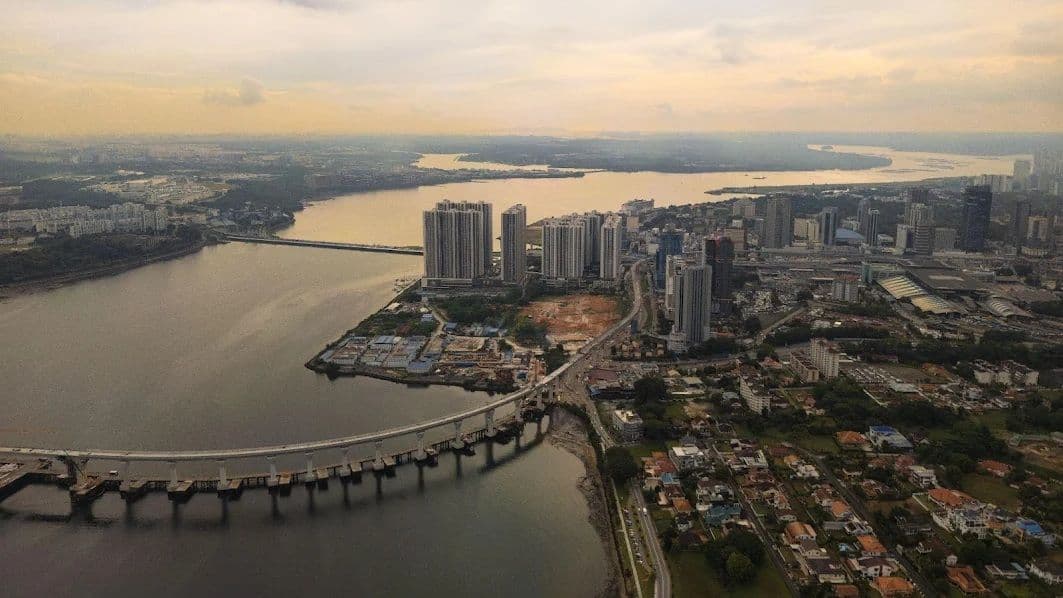
Singapore has not become “less investable.” It has become more intentionally selective.
For a foreign buyer, the headline is blunt: 60% Additional Buyer’s Stamp Duty on any residential purchase. That changes behavior. It pushes many buyers to either rent in Singapore or look next door.
Johor Bahru is the obvious pressure valve. It is cheaper, it is physically close, and by the end of 2026 it is expected to get a new commuting engine that makes the Singapore wage, Malaysia cost of living equation far more practical.
That engine is the Johor Bahru Singapore RTS Link.
This is not a hype story about one station. It is a structural story about how policy and infrastructure can reprice time, convenience, and rental demand.
If you want the clean investment thesis, it is the overlap of these three forces.
Singapore’s ABSD schedule sets the foreign buyer rate at 60% for foreigners buying any residential property.
That is a deliberate demand filter. It reduces speculative inflows and pushes marginal foreign demand into:
Commercial real estate exposure instead of residential
Nearby markets that can capture Singapore linked income and lifestyle demand
The RTS Link is designed to remove the biggest friction in the Singapore Johor relationship, daily travel uncertainty.
Key operational facts that matter for underwriting:
It is targeted to commence passenger service by December 2026, and the official project pages describe it as service at the end of 2026
Peak capacity is up to 10,000 commuters per hour per direction
Travel time between stations is described as about five minutes
There will be co located Customs, Immigration, and Quarantine facilities, so commuters clear immigration at the point of departure
Investor translation:
You are not buying “JB.” You are buying commute reliability
Stations and practical last mile access matter more than city level narratives
RTS is not the only demand driver being built.
Singapore and Malaysia signed an agreement to develop a Johor Singapore Special Economic Zone in January 2025, and public agencies describe it as a cross border platform designed to make it easier for businesses to invest, operate, and grow across both countries.
Key public facts that matter:
Enterprise Singapore describes the JS SEZ as spanning over 3,500 km², more than four times the size of Singapore, and covering multiple flagship zones across Johor, with investments across multiple sectors
Reuters reported the goal to attract 50 projects and create 20,000 skilled jobs within five years
Investor translation:
Analyze your Johor RTS investment with GRAI: https://internationalreal.estate/chat
Johor has shown price momentum, and the RTS corridor has clearly attracted attention.
Signals worth anchoring:
Business reporting cited Johor recording a 5.7% year over year increase in its House Price Index in the first half of 2025
That same reporting described prime sites and projects near RTS catchments seeing sharp repricing, but also warned the surge is uneven
Now the part most hype threads skip, overhang and product mismatch.
NAPIC’s property market status reporting for the first half of 2025 shows:
26,911 residential unsold completed units nationwide
Johor recorded 3,209 residential unsold completed units
By type, condominium and apartment units were the largest share nationally at 57.9% of residential unsold completed stock
Investor translation:
The biggest risk is not “Johor.” The biggest risk is owning the wrong high rise product in an oversupplied pocket
RTS upside can be real, but it does not automatically fix weak unit economics or weak tenant demand
The RTS driven opportunity generally shows up in four “investable” patterns.
This is the cleanest thesis for many investors.
What usually wins:
genuinely fast access to Bukit Chagar, plus easy last mile options
layouts that suit professionals, not just investor studio boxes
durable finishes and low maintenance design, because turnover is part of the model
This depends on schools, safety perception, and day to day convenience, not just commuting.
What usually wins:
larger units, better ventilation, practical storage
access to services, healthcare, and a stable community feel
In overheated corridors, exit liquidity matters more than the initial story.
What usually wins:
assets that are still desirable to Malaysian owner occupiers
pricing that is not “priced only for Singaporeans”
Not every investor should do commercial, but where infrastructure concentrates movement, certain street level assets can reprice.
What usually wins:
proven foot traffic, not projected foot traffic
tenant mix that survives beyond a single project launch cycle
Stress-test your Johor RTS investment with GRAI: https://internationalreal.estate/chat
Use this as a practical filter before you fall in love with a brochure.
actual door to station time, not just map distance
last mile options, walkability, safe routes, ride share availability
proximity to daily life needs, groceries, clinics, gyms, coworking
compare your unit type to what is overbuilt locally
watch for corridors dominated by investor high rises with thin owner occupier demand
do not assume RTS fixes vacancy if the building is not tenant friendly
underwrite conservative rents, then stress test vacancy
model a scenario where rents are flat for 12 to 24 months, and see if the deal still holds
confirm foreign ownership eligibility, any minimum price thresholds, and any state level requirements
price in holding costs, taxes, and realistic resale constraints
RTS is targeted for end 2026, but infrastructure timelines can slip
your deal should work even if the “full repricing” takes longer than expected
The mistake most investors make is buying “Johor Bahru” as a concept.
The better approach is buying a narrow, defensible thesis:
commute reliability
tenant demand depth
product scarcity in your micro pocket
resale optionality that does not rely on the next wave of hype
This is exactly where GRAI, the world’s smartest real estate AI advisor is useful, because it forces you to underwrite the asset, the location, and the scenario risks together, instead of mixing headlines with hope.
Use these GRAI prompts before you commit:
“Build me a 2026 to 2030 thesis for Johor Bahru near Bukit Chagar, include RTS timeline sensitivity, rental demand drivers, supply risk, and a conservative downside case.”
“Compare three JB neighborhoods for an RTS commuter rental strategy, rank them by true commute time, tenant depth, oversupply risk, and resale liquidity.”
“Underwrite this exact property, include conservative rent, 1 to 2 months vacancy, and realistic fees, then tell me the break even rent and the return range.”
“Design a tenant proof interior plan for this unit, prioritize durability, heat and humidity comfort, storage, and broad appeal, then give me a renovation checklist I can execute fast.”
Singapore’s 60% foreign buyer tax is not just a policy headline. It is a demand redirector.
With the RTS Link targeted to commence passenger service by December 2026, Johor Bahru has a credible chance to reprice around time and convenience, not just distance.
The opportunity is real, but it is not “buy anything in JB.” It is “buy the right address and the right product,” with a conservative model that still works if the hype arrives late, or only partially.
Model Johor RTS downside scenarios with GRAI: https://internationalreal.estate/chat
Q1. Does Singapore’s 60% ABSD make property investment unattractive for foreigners?
No. Singapore has not become less investable - it has become more selective. The 60% Additional Buyer’s Stamp Duty (ABSD) deliberately discourages foreign residential purchases, redirecting demand toward rentals, commercial assets, or nearby markets like Johor Bahru that can capture Singapore-linked income.
Q2. Why is Johor Bahru benefiting from Singapore’s foreign buyer tax?
Johor Bahru acts as a pressure valve. It offers significantly lower property prices while remaining geographically close to Singapore. With the upcoming RTS Link, the Singapore wage–Malaysia cost-of-living equation becomes more practical, increasing rental and owner-occupier demand tied to cross-border work.
Q3. What is the Johor Bahru - Singapore RTS Link and why does it matter?
The RTS Link is a cross-border rail system targeted to commence passenger service by December 2026. It aims to provide reliable, high-capacity commuting with travel times of about five minutes between stations and co-located immigration clearance. For investors, it reprices commute reliability, not just distance.
Q4. Will the RTS Link automatically increase property prices across Johor Bahru?
No. RTS benefits are uneven. Properties with genuine station access, strong last-mile connectivity, and tenant-friendly layouts stand to benefit most. Oversupplied high-rise investor products in weak micro-locations may not see sustained upside, even after RTS begins operations.
Q5. How does the Johor - Singapore Special Economic Zone (JS-SEZ) affect property demand?
The JS-SEZ, formalised in 2025, is designed to attract business investment and skilled jobs across Johor. Public targets include 50 projects and 20,000 skilled jobs within five years. This supports rental demand and higher-quality housing, but it does not lift every submarket equally.
Q6. Is oversupply a real risk in Johor’s residential market?
Yes. NAPIC data shows Johor recorded over 3,200 unsold completed residential units in the first half of 2025, with condominiums and apartments forming the largest share. The key risk is not Johor itself, but owning the wrong unit type in an oversupplied pocket.
Q7. What types of RTS-driven property strategies make the most sense?
Four strategies tend to work best:
Commuter rentals with fast, reliable RTS access
Family rentals for Singapore-linked households prioritising space and services
Resale-friendly assets appealing to local owner-occupiers
Selective commercial or mixed-use units with proven foot traffic
Each depends on micro-location quality and real tenant demand.
Q8. What should investors check before buying near the RTS corridor?
Key checks include:
True door-to-station travel time and last-mile access
Local supply dynamics for the same unit type
Conservative rental assumptions and vacancy stress tests
Foreign ownership rules, taxes, and resale constraints
Deal viability even if RTS benefits materialise slower than expected
Q9. Is the RTS Link timeline guaranteed?
No infrastructure timeline is risk-free. While the RTS Link is officially targeted for end-2026 passenger service, investors should model scenarios where full repricing takes longer. A sound investment should still hold under conservative timing assumptions.
Q10. How does GRAI help investors evaluate Johor Bahru opportunities?
GRAI helps investors move beyond headlines by underwriting the asset, location, and risk scenarios together. It can model RTS timeline sensitivity, rental demand depth, supply risk, vacancy assumptions, and downside cases - helping investors buy the right address and product, not just the story.


