Ask GRAI Anything
Your Real Estate Questions, Answered Instantly via Chat

Help us make GRAI even better by sharing your feature requests.
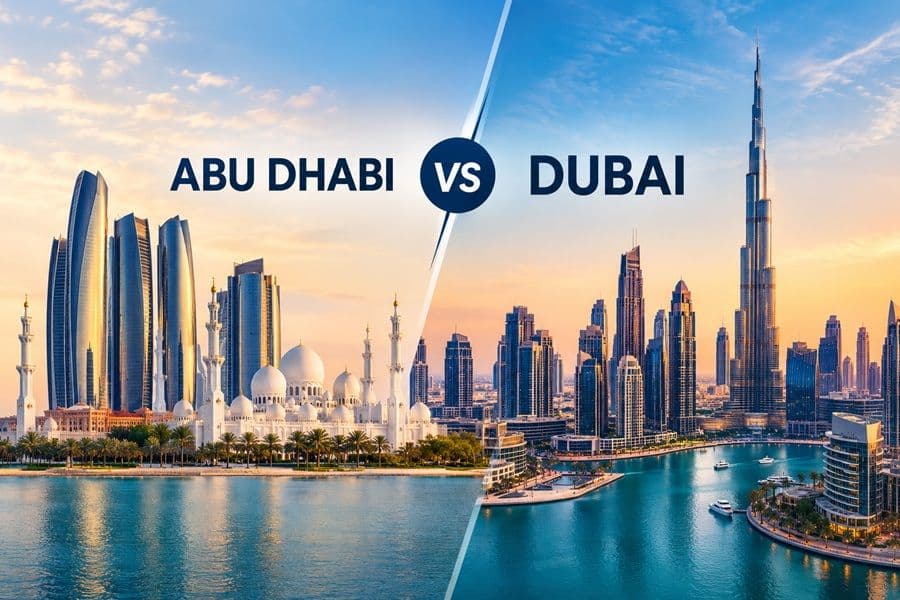
Dubai has dominated the UAE's international property-investment story for years. But as the market enters the 2025-2030 investment cycle, Abu Dhabi is becoming increasingly difficult for investors to ignore.
Both cities offer tax-efficient property ownership, strong infrastructure, international connectivity and growing populations. Yet their investment profiles are different.
Dubai offers deeper liquidity, a larger tourism economy and a more mature international property market. Abu Dhabi offers comparatively lower entry prices in many segments, strong rental growth and rapidly increasing foreign-investment activity.
For investors entering in 2026-27, the more useful question is not simply "Dubai or Abu Dhabi?"
It is:
Which market offers the better risk-adjusted return for your investment strategy through 2030?
This guide compares the two markets across price appreciation, rental demand, Airbnb potential, entry costs, supply, liquidity and investment risk.
| Investment Factor | Abu Dhabi | Dubai | Advantage |
|---|---|---|---|
| Recent price momentum | Very strong | Strong | Abu Dhabi |
| Historical appreciation | Strong | Exceptional | Dubai |
| Entry affordability | Generally lower | Higher | Abu Dhabi |
| Long-term rental demand | Strong | Very strong | Dubai |
| Short-term rental potential | Growing | Exceptional | Dubai |
| Market liquidity | Improving | Very high | Dubai |
| Future supply pressure | Moderate | Higher | Abu Dhabi |
| Tourism demand | Strong and expanding | Global leader | Dubai |
| Villa investment | Attractive | Attractive but expensive | Abu Dhabi |
| Market maturity | Developing rapidly | Highly mature | Dubai |
| 2025-2030 opportunity | Very strong | Strong, but selective | Abu Dhabi |
| Overall investment profile | 8.6/10 | 8.8/10 | Dubai |
The small difference in the overall score is intentional. Dubai remains the stronger all-round market, but Abu Dhabi may offer a more attractive marginal opportunity for investors entering during 2026-27.
The next five years could look very different from the previous Dubai-led property cycle.
Dubai enters the 2025-2030 period after almost five consecutive years of substantial residential price growth, making the UAE an important market to watch within the broader international real estate market.
The key question is whether either market can sustain its recent momentum while absorbing new housing supply.
Dubai's residential market delivered exceptional growth between 2021 and 2025.
By Q2 2025, average residential values had reached approximately AED 1,809 per sq ft, 21.6% above Dubai's previous 2014 peak.
The market then recorded another record year in 2025:
Residential sales reached approximately AED 544.2 billion
Residential transactions reached approximately 205,400
Residential transaction value increased approximately 25% year-on-year
Transaction volume increased approximately 18%
Prime residential values exceeded approximately AED 4,300 per sq ft by Q4 2025
The important point for a 2026-27 buyer is that past appreciation should not simply be extrapolated to 2030.
Dubai now faces a much larger future supply pipeline.
Knight Frank estimates that registered projects could potentially result in approximately 331,000 additional homes being completed between 2026 and 2030, although actual deliveries may be considerably lower.
That creates a more selective market.
Properties in established communities with strong infrastructure, limited competing supply, high-quality developers and persistent end-user demand may outperform developments where large amounts of comparable inventory are scheduled for delivery.
Abu Dhabi's recent trajectory is particularly interesting.
In 2025, Abu Dhabi recorded approximately AED 142 billion in total real estate transactions, while residential sales increased significantly.
Momentum accelerated during H1 2026.
Key indicators included:
Residential unit sales of approximately AED 70.4 billion
Apartment prices up approximately 20% year-on-year
Villa prices up approximately 12%
New apartment rents up approximately 17%
New villa rents up approximately 9%
Approximately 409,000 residential units in existing supply
Abu Dhabi is also expected to add approximately 71,000 residential units by 2030, with supply expected to peak around 2028.
This is an important distinction from Dubai.
Abu Dhabi is growing rapidly, but its projected additional supply is comparatively smaller. If population growth, employment creation, tourism and foreign investment continue to expand, demand could absorb a meaningful portion of this inventory.
| Metric | Dubai | Abu Dhabi |
|---|---|---|
| 2025 market position | Record market | Strong acceleration |
| 2026 price momentum | Moderating | Very strong |
| Historical 2021-25 performance | Exceptional | Strong |
| Future residential supply | ~331K potential completions* | ~71K additional units |
| Supply pressure | Higher | Moderate |
| Rental momentum | Strong | Very strong |
| Foreign-investment momentum | Strong | Rapidly accelerating |
| 2025-2030 outlook | Selective growth | Strong growth potential |
*Dubai's 331,000 figure is a potential delivery scenario based on registered projects, not a guaranteed number of completed homes.
There is no defensible basis for saying that either city will appreciate by a specific fixed percentage between 2025 and 2030.
Instead, the evidence points to two different investment propositions.
Dubai: stronger historical performance, deeper liquidity and global demand, but greater supply risk.
Abu Dhabi: stronger recent momentum, lower entry pricing in many segments and a comparatively smaller supply pipeline.
For investors focused specifically on 2025-2030 capital appreciation potential, Abu Dhabi gets a slight edge.
For investors prioritising liquidity and proven international demand, Dubai remains ahead.

Entry price can materially affect investment returns.
A lower purchase price means:
Less initial capital
Potentially better gross rental yields
Greater flexibility to diversify
Lower absolute financing requirements
More room to absorb transaction and operating costs
Knight Frank's 2025 data placed average Abu Dhabi residential pricing materially below Dubai.
For villas, the difference was particularly notable, with Abu Dhabi offering substantially lower average prices per sq ft than comparable Dubai stock.
However, investors should avoid comparing citywide averages alone.
A AED 2 million apartment in a high-demand Abu Dhabi community may be a better investment than a AED 2 million apartment in a lower-demand Dubai development, even if Dubai has stronger citywide liquidity.
This is where property-level analysis becomes more important than city-level rankings.
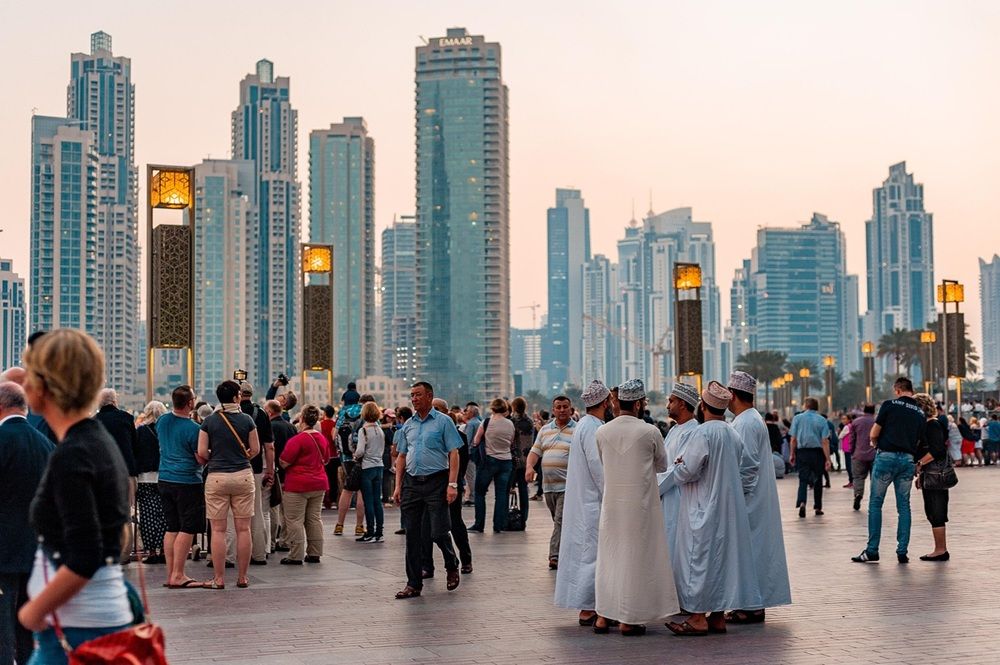
Dubai is generally more expensive than Abu Dhabi, particularly for central housing.
Indicative 2026 rental comparisons show that a one-bedroom apartment in Dubai's city centre costs substantially more than a comparable apartment in Abu Dhabi.
For landlords, however, higher rents are not necessarily a disadvantage.
Dubai's large expatriate population, tourism economy, corporate sector and international workforce create a broad tenant pool.
Dubai Land Department reported approximately 1.38 million registered tenancy contracts worth AED 126.4 billion in 2025.
Abu Dhabi's rental market is also strengthening.
In 2025, residential lease values increased, while new apartment leases showed particularly strong growth in investment zones.
By H1 2026, Abu Dhabi's residential rental market continued to show strong momentum.
Dubai wins on tenant depth and liquidity.
Abu Dhabi competes strongly on value and rental-growth potential.
For investors planning to hold property until 2030, the important calculation is not simply annual rent.
Calculate:
Net Rental Yield = (Annual Rent − Operating Costs − Vacancy − Management − Service Charges) ÷ Total Acquisition Cost
That figure provides a much more useful comparison.
Short-term rentals fundamentally change the economics of a property.
Dubai has a major advantage because of its enormous tourism ecosystem.
The city attracted approximately 19.59 million international overnight visitors in 2025, while hotel occupancy reached approximately 80.7%.
That creates demand for:
Holiday apartments
Serviced residences
Business accommodation
Event-driven stays
Luxury short-term rentals
Dubai therefore remains the stronger choice for investors specifically targeting holiday-home income.
Abu Dhabi is also developing a stronger tourism and events economy.
The emirate welcomed approximately 26.6 million visitors in 2025, although this broader visitor measure is not directly comparable with Dubai's international overnight visitor figure.
Holiday homes and glamping properties recorded approximately 338,000 guests in 2025, while hotel occupancy reached approximately 81%.
The emirate also operates a formal holiday-home permitting framework.
Dubai: 10/10
Abu Dhabi: 7/10
Dubai's tourism scale, global events calendar and established holiday-home ecosystem give it a substantial advantage.
However, short-term rental profitability should always be calculated after:
Platform fees
Management fees
Cleaning
Furnishing
Utilities
Maintenance
Vacancy
Licensing
Building restrictions
A property with a 9% gross short-term rental yield can produce a substantially lower net return.
Average gross yields in Dubai and Abu Dhabi can appear relatively close, with market estimates around the mid-single digits.
But citywide yield averages can be misleading.
Two apartments in the same city can have dramatically different yields because of:
Purchase price
Building quality
Service charges
Location
Unit size
Furnishing
Tenant profile
Vacancy
Rental demand
Future competing supply
For a 2026-27 investment decision, calculate at least three scenarios:
Use GRAI to model Dubai and Abu Dhabi net rental yields under different vacancy and cost scenarios: https://internationalreal.estate/chat
Lower rent + higher vacancy + normal maintenance.
Expected rent + realistic occupancy + normal operating costs.
Higher rent + strong occupancy + moderate appreciation.
This is more useful than relying on a developer's advertised ROI.
Also Read: Best Abu Dhabi Neighbourhoods for Rental Yield
Strong international tenant and tourism demand, but investors should carefully assess service charges and building-specific competition.
Strong global recognition, tourism demand and resale liquidity.
Strong rental demand and proximity to Downtown, but substantial future supply requires property-level selection.
Strong lifestyle positioning, infrastructure and family demand.
Interesting long-term development potential, although investors should monitor delivery schedules and competing supply.
Premium positioning, global demand and limited prime waterfront land.
Related: Dubai Property Market 2026 slowdown investor Guide
One of Abu Dhabi's strongest lifestyle and tourism-oriented investment locations, benefiting from attractions, entertainment infrastructure and growing residential demand.
Premium cultural and luxury residential market with strong demand for high-quality apartments and villas.
Established apartment market with strong rental demand and proximity to Abu Dhabi's central business districts.
One of the most important areas to watch for long-term development and premium residential growth.
Attractive for investors seeking villa exposure and a lower-density luxury environment.
Related: Abu Dhabi Real Estate Investment Guide
Supply is arguably the most important variable investors should monitor over the next five years.
Dubai's potential pipeline of approximately 331,000 homes through 2030 means investors need to ask:
How many competing properties will enter my specific neighbourhood before I plan to sell?
Abu Dhabi's approximately 71,000 additional residential units through 2030 represents a much smaller pipeline relative to Dubai.
However, supply alone does not determine prices.
What matters is:
New Supply ÷ New Demand
If demand grows faster than supply, prices and rents can continue rising.
If supply grows faster than demand, landlords may face:
Higher vacancy
Rental incentives
Longer marketing periods
Slower capital appreciation
Greater competition during resale
This is why investors should examine the 2025-2030 development pipeline before buying, rather than relying solely on historical price charts.
| Category | Abu Dhabi | Dubai |
|---|---|---|
| Capital appreciation potential | 9/10 | 8/10 |
| Rental income | 9/10 | 9/10 |
| Airbnb potential | 7/10 | 10/10 |
| Entry affordability | 9/10 | 7/10 |
| Liquidity | 8/10 | 10/10 |
| Tourism demand | 8/10 | 10/10 |
| Long-term stability | 9/10 | 9/10 |
| Villa investment | 9/10 | 8/10 |
| Market maturity | 8/10 | 10/10 |
| Supply outlook | 9/10 | 7/10 |
| Overall | 8.6/10 | 8.8/10 |
Choose Dubai if you want:
Maximum liquidity
Tourism exposure
Airbnb potential
International tenants
Luxury property exposure
Easier resale
A mature investment ecosystem
Choose Abu Dhabi if you want:
Lower entry pricing
Strong rental growth
Potential capital appreciation through 2030
Villa opportunities
Family-oriented demand
Exposure to a rapidly developing market
Potentially lower future supply pressure
City-level comparisons are useful for narrowing your options, but serious investors should go one level deeper. Combining property-level analysis with global real estate insights can help investors distinguish between headline market growth and the actual return potential of an individual property.
A property that looks attractive in Dubai could have:
Excessive service charges
Weak net yield
Large competing supply
Poor resale liquidity
High vacancy risk
Likewise, an apparently expensive Abu Dhabi property could generate better risk-adjusted returns because of stronger rental demand and constrained competing supply.
This is where GRAI's AI-powered real estate analysis can turn a city comparison into a property-level investment decision.
Instead of comparing Dubai and Abu Dhabi only at the city level, investors can use GRAI to create an AI real estate deal report for a specific property. The analysis can combine financial assumptions, rental potential, market conditions, supply risk and exit scenarios into a structured investment assessment.
"Compare these Dubai and Abu Dhabi properties by price, net yield, rental demand, appreciation potential, supply risk and resale liquidity. Which offers the better risk-adjusted return through 2030?"
"Create conservative, base-case and upside value scenarios for this property through 2030, considering rental growth, future supply, location demand and market risk."
"Compare long-term and short-term rental returns for this property, including occupancy, expenses, management fees and net income. Which strategy is more profitable and reliable?"
"Analyze this property and recommend BUY, NEGOTIATE or PASS. Consider price, net yield, supply, risks, liquidity and expected returns through 2030."
Ask GRAI to compare a specific Dubai and Abu Dhabi property on price, yield, supply risk and exit value: https://internationalreal.estate/chat
Before choosing between Abu Dhabi and Dubai, build a property-level investment scorecard.
| Metric | Why It Matters |
|---|---|
| Purchase price | Determines initial capital |
| Price per sq ft | Helps compare similar assets |
| Expected annual rent | Determines income potential |
| Gross yield | First-level income comparison |
| Net yield | More realistic return measure |
| Service charges | Can materially reduce returns |
| Vacancy | Directly affects cash flow |
| Future supply | Determines competitive pressure |
| Rental growth | Supports future income |
| Capital appreciation | Drives total return |
| Developer reputation | Affects construction and resale risk |
| Building quality | Influences tenant demand |
| Location | Determines liquidity |
| Exit demand | Critical for 2029-30 sale |
| Financing cost | Changes leveraged returns |
The winning property is rarely the one with the highest advertised ROI.
It is the one that produces the best risk-adjusted return after realistic costs and future market conditions.
Not for every investor. Dubai remains stronger for liquidity, tourism and short-term rentals. Abu Dhabi currently offers strong price and rental momentum and may provide better value in selected communities.
Abu Dhabi currently has a slight advantage in forward-looking potential because of its strong recent momentum and comparatively smaller projected supply pipeline. However, there is no reliable basis for guaranteeing a specific percentage return through 2030.
Yes, but investors should be more selective. Dubai's market has already experienced significant appreciation, while future supply could moderate broad-based price growth.
Generally, yes. Abu Dhabi has lower average residential pricing in many segments, although premium areas such as Saadiyat Island can command very high prices.
Dubai. Its larger tourism market, international visitor base and established holiday-home ecosystem give it a significant advantage.
Both can work well. Dubai has deeper tenant demand and liquidity, while Abu Dhabi can offer attractive rental growth and value in selected investment zones.
Selected properties could be. Strong rental growth, foreign investment and development in areas such as Yas Island, Saadiyat Island and Hudayriyat Island make Abu Dhabi one of the UAE markets worth watching through 2030.
Apartments generally offer a lower entry price and broader tenant pools. Villas can provide stronger family-rental demand and potentially greater scarcity value, but they require a larger initial investment.
Dubai has the stronger historical record. Abu Dhabi currently has stronger recent momentum. For 2026-30 investors, the individual property and community matter more than the city average.
Future supply. A substantial development pipeline could create competition between new and existing properties, particularly in areas with large numbers of similar units.
Rapid price growth can create the risk of buying after a strong appreciation phase. Investors should also monitor future supply, project delivery and whether rental growth can keep pace with property prices.
Yes. The most useful approach is to provide GRAI with the actual property details and ask it to compare acquisition cost, rental income, operating expenses, future supply, appreciation scenarios, risk and exit value rather than relying only on citywide averages.
Dubai remains the stronger all-round UAE property market. Abu Dhabi may offer the more compelling opportunity for investors looking toward 2030.
Dubai has the advantages of scale, liquidity, tourism and global recognition. Abu Dhabi is developing rapidly, with strong residential demand, rising rents, increasing foreign investment and a comparatively more measured supply pipeline.
For Airbnb and short-term rental income → Dubai.
For long-term rental growth → Both, depending on the property.
For liquidity and resale → Dubai.
For lower entry cost → Abu Dhabi.
For potential 2025-2030 capital appreciation → Abu Dhabi gets a slight edge.
But the smartest strategy is not to buy simply because a city ranks higher.


