Ask GRAI Anything
Your Real Estate Questions, Answered Instantly via Chat

Help us make GRAI even better by sharing your feature requests.

Grenada and Vanuatu citizenship by investment programs are often considered by internationally mobile investors seeking a second citizenship, greater travel flexibility, family mobility, or diversification outside their country of residence.
But the two programs are not equivalent.
Grenada offers a Caribbean citizenship-by-investment framework with a National Transformation Fund contribution and a government-approved real estate route. Vanuatu, in the South Pacific, has several investor citizenship categories, including the Development Support Program and a Real Estate Option Program.
For investors, the important question is therefore not simply “Which passport is cheaper?” It is:
Which citizenship, investment structure, real-estate exposure and geopolitical risk profile best match the investor's long-term objectives?
This comparison examines the programs using publicly available government information and current geopolitical developments as of September 2026.
| Factor | Grenada | Vanuatu |
|---|---|---|
| Region | Caribbean | South Pacific |
| Citizenship by investment | Yes | Yes |
| Government contribution route | National Transformation Fund (NTF) | Development Support Program / other statutory programs |
| Real-estate route | Yes | Yes, through the Real Estate Option Program |
| Minimum contribution cited by government | US$235,000 | US$130,000 for a single applicant under the government's published fee schedule |
| Real-estate investment | Minimum US$270,000 in an approved project | Government-approved project required under REO |
| Additional government payment on Grenada real-estate route | US$50,000 government contribution | Prescribed fees apply |
| Residence requirement for CBI | No visit required before, during or after application | Investor programs are designed as citizenship routes without ordinary residence-based naturalisation requirements |
| Due diligence | Yes; online interview forms part of the process | Government/FIU due diligence applies |
| EU visa-free access | Yes, subject to applicable Schengen rules | No; EU visa exemption was revoked |
| Dual citizenship | Permitted by Grenada | Vanuatu's legal framework recognizes dual citizenship in relevant circumstances |
| Real-estate relevance | Strong | Relevant, but program-specific |
| Key current risk | Changes to investment-migration rules and global mobility policy | Loss of EU visa exemption and ongoing international scrutiny of investor citizenship |
| Geographic risk profile | Caribbean | South Pacific |
Investment amounts and program rules can change. Applicants should verify the current government requirements and fees before making an investment decision.
Grenada operates a government-regulated Citizenship by Investment Programme.
The Investment Migration Agency Grenada identifies several investment options, including a contribution to the National Transformation Fund (NTF) and investment in approved real estate. The government states that the minimum NTF investment is US$235,000 for a single applicant and also lists US$235,000 for a family of four.
For the real-estate option, Grenada's official information states that the minimum investment in an approved project is US$270,000, accompanied by a US$50,000 government contribution.
Importantly, the real-estate route is not an open-market property purchase. Grenada states that citizenship-related real-estate investment is permitted only in qualified, government-approved projects.
| Route | Government-published minimum | Structure |
|---|---|---|
| National Transformation Fund | US$235,000 | Direct contribution |
| Approved real estate | US$270,000 | Investment in an approved project |
| Government contribution accompanying real estate route | US$50,000 | Government contribution |
| Application fee | US$1,500 per applicant | Non-refundable |
| Processing fee | US$1,500 for applicants aged 17+ | Non-refundable |
| Due diligence | US$6,000 for applicants aged 17+ | Non-refundable |
Grenada's published information also states that applications must be submitted through an authorized local agent, that applicants do not need to visit Grenada before, during or after the application process, and that an online interview forms part of due diligence.
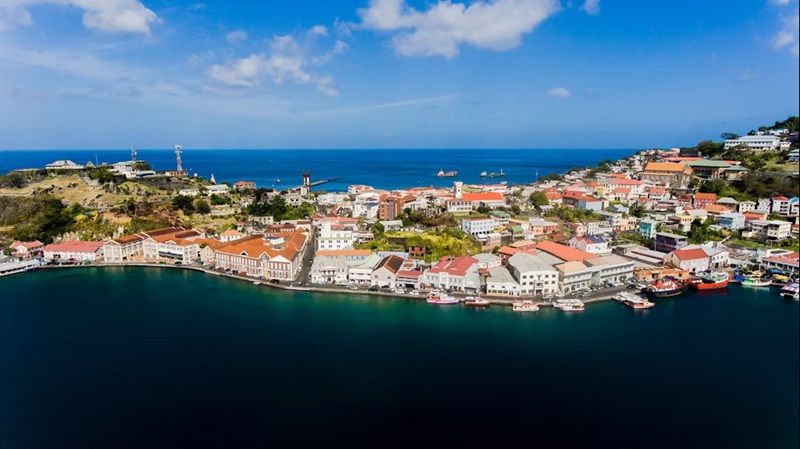
Vanuatu's Citizenship Office provides several statutory investor citizenship pathways, including the Development Support Program (DSP), Vanuatu Contribution Program (VCP), Capital Investment Immigration Plan (CIIP) and Real Estate Option Program (REO).
The government's published fee schedule lists:
| Applicant category | Government-published amount |
|---|---|
| Single applicant | US$130,000 |
| Married couple | US$150,000 |
| Couple + 1 child | US$165,000 |
| Couple + 2 children | US$180,000 |
| Additional applicant | US$10,000 |
| FIU diligence fee | US$5,000 |
The Vanuatu Citizenship Office states that the citizenship fee is payable after approval by the Citizenship Commission.
Vanuatu also has a Real Estate Option Program. The Citizenship Office states that the program commenced on 23 July 2021 and that applicants using the REO route must invest in property in a Vanuatu Government Approved Project in addition to paying the prescribed fees.
That distinction matters for property investors: buying an ordinary property in Vanuatu should not automatically be interpreted as qualifying for citizenship.

For investors who are interested in both citizenship and property, the structure of the real-estate route is particularly important.
Grenada's program is closely linked to government-approved developments. The official list can change as projects are approved or decertified.
This means investors should evaluate more than the citizenship eligibility of a project.
They should also examine:
Purchase price
Developer track record
Construction status
Location
Tourism demand
Rental economics
Exit restrictions
Resale market
Holding period
Ownership structure
Project-level fees
Independent property valuation
Vanuatu's REO program similarly requires investment in a government-approved project.
The investor should therefore distinguish between: citizenship eligibility and investment quality.
A property can qualify under an immigration program without necessarily being the strongest real-estate investment on a risk-adjusted basis.
This is one of the biggest differences between the two programs.
Grenada retains significant international travel access, including visa-free travel arrangements with the Schengen Area. Grenadian citizens also benefit from travel arrangements with a number of other countries, although visa rules can change and should always be checked before travel.
Vanuatu faces a materially different situation.
The European Union ended Vanuatu's visa exemption after concluding that the country's investor citizenship schemes created security and migration risks. The Council of the EU formally adopted the decision in December 2024 after the exemption had already been suspended.
That means investors should not evaluate Vanuatu citizenship on the assumption that it provides visa-free access to the EU.
| Mobility consideration | Grenada | Vanuatu |
|---|---|---|
| Schengen visa-free travel | Yes, subject to current rules | No |
| EU visa exemption | Maintained | Revoked |
| International mobility value | Relatively strong | More limited than historically advertised |
| Policy sensitivity | Moderate | High |
| Need to verify destination rules | Yes | Yes |
For investors whose primary objective is international travel flexibility, this distinction can be more important than the headline investment amount.
The Vanuatu example illustrates a broader principle in citizenship-by-investment investing:
A passport's value is partly determined by how other governments treat it.
A citizenship program can remain legally operational while its practical mobility benefits change.
The EU's decision is particularly important because it demonstrates that destination countries can change visa policies in response to concerns about investor citizenship programs. The European Commission previously cited concerns including limited physical-presence requirements, screening processes and the potential security and migration risks associated with the programs.
For investors, this creates an important risk category:
This should be assessed alongside:
Investment risk
Property risk
Currency risk
Political risk
Tax risk
Regulatory risk
Travel-access risk
Climate risk
Exit/liquidity risk
This is why citizenship should not be evaluated purely by the lowest advertised investment amount.
This is where investors need to separate forecasting from speculation.
There is currently no credible basis to state that Grenada or Vanuatu is going to enter a war.
However, the global geopolitical environment is more uncertain than it was a decade ago.
The Council on Foreign Relations' 2026 conflict assessment identifies elevated risks around several major geopolitical flashpoints, including the Russia-Ukraine war, Middle East conflicts and tensions involving China and Taiwan. CFR describes the global environment as increasingly violent and disorderly and notes that the number of armed conflicts is at its highest level since the end of World War II.
The relevant question for Grenada and Vanuatu investors is therefore not:
“Will Grenada or Vanuatu go to war?”
It is:
“How could a wider international conflict affect these countries and the assets located there?”
| Risk | Possible effect on Grenada | Possible effect on Vanuatu |
|---|---|---|
| Global Recession) | Lower tourism and property demand | Lower tourism and property demand |
| Energy-price shock | Higher transport and operating costs | Higher transport and operating costs |
| Shipping disruption | Higher imported-goods costs | Potentially significant due to island logistics |
| Airline disruption | Lower international tourism | Lower international tourism |
| Currency/financial volatility | Investment sentiment could weaken | Investment sentiment could weaken |
| Geopolitical realignment | Changes in travel and investment policies | Potentially greater Pacific strategic sensitivity |
| Property liquidity | Resales may take longer | Smaller market may amplify liquidity risk |
| Passport policy changes | Possible | Already demonstrated as a material risk |
These are risk scenarios, not predictions.
A responsible investment article should not claim that a world war is inevitable or assign a false probability to it.
Current conflict-risk assessments point instead to a world in which regional conflicts, geopolitical competition, sanctions, trade disruption and supply-chain shocks remain important risks.
CFR's 2026 assessment highlights continued concerns involving Ukraine, the Middle East and potential China-Taiwan tensions.
For Grenada and Vanuatu investors, the practical takeaway is therefore:
The more realistic investment risk is not a predicted war in either country, but the economic and policy spillovers from conflicts elsewhere.
For example, a conflict that disrupts global shipping or energy markets could affect construction costs, tourism, imported goods, financing conditions and property demand even if Grenada or Vanuatu remains physically outside the conflict.
The answer depends on the investor's objective.
Caribbean exposure
Government-approved real estate
A citizenship route with a contribution alternative
International mobility
Family citizenship planning
Exposure to a tourism-oriented Caribbean economy
South Pacific exposure
Diversification into a different geographic region
An investor citizenship route with lower headline government-published entry amounts
Vanuatu-approved real-estate opportunities
Long-term geographic diversification
But Vanuatu's loss of EU visa-free access is a major consideration for investors who originally viewed the passport primarily as a European travel-access solution.
Use GRAI to compare Grenada and Vanuatu citizenship-linked properties on rental income, liquidity, and mobility risk: https://internationalreal.estate/chat
This distinction is critical.
An investor may receive citizenship after making a qualifying investment, but that does not mean the underlying property will automatically produce attractive returns.
A proper property analysis should consider:
Purchase price
Operating income
Expenses
Financing
Taxes
Vacancy
Capital expenditure
Exit value
Liquidity
Downside scenarios
For example, a resort unit with an attractive citizenship eligibility threshold may still have:
Low rental occupancy
High management costs
Limited resale demand
Construction delays
Developer concentration risk
High service charges
Currency exposure
Hurricane, cyclone or climate exposure
Citizenship can therefore be one component of the investment decision - not the entire investment thesis.
Citizenship by investment should not be evaluated separately from the underlying property. Investors need to understand whether a qualifying real estate opportunity makes financial sense, how local market conditions could affect returns, and what risks could influence the investment over time.
GRAI, the AI real estate intelligence platform, can help investors evaluate Grenada and Vanuatu properties by bringing property, market, financial, environmental, and geopolitical considerations into a single analysis.
For citizenship-by-investment properties, GRAI can also help investors separate the value of the citizenship pathway from the value of the real estate itself. A property may qualify for an immigration program, but that does not automatically make it a strong investment.
“Analyze this Grenada/Vanuatu property as an investment. Estimate its potential rental income, operating costs, cash flow, valuation range, major risks and potential return scenarios. Clearly identify which assumptions require verification.”
“Compare this Grenada property with this Vanuatu property for a citizenship-by-investment investor. Evaluate the real estate fundamentals, investment costs, rental potential, liquidity, risks, international mobility considerations and long-term investment suitability. Give me a side-by-side comparison and identify which option is stronger for my stated objectives.”
“Stress-test this Grenada/Vanuatu real estate investment against major downside scenarios, including global recession, tourism decline, higher construction costs, travel restrictions, geopolitical conflict and climate-related disruption. Show how each scenario could affect rental income, property value, cash flow and exit liquidity.”
The key advantage is not simply getting an AI-generated property opinion. It is being able to interrogate the investment from multiple angles before committing capital. For agents, this analysis can also feed into a GRAI Branded Real Estate Deal Report, giving investors a client-ready view of the property's economics, assumptions, scenarios, risk flags and supporting sources.
Ask GRAI to stress-test your Grenada or Vanuatu CBI property against war, tourism shocks, and policy changes: https://internationalreal.estate/chat
Real estate and investment-migration agents increasingly need to provide investors with more than a property brochure.
A Branded Real Estate Deal Report can help agents turn property information into an investor-oriented analysis covering factors such as rental income, cash flow, DSCR, risk flags, assumptions, cited sources and scenario analysis.
For a Grenada or Vanuatu investor, an agent could use a branded deal report to present the property economics separately from the citizenship case - helping the investor understand whether the underlying real estate makes sense even after considering the immigration objective.
This creates a more transparent conversation:
Citizenship benefit + property fundamentals + downside risk + investor assumptions = better-informed decision.
Before choosing between Grenada and Vanuatu, investors should score both the citizenship program and the underlying investment.
| Due-diligence category | Questions to ask |
|---|---|
| Citizenship | What is the current legal route? |
| Government fees | What is the total government-mandated cost? |
| Due diligence | What checks and interviews are required? |
| Family | Which dependants qualify? |
| Mobility | Which destinations currently permit visa-free entry? |
| Real estate | Is the property officially approved for the program? |
| Developer | Who owns and develops the project? |
| Rental income | What is the evidence for expected rental performance? |
| Financing | What financing assumptions are being used? |
| Exit Liquidity | When and how can the property be sold? |
| Taxes | What taxes apply to acquisition, ownership and sale? |
| Climate | What weather and climate risks affect the location? |
| Geopolitics | Could international conflicts affect travel, trade or investment? |
| Currency | What currency is used for purchase and operating income? |
| Liquidity | How deep is the resale market? |
There is no universal winner.
Grenada currently has the stronger case for investors who place substantial weight on international mobility and Caribbean real-estate exposure. Its government-approved real-estate route and NTF contribution option provide different investment structures, while its international travel profile remains an important attraction.
Vanuatu offers a distinctive South Pacific option and a lower headline government-published citizenship fee for a single applicant, but investors need to factor in the loss of EU visa-free access and the resulting mobility risk.
For property investors, the decision should go one step further.
The best question is not:
“Which citizenship is cheaper?”
It is:
“Which combination of citizenship rights, travel access, property fundamentals, geopolitical exposure, climate risk and long-term liquidity best fits my investment objectives?”
That is the level at which citizenship-by-investment becomes a real estate intelligence decision rather than simply a passport comparison.
Evaluate which citizenship, property fundamentals, and geopolitical profile truly fit your objectives using GRAI: https://internationalreal.estate/chat
Yes. Grenada's Citizenship by Investment Programme remains operational, with investment options including the National Transformation Fund and government-approved real estate.
Grenada's official information currently lists a minimum NTF investment of US$235,000. Its approved real-estate route lists a minimum investment of US$270,000, together with a US$50,000 government contribution. Additional application, processing and due-diligence fees apply.
Vanuatu's Citizenship Office publishes a government fee schedule listing US$130,000 for a single applicant, US$150,000 for a married couple, US$165,000 for a couple with one child and US$180,000 for a couple with two children, plus applicable fees.
No. Grenada's real-estate option is restricted to government-approved projects.
Vanuatu has a Real Estate Option Program. The government states that applicants must invest in property in a Vanuatu Government Approved Project and pay the prescribed fees.
No. The EU revoked Vanuatu's visa exemption after citing security and migration concerns associated with its investor citizenship schemes.
No citizenship program can guarantee permanent visa-free access to every destination. Other governments can change their visa policies. Investors should therefore treat travel access as a policy-sensitive benefit, not a permanent entitlement.
There is no credible basis to predict that either country will enter a war. The more relevant investment risk is that a wider international conflict could affect tourism, energy costs, shipping, financial markets, construction costs and travel policies.
Citizenship eligibility should not replace real-estate due diligence. Investors should independently evaluate the property's income potential, costs, developer risk, valuation, liquidity and exit strategy.
Yes. GRAI can compare properties in Grenada and Vanuatu across valuation, rental potential, cash flow, investment costs, market conditions, environmental factors and potential risks. Investors can use the analysis to understand the strengths and weaknesses of each opportunity before making a property or citizenship-by-investment decision
Grenada and Vanuatu citizenship by investment serve different strategic purposes.
Grenada currently presents a stronger proposition for investors who prioritize Caribbean exposure, government-approved real estate and broader international mobility.
Vanuatu can appeal to investors seeking South Pacific diversification, but its citizenship proposition must be evaluated in light of the EU's removal of visa-free access and the broader scrutiny surrounding investor citizenship programs.
And when geopolitical risk is part of the decision, investors should avoid dramatic predictions about an impending world war. A more useful approach is to model how different geopolitical scenarios could affect property values, rental income, tourism, construction costs, liquidity and international mobility.
That is where data-driven real estate intelligence can add more value than a simple citizenship comparison.
For agents, a branded real estate deal report can make that analysis easier to present to investors by combining property economics, scenarios, risk flags, assumptions and cited evidence in a client-ready format.


