Ask GRAI Anything
Your Real Estate Questions, Answered Instantly via Chat

Help us make GRAI even better by sharing your feature requests.

Italy combines a large domestic economy, internationally recognised cities, cultural assets and a diverse property market. For international investors, however, the first question is not simply whether Italy offers attractive real estate. It is whether an investment can also support a long-term relocation or citizenship objective.
Italy does not offer a direct citizenship-by-investment programme. Its Investor Visa provides a residency-related route for eligible non-EU nationals who make qualifying investments. Italian citizenship may become an option later through naturalisation, subject to statutory residence requirements and other conditions. Buying a house or commercial property in Italy does not, by itself, confer citizenship or automatically qualify the purchaser for the Investor Visa. The Italian Ministry of Enterprises and Made in Italy publishes the official programme requirements, while the Ministry of Foreign Affairs explains the citizenship rules.
For prospective buyers, these distinctions matter. An investor seeking a European residence pathway has a different objective from someone buying a rental property, relocating for work or establishing a long-term family home. Each decision requires its own legal, financial and practical assessment.
This guide examines Italy's investment-visa rules, the route to citizenship, real estate opportunities and risks, and how geopolitical developments could affect investment decisions over the next 12-36 months. It also explains how GRAI, an AI real estate intelligence platform, can help investors organise research and compare property scenarios.
No. Italy does not grant citizenship directly in exchange for a qualifying investment. The Italy Investor Visa is a residence-related immigration route. Citizenship is a separate legal status governed by Italian nationality law.
The distinction is important because some online material uses the terms citizenship by investment, residency by investment and golden visa interchangeably. They do not describe the same outcome.
Italy's Investor Visa allows eligible non-EU nationals to apply through an official process based on specified investments or philanthropic donations. Applicants must satisfy the programme's requirements and maintain their qualifying investment to pursue renewal. This does not eliminate the separate requirements for naturalisation.
Three concepts should be kept separate:
Residency by investment: An immigration pathway connected to an eligible investment, subject to the applicable rules.
Citizenship by naturalisation: A legal process through which a foreign national may apply for citizenship after meeting the relevant residence and other statutory requirements.
Citizenship by descent: A potential route based on qualifying family ancestry and the nationality law applicable to the individual.
The practical implication is straightforward: investors should select an immigration route based on its actual legal benefits, not on the assumption that buying assets in Italy will eventually guarantee an Italian passport.
Italy's Investor Visa programme recognises four principal investment categories. The official programme lists the following minimum amounts.
| Qualifying category | Minimum investment | Main consideration |
|---|---|---|
| Italian government bonds | €2,000,000 | Must satisfy the programme's qualifying security and holding conditions |
| Capital in an Italian limited company | €500,000 | The investment must meet the applicable company and programme requirements |
| Italian innovative startup | €250,000 | The recipient must qualify as an innovative startup under the relevant rules |
| Philanthropic initiative | €1,000,000 | Funds must support an eligible public-interest project in an approved area |
These amounts are programme thresholds, not property-purchase budgets. Residential or commercial real estate is not listed as a standalone qualifying category.
The €250,000 innovative-startup threshold is the lowest of the four published amounts. It should not be interpreted as the easiest route for every applicant: startup eligibility, investment documentation, financial capacity and the applicant's circumstances still matter.
The programme is intended for non-EU nationals who meet the applicable requirements. The official portal also states that the programme is suspended for Russian and Belarusian citizens and for non-EU applicants holding dual passports where one is Russian or Belarusian, following the notices published by the programme authorities. Applicants should check the latest official guidance before proceeding.
Apply through the official portal: Create an account, select the intended investment category and submit the required information, including passport details, a CV, evidence of financial resources and criminal-record documentation.
Obtain the Nulla Osta: The Investor Visa for Italy Committee assesses the application and may approve it, request additional documentation or reject it. The official process describes a 30-day assessment period, although requests for further information can suspend the assessment.
Apply for the visa: Following approval, apply at the relevant Italian diplomatic or consular representation. The programme guidance states that the visa request must be made within six months of the Nulla Osta and that entry is permitted within two years of the visa's release.
Apply for the residence permit: After arriving in Italy, the holder must apply at the local Questura within eight days.
Complete the investment: The qualifying investment or donation must be made within three months of arrival, with evidence submitted through the programme portal. Failure to demonstrate compliance can result in the residence permit not being issued or being revoked.
The visa is valid for two years. If the investment is maintained and the conditions continue to be met, the holder may apply for a three-year renewal, with the renewal application made at least 60 days before expiry and a new Nulla Osta required. Renewal is not automatic.
The programme's official guidance also indicates that maintaining the original investment for five years may allow an eligible applicant to request an EU long-term residence permit. That is a separate status, with its own requirements; it is not Italian citizenship. The residence history and eligibility conditions should be assessed individually before relying on this route.
Investors should obtain independent legal and tax advice before transferring funds. The relevant investment structure, source of funds, documentation, family circumstances and continuing obligations can materially affect an application.
Buying Italian real estate does not automatically grant Italian residency or citizenship, and a property purchase alone does not qualify an investor for Italy's Investor Visa. The programme's investment categories are distinct from an ordinary property acquisition.
A foreign national may be able to purchase eligible Italian property, subject to the applicable ownership rules and any relevant restrictions. However, ownership and immigration status are separate legal matters.
For example, an investor might purchase a residential apartment in Milan for personal use or rental income. That purchase could form part of a property investment strategy, but it would not replace the qualifying investment requirements of the Investor Visa.
Likewise, owning a holiday home in Tuscany does not itself establish the legal residence needed for a naturalisation application.
Investors should distinguish between four different objectives:
| Objective | What it involves | Does property ownership alone achieve it? |
|---|---|---|
| Own Italian real estate | Purchasing property under applicable law | Yes, if the purchase is legally completed |
| Obtain Italian residence rights | Qualifying under an applicable immigration route | No |
| Qualify for the Investor Visa | Making an eligible investment or donation and meeting programme rules | No |
| Obtain Italian citizenship | Meeting the requirements of an applicable citizenship route | No |
Before purchasing, buyers should arrange independent checks of title, planning permissions, building compliance, outstanding liabilities, local taxes, renovation obligations and expected rental income.
For a non-EU national applying through ordinary residence-based naturalisation, the general statutory requirement is at least 10 years of legal residence in Italy. Meeting that requirement makes an applicant potentially eligible to apply; it does not guarantee citizenship.
Applicants must also meet the relevant legal and administrative requirements. These include adequate income, appropriate documentation, checks concerning criminal convictions and national security, and generally certified Italian-language proficiency at B1 level under the applicable rules, subject to recognised exemptions. The competent authorities assess the application under the law in force when it is processed.
Some applicants qualify for different residence periods under specific statutory provisions. For example, Italian Foreign Ministry guidance identifies shorter periods for certain EU nationals and particular categories of applicants. Such exceptions depend on individual circumstances and should not be assumed to apply to a non-EU investor simply because they hold an Investor Visa.
Three timelines need to be distinguished:
Immigration processing: The time needed to obtain the visa and residence permit.
Naturalisation eligibility: The qualifying period of legal residence and satisfaction of the other statutory conditions.
Citizenship processing: The time taken by the authorities to examine and decide an application after submission.
These are separate processes. An Investor Visa does not turn a qualifying investment into immediate citizenship, and the two-year visa validity does not represent a citizenship timeline.
Investors considering a long-term move should obtain professional advice about residence registration, absences from Italy, the continuity of lawful residence and the evidence they will need to retain. They should also check the current application procedure and processing requirements before making relocation plans.

Italy's famous €1 house schemes attract international attention by offering selected abandoned properties at a symbolic purchase price of just one euro. These are generally municipality-led initiatives intended to regenerate historic villages, bring neglected buildings back into use and encourage investment in communities experiencing population decline. Such schemes have operated in several Italian towns, although availability and conditions vary by municipality.
For overseas buyers, however, the €1 price is only the starting point - not the total cost of owning or renovating a property. Buyers may need to finance extensive structural repairs, professional fees, taxes, guarantees and renovation work within deadlines set by the relevant municipality.
Most importantly, purchasing a €1 house does not automatically provide an Italian residence permit, an Investor Visa or citizenship. Immigration eligibility must be established separately.
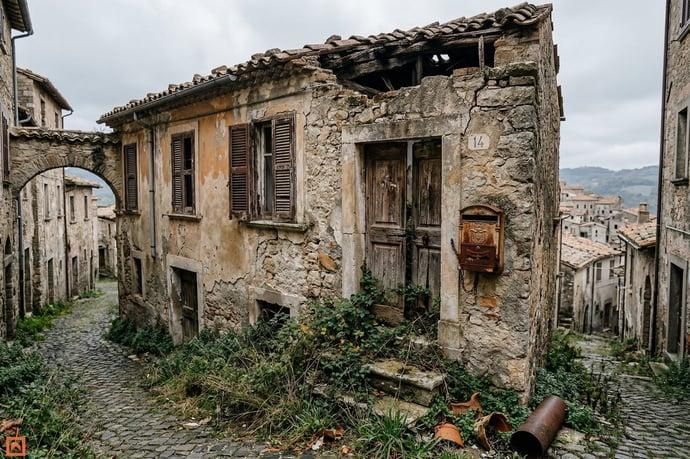
Although the headline price is often the same, each municipality can impose its own application process, property conditions, renovation commitments, financial guarantees and deadlines.
| Factor | What international buyers should understand |
|---|---|
| Purchase price | The advertised price may be €1, but additional acquisition and administrative costs apply. |
| Property condition | Many properties are abandoned or require substantial repairs. A professional inspection is essential. |
| Renovation commitments | Buyers may have to submit a project, obtain approvals and complete works within a specified period. |
| Financial guarantees | Some municipalities require a deposit or guarantee to secure compliance with their conditions. The amount and refund terms vary. |
| Location | Properties may be in small inland villages with limited employment, transport, services or year-round rental demand. |
| Rental potential | Letting may be possible after renovation, subject to local planning, registration, safety and rental regulations. |
| Immigration status | Property ownership does not itself grant residency or citizenship. |
The exact requirements must be checked in the current municipal announcement and sale documents before making an offer. There is no single nationwide €1 house contract that applies to every property.
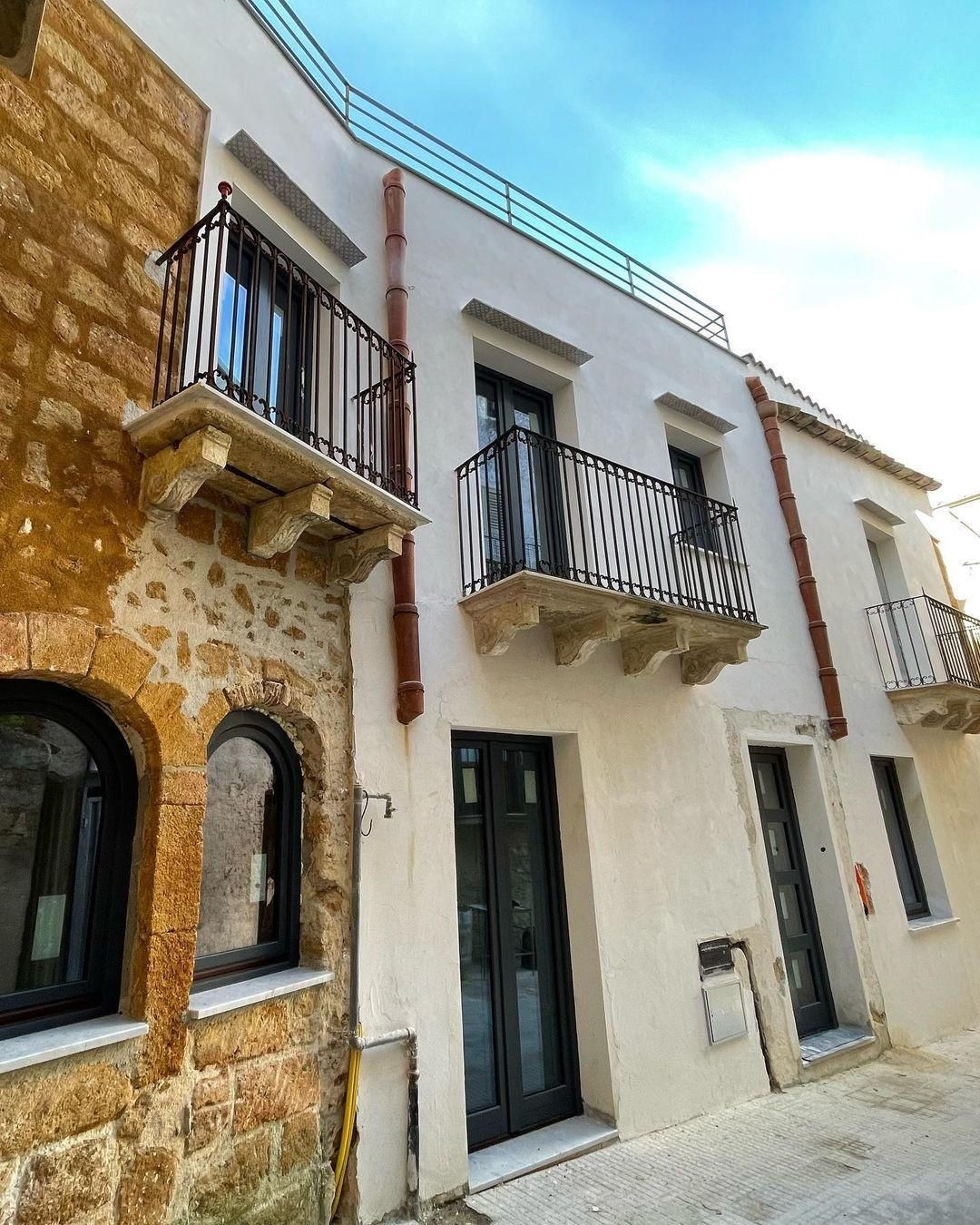
Potential advantages
Low headline acquisition price: The initial purchase price can be nominal compared with conventional property purchases.
Renovation-led opportunity: Buyers with adequate capital and a realistic project may be able to restore a historic property for personal use or a permitted rental business.
Lifestyle appeal: A restored home may suit buyers seeking a second home or a long-term connection with a smaller Italian community.
Community regeneration: Renovation can help preserve historic buildings and contribute to the local economy.
Potential long-term utility: A well-executed project may provide personal use or rental income, depending on the location and demand.
Risks and disadvantages
Renovation costs can dominate the purchase price: Structural repairs, roofs, plumbing, electricity and damp remediation can require substantial spending.
Strict contractual obligations: Missed deadlines or failure to meet municipal conditions may lead to penalties or loss of a required guarantee.
Uncertain resale value: A low purchase price does not mean the restored property will appreciate or be easy to sell.
Limited rental demand: Small villages may have seasonal demand, fewer services and a smaller pool of tenants or buyers.
Administrative complexity: Planning approvals, heritage restrictions, technical documentation and contractors can make restoration time-consuming.
No automatic immigration benefits: The purchase does not provide a shortcut to Italian residence or citizenship.
The total project budget depends on the building's condition, floor area, structural stability, location, accessibility, required permits and chosen finish. It is not possible to provide a reliable universal renovation cost without assessing a specific property.
International buyers should budget for:
Purchase-related taxes, notarial costs and professional fees.
Structural surveys and architectural or engineering services.
Planning applications and any heritage-related requirements.
Roof, foundations, walls, damp treatment and essential utilities.
Plumbing, electrical systems, heating and energy-efficiency improvements.
Labour, materials, transport and local contractor availability.
Ongoing taxes, insurance, maintenance and contingency funding.
Do not treat illustrative renovation budgets from online articles as quotes for a particular house. Obtain a technical inspection and itemised local estimates before committing.
It depends on the investor's objective. A property may be worthwhile as a lifestyle project without being an attractive rental investment. Conversely, a property intended to generate income must justify its total acquisition and renovation cost, not merely its nominal purchase price.
Consider a hypothetical example:
| Budget item | Illustrative amount |
|---|---|
| Purchase price | €1 |
| Renovation and essential repairs | €60,000 |
| Professional fees, permits and other costs | €10,000 |
| Contingency allowance | €10,000 |
| Illustrative total | €80,001 |
This is a hypothetical budgeting example, not a quote, market average or estimate for a specific property. Actual costs can be materially higher or lower.
If the completed property is worth less than the total amount invested, the buyer may face a capital loss even though the initial purchase price was only €1. If the property is intended for rental, the investor must also test achievable rents, occupancy, operating expenses, taxes and management costs.
For some buyers, a habitable low-cost property requiring fewer repairs may offer a more predictable route into the Italian market. Compare both options using actual property inspections, comparable sales and full project budgets rather than the headline purchase price alone.
Use GRAI to compare a €1 house renovation against a move-in-ready Italian rental and see which delivers better risk-adjusted returns: https://internationalreal.estate/chat
Read the municipality's current rules: Confirm deadlines, deposit requirements, renovation obligations, penalties and resale restrictions, if any.
Inspect the property independently: Establish its structural condition, legal status, utility access and realistic renovation scope.
Obtain itemised cost estimates: Include permits, professionals, labour, materials, taxes and contingency funding.
Check the local market: Investigate year-round demand, comparable sales, achievable rents, transport and access to essential services.
Confirm the immigration position: Establish which visa or residence route applies to your circumstances; do not assume property ownership qualifies you.
Model the exit strategy: Assess whether you could sell the restored property, how long that might take and whether likely proceeds would cover the total investment.
Italy's property market should be evaluated on local evidence rather than the assumption that buying in a famous European destination guarantees capital appreciation or rental income.
The latest available national data from Italy's National Institute of Statistics (ISTAT) provide a useful starting point. In the second quarter of 2026, Italian residential property prices increased by 4.0% year on year and 1.7% compared with the previous quarter. Annual growth was 5.0% for new homes and 3.7% for existing homes. Residential transaction volumes were broadly stable year on year, increasing by 0.1%
These figures suggest that prices were rising nationally, but they do not establish that every city, neighbourhood or property type was performing equally well. Nor do they indicate what an individual investor will earn after taxes, financing costs, repairs and periods without tenants.
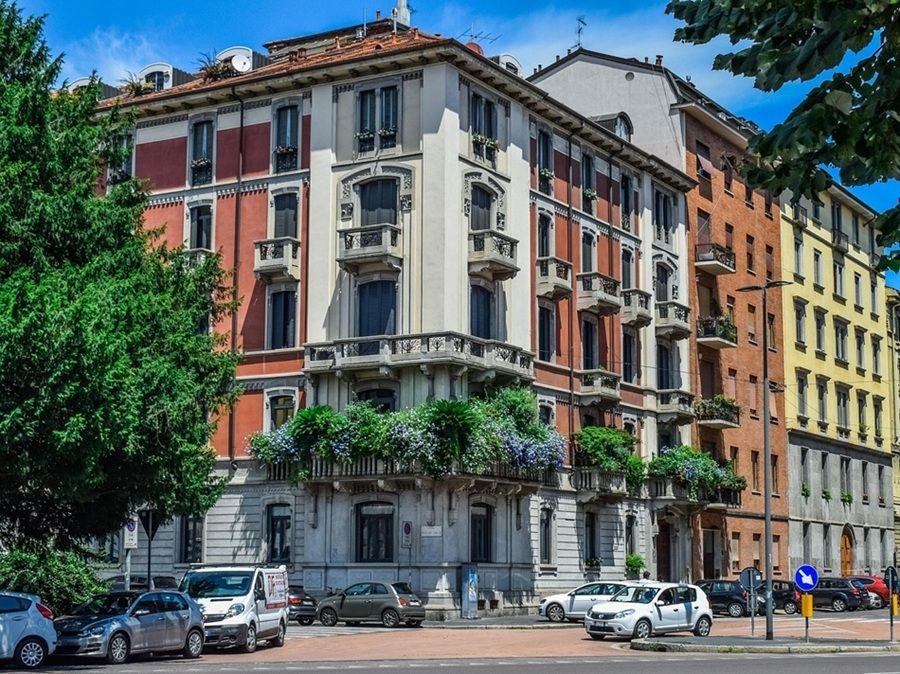
Different locations can serve different investment objectives. The following is a framework for research, not a ranking of the highest-yielding cities.
| Location | Potential investment angle to investigate | Key due-diligence question |
|---|---|---|
| Milan | Business-oriented housing demand and urban residential investment | Does the purchase price leave sufficient room for net rental returns? |
| Rome | Residential demand and selected tourism-related opportunities | How do local rules, maintenance costs and occupancy assumptions affect the business case? |
| Florence | Residential and tourism-linked property segments | Are projected rental revenues sustainable under applicable local rules? |
| Turin | Residential opportunities that may have different entry costs from Italy's largest markets | Is demand strong enough in the specific neighbourhood to support the expected rent? |
| Naples | Residential and selected tourism-related opportunities | Have property condition, building compliance and realistic occupancy been independently assessed? |
These are market research starting points, not claims that one city necessarily offers better returns than another. Investors should obtain current, comparable data on purchase prices, achieved rents, vacancy rates, operating expenses and transaction activity before comparing locations.
A property advertised at an attractive price may still produce disappointing returns if the investor underestimates ownership costs.
Before committing funds, account for:
Purchase taxes, notarial fees and any applicable agency charges.
Financing costs, interest-rate exposure and lender requirements.
Renovation, maintenance, insurance and building-management expenses.
Applicable property taxes and taxes on rental income or capital gains.
Vacancy, tenant turnover and local rental regulations.
Energy-efficiency improvements and potential environmental or physical risks.
Currency-conversion costs if the investor earns income or holds capital outside the euro area.
Calculate net cash flow rather than relying only on gross rental yield. A property with a higher advertised yield may be less attractive after financing, maintenance, taxes and vacancy are considered.
For international property investors, the relevant question is not whether a war can be predicted with certainty. It is how different geopolitical developments could affect energy costs, inflation, borrowing conditions, tourism, investor confidence and the ability to sell a property when required.
As of 15 October 2026, geopolitical and energy-market risks remain relevant to Europe's economic outlook. The European Commission's Spring 2026 forecast warned that conflict in the Middle East and the associated energy shock could weaken economic activity and raise inflation.
The Russia-Ukraine war also remains relevant to European security and economic policy. Separately, disruptions associated with the Middle East conflict have put renewed pressure on energy supply expectations. Reuters reported on 12 October 2026 that Europe was facing the prospect of elevated gas prices amid low storage levels and disrupted global supplies.
These developments do not mean Italian property prices will necessarily fall. They indicate risks that investors should incorporate into their financial assumptions.
The following scenarios cover the next 12-36 months, from October 2026. They are conditional analytical frameworks, not predictions that any particular war will begin, end or escalate.
| Scenario | Economic implications | Potential property-market effects | Investor response |
|---|---|---|---|
| De-escalation | Energy-market pressures ease and confidence improves, assuming other conditions remain supportive | Lower cost pressures could support affordability and investment sentiment, but property outcomes would still depend on local demand and financing | Test whether the investment remains viable without assuming rapid price appreciation |
| Continued instability | Energy costs and economic uncertainty remain volatile | Buyers may become more cautious; borrowing costs, renovation budgets and rental demand may respond differently across locations | Stress-test cash flow and retain a contingency for unexpected expenses |
| Escalation | A larger supply disruption or security shock could weaken growth, raise inflation and increase risk premiums | Transactions could slow, liquidity could deteriorate and some owners could face greater difficulty selling at their desired price | Avoid excessive leverage, preserve liquidity and evaluate downside resale values |
The European Commission's scenario analysis specifically examined how a more prolonged Middle East conflict and persistently elevated oil and gas prices could weaken growth and trade, reduce confidence and raise risk premiums.
There is no reliable basis for claiming that a specific war will end by a particular date or that Italian property prices will rise or fall by a predetermined percentage because of conflict.
A more defensible planning approach is to prepare for continued uncertainty, while recognising that de-escalation and further escalation are both possible. The effects on Italy will depend on the nature and duration of disruptions, European economic policy, interest rates, energy supplies and conditions in individual property markets.
For property investors, the most important transmission mechanisms are:
Energy and construction costs: Higher energy prices can increase operating expenses and put pressure on renovation and construction budgets.
Financing and affordability: Inflation and changes in interest rates can affect mortgage payments, purchasing power and investment demand.
Tourism and rental demand: Changes in travel costs, confidence and household budgets may affect tourism-dependent locations differently from areas supported by employment and long-term housing demand.
Liquidity and resale risk: Uncertainty can cause some buyers to delay transactions, potentially making it harder to sell quickly at an expected price.
Investor sentiment: Political and economic uncertainty can change the willingness of domestic and international investors to commit capital.
These are potential channels of impact, not outcomes that will occur uniformly across Italy. A well-located property with sustainable rental demand and manageable operating costs may have a different risk profile from a highly leveraged holiday rental dependent on optimistic occupancy assumptions.
The practical takeaway: Do not buy Italian property solely because you expect a war to end, a market to rebound or prices to rise. Assess whether the investment can withstand less favourable conditions.
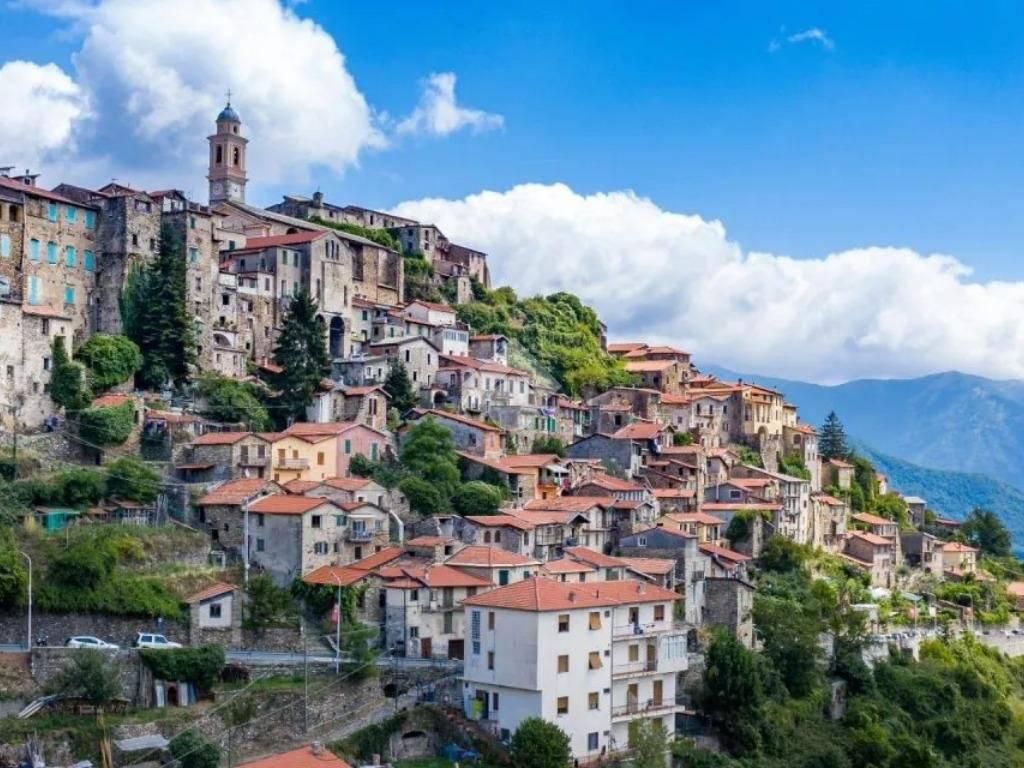
A property decision should combine local market evidence, legal checks and a financial model. The objective is to understand the risks before committing capital, rather than relying on a headline price or an optimistic appreciation forecast.
Verify title, registered ownership, mortgages and other encumbrances.
Confirm planning permissions, building compliance and permitted use.
Investigate heritage restrictions, condominium obligations and rental rules.
Review comparable completed transactions in the same neighbourhood.
Verify achievable rents, tenant demand, vacancy and seasonality.
Assess resale liquidity and competing properties.
Calculate acquisition taxes, notary fees, professional fees and renovation costs.
Model gross rent, operating expenses, NOI, debt service and cash flow.
Stress-test vacancy, lower rents, higher costs and delayed completion.
Review energy efficiency, climate exposure, insurance and maintenance needs.
Assess interest-rate, currency, economic and geopolitical risks.
Obtain independent legal, tax, valuation and property-professional reviews.
Investors should also separate the property's operating performance from its financing structure. A property may generate positive NOI while producing negative cash flow after mortgage payments. Similarly, an increase in the estimated market value does not guarantee that the property can be sold quickly at that price.
A robust investment case should work under more than one set of assumptions. The base case can represent the most defensible current estimates; downside cases should test weaker rents, higher expenses and slower resale; an upside case should be based on plausible market evidence rather than assumed appreciation.
Immigration and investment due diligence should remain separate workstreams. A property that passes the financial assessment does not necessarily advance an immigration application, and an eligible Investor Visa applicant does not automatically have a sound property investment.
Also Read: AI Won’t Make a Bad Real Estate Deal Good. It Will Just Expose It Faster
Evaluating an Italian property investment requires more than comparing purchase prices. Investors need to understand local market conditions, estimate acquisition and renovation costs, test potential rental income, and assess how economic uncertainty could affect returns. GRAI, an AI real estate intelligence platform, helps bring these considerations together so investors can investigate opportunities and compare different investment scenarios.
For international buyers exploring the Italian property market, several capabilities are particularly relevant.
GRAI helps users investigate international real estate market trends, relevant political and economic indicators, and market sentiment. This research can provide context when comparing locations such as Milan, Rome, Florence, Turin and Naples, or when considering how energy prices, financing conditions and changing investor confidence could affect an investment. AI-generated insights should be checked against current statistics, official information and reliable reporting.
Investors can use GRAI to support preliminary property valuation and renovation or construction cost analysis, where sufficient information is available. By combining purchase costs, estimated rental income, operating expenses and other assumptions, users can examine whether a property appears financially viable and identify the figures that require further verification.
Italy's €1 house schemes illustrate why a low purchase price does not necessarily mean a low-cost investment. A property may require extensive repairs, professional fees, permits and ongoing maintenance before it becomes suitable for personal use or rental.
Upload a photograph of a €1 house, and GRAI can analyse its visible condition, identify potential repair requirements and generate a preliminary estimate of renovation costs. For a more useful assessment, provide clear exterior and interior photographs, the property's location, its approximate size and any known details about its condition.
This initial analysis can help buyers investigate visible deterioration, consider possible renovation budgets and explore how the total project cost could affect potential rental returns or resale value. Investors can also compare alternative scenarios, such as higher repair costs, lower rental income or a longer renovation period.
However, photographs cannot reveal every structural or hidden defect. Image-based findings and cost estimates are preliminary and should not replace an on-site inspection, structural assessment, itemized contractor quotations or checks of local planning and heritage requirements.
GRAI's portfolio and what-if analysis capabilities can help users compare opportunities and test how changes in rent, vacancy, financing, renovation expenses or resale assumptions may affect potential returns and investment risk. Scenario analysis is particularly useful when planning for uncertainty rather than relying on a single optimistic forecast.
For real estate agents working with international buyers, GRAI's AI Real Estate Deal Report can organise rental assumptions, potential cash flow, returns, risk factors, scenarios and cited sources into a structured, branded report. This gives agents and clients a clearer basis for discussing an opportunity and identifying which assumptions require additional due diligence.
Whether comparing a rental apartment in Milan, evaluating a tourism-oriented property in Florence or investigating a €1 house in a small Italian village, investors should verify the underlying data and assess each property's legal, financial and practical requirements independently.
GRAI supports preliminary research and investment decision-making; it does not guarantee returns, predict geopolitical events with certainty or replace independent valuations and qualified Italian legal, tax and property advice.
Explore your property investment questions with GRAI: https://internationalreal.estate/chat
Italy may suit investors who value its cities, lifestyle, business links, cultural assets or particular residential and commercial property opportunities. It is not automatically the best option for every nationality, budget, investment strategy or relocation objective.
Before proceeding, consider six questions:
Immigration objective: Are you seeking a residence pathway, a long-term home, a property investment or eventual citizenship? These objectives have different legal requirements.
Time horizon: Can you accommodate a long-term investment and a naturalisation process that requires years of lawful residence?
Investment budget: Can you afford the qualifying investment, if pursuing the Investor Visa, without confusing it with a separate property-purchase budget?
Market fundamentals: Is the property supported by verifiable local demand, realistic rental income and a credible exit strategy?
Taxation and ownership costs: Have you assessed acquisition taxes, recurring expenses, rental taxation and any implications of becoming an Italian tax resident?
Risk tolerance: Could you withstand weaker rental income, higher costs, currency movements or a period of reduced liquidity?
Italy also has an optional tax regime for certain new residents with substantial foreign income. The official Investor Visa portal describes a regime under Article 24-bis of the Italian tax code. Eligibility, current terms and suitability require separate tax assessment; it should not be treated as an automatic benefit of holding an Investor Visa.
The most defensible decision is one in which immigration objectives, investment economics and personal circumstances have been assessed independently. Investors should seek qualified Italian immigration and tax advice, obtain independent property due diligence and use current market evidence before committing funds.
No. Italy does not offer direct citizenship by investment. Its Investor Visa is a residence-related immigration route for qualifying investments. Citizenship is a separate legal process, potentially available through naturalisation or another applicable route.
The published minimums are €2 million in Italian government bonds, €500,000 in an Italian limited company, €250,000 in an eligible Italian innovative startup or €1 million in an eligible philanthropic initiative. Applicants must satisfy the applicable conditions.
No. Purchasing residential or commercial real estate is not a standalone qualifying category in the official Investor Visa programme. A qualifying investment in an Italian company is a different transaction from buying that company's property.
The general requirement for ordinary residence-based naturalisation is at least 10 years of legal residence for non-EU nationals. Additional statutory conditions apply, and specific categories may qualify for different periods. Eligibility does not guarantee approval.
No. The initial residence permit is valid for two years. A qualifying holder may apply for a three-year renewal if the investment and other conditions are maintained. The official programme also describes a possible long-term residence application after five years of maintaining the investment, subject to applicable requirements. Neither outcome automatically confers citizenship.
No. An Italian residence permit does not make its holder an EU citizen. EU citizenship generally follows from nationality of an EU Member State. Rights to travel, reside or work in other Member States depend on the person's status and the applicable rules; an Italian permit should not be treated as unrestricted EU-wide residence permission.
Conflict could influence property markets through energy costs, inflation, financing conditions, tourism, investor confidence and economic growth. The effects would vary by location, asset type and debt exposure. Higher costs or weaker confidence could pressure some properties, while assets supported by durable local demand might prove more resilient. No single outcome can be guaranteed.
It can be suitable for investors whose objectives, budget and risk tolerance match a particular property's fundamentals. Assess comparable transactions, realistic rents, vacancy, acquisition and operating costs, taxes, financing, local regulation and resale liquidity. National price growth alone is not enough to establish that a property is a sound investment.
GRAI can help users investigate market and political-economic indicators, explore sentiment, compare portfolio assumptions and conduct preliminary property-price or cost analysis. Its outputs should be verified and should not replace independent valuations, official records or professional legal and tax advice.
Agents can use a branded AI Real Estate Deal Report to present rental assumptions, potential cash flow, returns, risks, scenarios and sources in a structured client-facing format. They should verify the data and disclose assumptions; the report does not establish immigration eligibility or guarantee returns.
Italy's appeal to international investors should be assessed through two separate lenses: the legal requirements for immigration and citizenship, and the financial merits of a property or business investment.
The Investor Visa offers an established route for eligible investors to pursue residence through specified qualifying investments. It is not a shortcut to citizenship, and buying property does not replace its investment requirements.
Meanwhile, Italy's residential market showed annual price growth of 4.0% in the second quarter of 2026, according to ISTAT. That is useful context, but it does not eliminate local market risks or uncertainty about the effects of future geopolitical developments.
Investors who combine verified legal information, realistic financial modelling and scenario-based risk analysis will be better positioned to evaluate Italian opportunities. GRAI and its AI Real Estate Deal Report can help structure that analysis, while qualified professionals remain essential for legal, tax and property-specific decisions.


