Ask GRAI Anything
Your Real Estate Questions, Answered Instantly via Chat

Help us make GRAI even better by sharing your feature requests.
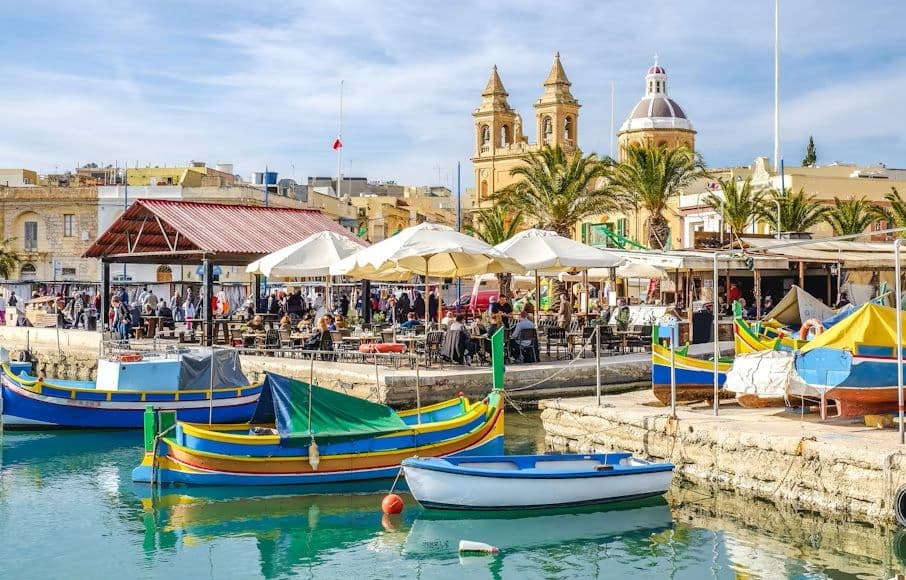
For more than a decade, Malta was one of Europe's most recognized destinations for investment migration, offering a structured pathway that eventually enabled eligible investors to acquire Maltese citizenship after meeting strict financial, residency, and due diligence requirements. Its reputation was built on political stability, European Union membership, English-speaking institutions, and one of the world's most rigorous applicant screening processes.
That landscape fundamentally changed in 2025.
Following a landmark judgment by the Court of Justice of the European Union (CJEU), Malta's investment-based citizenship framework was declared incompatible with the principles governing EU citizenship because nationality cannot be granted primarily in exchange for predetermined financial contributions without establishing a genuine connection to the Member State. As a result, the former transactional citizenship route has been discontinued, reshaping how Malta should be evaluated by investors, family offices, wealth advisors, and global mobility professionals.
Today, Malta remains one of Europe's strongest jurisdictions for long-term residency, real estate investment, wealth preservation, and business expansion - but not as a destination where citizenship can simply be purchased.
As cross-border property investment becomes increasingly data-driven, investors are also leveraging real estate AI platforms such as GRAI to evaluate market trends, compare international opportunities, estimate property values, review legal documents, and monitor international real estate news before making investment decisions. AI-powered intelligence is becoming an important complement to professional legal, tax, and financial advice.
Instead, the Malta Permanent Residence Programme (MPRP) has become the country's principal investment-linked immigration pathway for eligible non-EU nationals. Combined with Malta's mature legal system, strategic Mediterranean location, resilient property market, and access to the European Single Market, the country continues to attract international investors seeking a stable European base.
This guide explains:
Malta's current legal position after the EU ruling
The difference between residency and citizenship
The Malta Permanent Residence Programme (MPRP)
Investment costs and real estate opportunities
Tax considerations
Lifestyle and business advantages
Malta's competitive position against Portugal, Greece, Italy, and the UAE
How AI-driven real estate intelligence supports cross-border investment decisions
The long-term outlook for Malta through 2030
| Category | Current Status |
|---|---|
| Former Citizenship by Investment Programme | Discontinued following the 2025 CJEU ruling |
| Primary Investor Immigration Route | Malta Permanent Residence Programme (MPRP) |
| EU Member State | Yes |
| Schengen Area | Yes |
| Currency | Euro (€) |
| Official Languages | Maltese & English |
| Capital City | Valletta |
| Population | Approximately 570,000 |
| Political System | Parliamentary Republic |
| Major Industries | Financial Services, Technology, Maritime, Aviation, Tourism, iGaming, Professional Services |
| Foreign Property Ownership | Permitted under applicable regulations |
| Tax Environment | EU-compliant, tax-efficient (not a tax haven) |
This guide is designed for:
High-net-worth individuals (HNWIs)
International property investors
Family offices
Wealth advisors
Immigration consultants
Entrepreneurs expanding into Europe
Digital business owners
Global mobility specialists
International real estate professionals
Whether you're evaluating Malta as a place to live, invest, establish a European presence, or diversify your real estate portfolio, understanding today's legal framework is essential.
To understand Malta's position in 2026, it is important to separate historical perception from today's legal reality.
Malta introduced its Individual Investor Programme (IIP) in 2014 with the objective of attracting foreign investment while maintaining high standards of due diligence. Unlike many other investment migration programmes operating at the time, Malta's framework combined financial contributions with mandatory property commitments, residency requirements, and extensive background checks.
The programme quickly became one of the most recognized citizenship-by-investment initiatives globally because applicants were subject to comprehensive reviews of:
Identity verification
Source of wealth
Source of funds
Criminal background
International sanctions
Financial integrity
Reputational risk
For investors, obtaining Maltese citizenship also meant acquiring citizenship of a European Union Member State, providing rights associated with EU citizenship, including freedom of movement across the bloc under applicable EU law.
However, these very benefits also placed Malta's programme under increasing scrutiny from European institutions.
The European Commission argued that EU citizenship is more than a national administrative decision - it carries rights that extend across all Member States. As such, granting nationality primarily in exchange for financial investment, without requiring a meaningful connection to the country, was viewed as inconsistent with the underlying principles of European Union law.
Following years of legal proceedings, the Court of Justice of the European Union ruled in 2025 that Malta's investment-based citizenship framework was incompatible with EU law because it effectively treated citizenship as a commercial transaction rather than the result of a genuine relationship between an individual and the Member State.
Importantly, the judgment did not prohibit Malta from:
Granting citizenship through descent
Granting citizenship through marriage
Allowing ordinary naturalization for eligible long-term residents
Operating lawful residence programmees
Attracting foreign investment
Promoting international real estate investment
Instead, the ruling focused specifically on citizenship granted principally in exchange for predetermined financial contributions.
For investors, the practical implication is clear:
Malta no longer offers a direct citizenship-by-investment programme. Any website suggesting otherwise is outdated and should be approached with caution.
Timeline of Malta's Investment Migration Evolution
| Year | Milestone |
|---|---|
| 2004 | Malta joins the European Union |
| 2008 | Euro adopted as national currency |
| 2014 | Individual Investor Programme (IIP) launched |
| 2020 | Citizenship framework revised through naturalization reforms |
| 2022-2024 | European Commission challenges Malta's programme |
| 2025 | Court of Justice of the European Union rules against investment-based citizenship |
| 2025-2026 | Malta restructures its immigration framework and positions residency - not citizenship - as the primary route for international investors |
One of the biggest misconceptions among international investors is the assumption that Malta still sells citizenship through investment.
It does not.
Today's Malta should instead be viewed through three strategic lenses:
A stable European residency destination through the Malta Permanent Residence Programme (MPRP).
A resilient real estate market supported by limited land supply, strong rental demand, and international business activity.
A gateway to Europe for entrepreneurs, global families, and investors seeking long-term diversification within a regulated EU jurisdiction.
For wealth advisors and family offices, this shift changes the conversation from "buying a passport" to building a sustainable European presence supported by real estate, business opportunities, and long-term residency planning.
With the closure of Malta's former Citizenship by Investment framework, the Malta Permanent Residence Programme (MPRP) has become the country's principal immigration route for eligible non-EU investors seeking long-term residency in Europe.
Unlike the previous citizenship programme, the MPRP is not a fast track to a Maltese passport. Instead, it grants qualifying applicants and their eligible family members the right to reside permanently in Malta while benefiting from the country's stable economy, EU membership, English-speaking environment, and strategic Mediterranean location.
For investors, entrepreneurs, and globally mobile families, the programme offers a lawful and transparent way to establish a long-term European base without creating unrealistic expectations about automatic citizenship.
One of the most common misconceptions among international investors is confusing permanent residence with citizenship. Understanding this distinction is essential before making any immigration or investment decision.
| Feature | Malta Permanent Residence | Maltese Citizenship |
|---|---|---|
| Right to Live in Malta | Yes | Yes |
| Permanent Residence Status | Yes | Yes |
| Maltese Passport | No | Yes |
| EU Citizenship Rights | No | Yes |
| Voting Rights | No | Yes |
| Schengen Travel | Short-term travel under applicable rules | Full EU citizen rights |
| Automatic Path to Citizenship | No | Already a citizen |
Key Takeaway:
Permanent residence allows eligible individuals to live in Malta indefinitely, but it does not automatically lead to Maltese citizenship or an EU passport. Any future naturalization is governed by Maltese nationality law and requires applicants to independently satisfy all statutory conditions.
The programme is designed primarily for financially stable non-EU nationals who wish to establish a long-term residence in Malta.
Applicants generally must:
Be a non-EU, non-EEA, and non-Swiss national.
Demonstrate sufficient financial resources and capital.
Maintain a qualifying residential property through purchase or lease.
Hold valid health insurance covering Malta.
Pass comprehensive due diligence and background checks.
Meet all legal and regulatory requirements established by the Residency Malta Agency.
Approval is discretionary, meaning meeting the financial requirements alone does not guarantee acceptance.
Although processing times may vary depending on documentation and due diligence, the application process generally follows these stages:
| Stage | Description |
|---|---|
| Initial Assessment | Review eligibility and financial profile |
| Documentation | Identity, financial records, source of wealth, health insurance |
| Submission | Application filed through a licensed agent |
| Due Diligence | Security, compliance, and financial integrity checks |
| Approval in Principle | Conditional approval issued |
| Property Compliance | Purchase or lease of qualifying property |
| Final Approval | Residence certificates issued after all conditions are met |
This structured process reflects Malta's reputation for applying one of Europe's most robust due diligence frameworks.
While programme requirements may be updated periodically, investors should plan beyond the qualifying contribution or property requirement.
Typical cost considerations include:
| Cost Category | Typical Consideration |
|---|---|
| Government Contributions | Applicable under current MPRP regulations |
| Qualifying Property | Purchase or long-term lease |
| Professional Fees | Licensed agents, legal advisors, notaries |
| Due Diligence Fees | Government background checks |
| Administrative Charges | Processing and documentation |
| Stamp Duty & Registration | Applicable to qualifying property purchases |
| Insurance | Health insurance and, where applicable, property insurance |
Important: Investors should always verify the latest financial thresholds and contribution requirements directly with the Residency Malta Agency or an authorized licensed agent, as programme rules may change over time.

Although investment no longer provides direct access to citizenship, Malta's property market remains one of the country's strongest long-term investment fundamentals.
Several structural factors continue to support demand:
Limited developable land.
Strong demand from expatriates and international professionals.
Stable legal framework for property ownership.
English-speaking legal and business environment.
Continued economic growth across finance, technology, aviation, maritime services, and iGaming.
Rather than viewing property as an immigration shortcut, investors increasingly evaluate Malta as a strategic real estate market with long-term capital preservation potential.
Different locations appeal to different investor profiles.
| Location | Best For | Investment Outlook |
|---|---|---|
| Valletta | Luxury buyers, heritage investors | High |
| Sliema | Premium waterfront living | High |
| St. Julian's | Business professionals & rental investors | High |
| Gżira | Young professionals | Medium–High |
| Mellieħa | Families & retirees | Medium |
| Gozo | Lifestyle and second-home buyers | Medium |
Prime coastal districts continue to attract both owner-occupiers and long-term rental demand, particularly from professionals employed in Malta's growing international business sectors.
Rental demand remains resilient due to Malta's expanding workforce and international business community.
| Property Type | Demand | Typical Tenant |
|---|---|---|
| Apartments | Very High | Professionals & expatriates |
| Luxury Residences | High | Executives & HNWIs |
| Family Homes | Moderate | Local and international families |
| Student Accommodation | Moderate | University students |
| Holiday Rentals | Seasonal | Tourists |
For investors focused on recurring income, professionally managed apartments in established business districts generally experience the strongest occupancy levels.
Use GRAI to compare Malta’s top rental districts, model yields, and stress-test vacancy risk before you buy: https://internationalreal.estate/chat
Yes. Foreign nationals are generally permitted to purchase property in Malta, although certain acquisitions may require compliance with local regulations.
Depending on the buyer's nationality, residency status, and the property's location, an Acquisition of Immovable Property (AIP) Permit may be required. Different rules also apply within Special Designated Areas (SDAs), where foreign ownership is generally more flexible.
Before purchasing any property, investors should seek independent legal advice to understand:
Property ownership regulations.
Applicable taxes and stamp duty.
Notarial procedures.
Registration requirements.
Ongoing maintenance obligations.
Many first-time investors focus only on the purchase price, overlooking additional acquisition expenses.
These commonly include:
Stamp duty
Legal fees
Notarial charges
Registration fees
Property insurance
Annual maintenance
Property management (for rental investments)
Factoring these costs into the overall investment strategy provides a more realistic assessment of long-term returns.
Instead of making investment decisions based solely on listings or local market knowledge, international investors increasingly rely on GRAI, a real estate AI intelligence platform, to evaluate opportunities before engaging legal or financial advisors.
Whether purchasing an apartment in Sliema, evaluating development land in Gozo, or comparing Malta with Portugal or Dubai, GRAI transforms complex data into practical investment insights.
| Investment Challenge | How GRAI Helps |
|---|---|
| Understand current market conditions | Aggregates international real estate news, economic indicators, and property market trends from multiple sources. |
| Estimate property value | AI-powered valuation using comparable sales and market intelligence. |
| Evaluate development land | Upload land images to assess construction feasibility, climate suitability, legal considerations, and investment potential. |
| Estimate construction costs | AI-generated estimates based on project type, materials, labour, and location. |
| Identify environmental risks | Flood risk, soil stability, sustainability analysis, and climate projections. |
| Review legal documents | AI-assisted multilingual summaries highlighting key clauses and potential risks. |
| Compare countries | Compare Malta with Portugal, Greece, UAE, Singapore, and other international markets. |
| Monitor investment sentiment | News analysis, government updates, and market sentiment to identify emerging opportunities |
Is the Malta Permanent Residence Programme right for my family?
Compare Malta Permanent Residence with Greece Golden Visa.
What are the latest MPRP investment requirements?
Compare Sliema vs St Julian's for rental yield.
Which Malta city has the best capital appreciation potential?
Key Takeaways:
The Malta Permanent Residence Programme (MPRP) is now the primary investment-linked immigration pathway for eligible non-EU nationals.
Permanent residence is not the same as citizenship and does not automatically lead to a Maltese passport.
Malta's property market remains attractive due to limited land supply, international demand, and a stable legal framework.
Foreign nationals can invest in Maltese real estate, subject to applicable regulations.
AI-powered real estate intelligence is increasingly helping international investors make faster, more informed property decisions before engaging legal and tax advisors.
Ask GRAI to benchmark Malta’s MPRP against Portugal, Greece, and UAE residency options in one integrated analysis: https://internationalreal.estate/chat
One of the most searched questions by international investors is:
"Is Malta a tax haven?"
The short answer is No.
Malta is better described as a tax-efficient and internationally compliant jurisdiction rather than a traditional tax haven. As a member of the European Union, Malta operates within EU regulations and adheres to international standards established by the Organisation for Economic Co-operation and Development (OECD), including anti-money laundering (AML), tax transparency, and international reporting obligations.
For individuals and businesses, Malta's tax framework can offer planning opportunities depending on residency status, domicile, income sources, and applicable double taxation treaties. However, tax outcomes vary significantly based on personal circumstances and should always be reviewed with a qualified tax advisor.
Understanding Malta's taxation framework is an important step for investors evaluating long-term relocation or business expansion.
| Tax Category | General Overview |
|---|---|
| Personal Income Tax | Progressive rates based on residency and taxable income |
| Corporate Income Tax | Standard corporate rate with refund mechanisms available under qualifying structures |
| Capital Gains Tax | Applies in certain circumstances depending on asset type and transaction |
| Value Added Tax (VAT) | Standard VAT applies to most goods and services |
| Wealth Tax | No general annual wealth tax |
| Inheritance Tax | No general inheritance tax, although certain transfers may attract stamp duty |
Investor Insight
Malta's tax system is designed to encourage legitimate international business while remaining fully aligned with European and OECD compliance standards. Investors should avoid assuming that Malta offers "tax-free" status, as tax liabilities depend on residency, domicile, and the nature of income earned.
Double Taxation Agreements (DTAs)
For internationally mobile families and businesses, one of Malta's strongest advantages is its extensive network of Double Taxation Agreements (DTAs).
These agreements help reduce the risk of the same income being taxed in multiple jurisdictions and can support more efficient cross-border investment structures.
Potential benefits may include:
Reduced withholding taxes.
Relief for foreign-source income.
Improved certainty for international investors.
Better tax planning for multinational businesses.
Reduced exposure to double taxation.
Eligibility depends on the specific treaty provisions and the taxpayer's individual circumstances.
Investment decisions increasingly involve more than financial returns. Families also consider education, healthcare, safety, and lifestyle when selecting a long-term residence destination.
Healthcare
Malta offers a modern healthcare system comprising both public and private providers. Residents benefit from access to high-quality medical facilities, while private healthcare provides additional flexibility and shorter waiting times.
Education
Malta's education system is one of its strongest competitive advantages for international families.
Options include:
English-language schools.
International schools offering globally recognized curricula.
The University of Malta.
Growing private education sector.
Because English is an official language, children often experience a smoother transition compared with many other European destinations.
Language
Unlike many European jurisdictions, English is widely used in:
Government.
Business.
Banking.
Legal documentation.
Education.
Real estate transactions.
This significantly simplifies relocation for international investors and expatriates.
Safety
Malta consistently ranks among Europe's safer countries, with relatively low levels of violent crime. While standard precautions remain advisable, the country continues to be regarded as a secure environment for families and professionals.
Climate
Malta enjoys a classic Mediterranean climate featuring:
Mild winters.
Warm summers.
More than 300 sunny days annually.
Extensive coastline.
Outdoor lifestyle.
These factors continue to support both tourism and residential demand.
Choosing a residency destination often involves comparing multiple jurisdictions. Below is a high-level comparison of Malta with several leading alternatives.
| Feature | Malta | Portugal |
|---|---|---|
| EU Member | ✔ | ✔ |
| Euro Currency | ✔ | ✔ |
| English Usage | Very High | Moderate |
| Residency Programme | ✔ | ✔ |
| Property Market | Limited supply | Larger and more diverse |
| Business Environment | Finance & Technology | Technology & Tourism |
Best for: Investors seeking an English-speaking European jurisdiction with strong financial services.
Also Read: Lisbon Real Estate Prices, Investments & Insights
| Feature | Malta | Greece |
|---|---|---|
| Residency Programme | ✔ | ✔ |
| Property Market Size | Smaller | Larger |
| English in Business | Widely Used | Moderate |
| Rental Demand | Strong | Strong |
| Tourism | High | Very High |
Best for: Investors prioritizing business infrastructure and ease of communication.
| Feature | Malta | Italy |
|---|---|---|
| Bureaucracy | Relatively Streamlined | More Complex |
| English Usage | High | Moderate |
| Property Choice | Limited | Extensive |
| Financial Services | Strong | Strong |
Best for: Investors seeking a more manageable business environment with easier international integration.
| Feature | Malta | UAE |
|---|---|---|
| EU Member | ✔ | ✖ |
| Euro Currency | ✔ | ✖ |
| Schengen Access | ✔ | ✖ |
| Personal Income Tax | Progressive | Generally no federal personal income tax |
| Strategic Focus | Europe | Middle East |
Best for: Investors prioritizing European market access rather than Middle Eastern expansion.
| Feature | Malta | Singapore |
|---|---|---|
| Region | Europe | Asia-Pacific |
| English Language | Official | Official |
| EU Market Access | ✔ | ✖ |
| Financial Centre | Strong | Global Financial Hub |
Best for: Businesses seeking a European gateway instead of an Asia-Pacific headquarters.
Related: Singapore Real Estate Market Trends for 2026 with Price Forecasts & Investment
Different investors have different priorities. Malta's strengths align particularly well with the following profiles.
| Investor Type | Suitability |
|---|---|
| High-Net-Worth Individuals | ⭐⭐⭐⭐⭐ |
| International Families | ⭐⭐⭐⭐⭐ |
| Property Investors | ⭐⭐⭐⭐☆ |
| Entrepreneurs | ⭐⭐⭐⭐☆ |
| Digital Nomads | ⭐⭐⭐⭐☆ |
| Remote Business Owners | ⭐⭐⭐⭐☆ |
| Retirees | ⭐⭐⭐⭐⭐ |
| Family Offices | ⭐⭐⭐⭐⭐ |
Malta is especially attractive for investors seeking a stable European base, portfolio diversification, and long-term wealth preservation rather than speculative, short-term returns.
Key Takeaways
Malta is not a tax haven, but an EU-compliant, tax-efficient jurisdiction offering opportunities for legitimate international tax planning.
Its diversified economy, English-speaking environment, and strategic location continue to attract entrepreneurs, investors, and multinational businesses.
Modern healthcare, international education, and political stability make Malta particularly appealing for globally mobile families.
Compared with Portugal, Greece, Italy, the UAE, and Singapore, Malta offers a unique combination of European market access, legal certainty, and ease of doing business in English.
AI-powered real estate intelligence is becoming an essential component of cross-border property investment, enabling investors to evaluate opportunities more efficiently before engaging legal and financial advisors.
While Malta's Citizenship by Investment programme has ended, the country's long-term investment fundamentals remain strong. The focus has shifted from acquiring citizenship to establishing residency, investing in high-quality real estate, and building a strategic European presence.
Several structural advantages are expected to continue supporting Malta's economy and property market over the coming years:
Limited land availability restricting oversupply.
Consistent demand from international professionals and expatriates.
Continued growth in financial services, technology, AI, aviation, maritime, and iGaming sectors.
Stable legal and regulatory framework backed by EU membership.
Strong tourism industry supporting the hospitality and short-term rental markets.
Increasing demand for sustainable and energy-efficient developments.
Although no property market is immune to economic cycles, Malta continues to demonstrate characteristics that appeal to long-term investors seeking stability over speculation.
Like every open economy, Malta is influenced by global economic and geopolitical developments. Investors should evaluate these factors as part of a broader risk management strategy rather than viewing them as predictions.
| Global Factor | Potential Impact on Malta |
|---|---|
| European Central Bank (ECB) interest rate decisions | Mortgage costs, borrowing demand, and property affordability |
| Global inflation | Construction costs, consumer spending, and housing demand |
| Supply chain disruptions | Increased material costs and project timelines |
| Geopolitical tensions | Investor confidence and energy prices |
| European economic growth | Business expansion, employment, and real estate demand |
| Climate and sustainability regulations | Greater focus on energy-efficient and environmentally resilient developments |
Malta's diversified economy and EU integration provide a degree of resilience, but investors should continue monitoring macroeconomic developments when making long-term decisions.
Although residency is no longer linked to direct citizenship, Malta continues to offer significant advantages for internationally mobile individuals and families.
Key benefits include:
A stable European base within the European Union.
Access to the Schengen Area for eligible short-term travel under applicable rules.
English as an official language, simplifying business and daily life.
A mature legal and financial system aligned with EU regulations.
Strong connectivity to Europe, North Africa, and the Middle East.
A high standard of living supported by quality healthcare and education.
For entrepreneurs, remote business owners, retirees, and family offices, Malta remains an attractive jurisdiction for establishing a long-term presence in Europe.
Before relocating or investing in Malta, consider the following questions:
| Question | Why It Matters |
|---|---|
| Are you seeking residency or citizenship? | Malta currently offers residency through the MPRP, not direct investment-based citizenship. |
| Does the property align with your investment objectives? | Evaluate rental demand, location, capital appreciation potential, and long-term value independently of immigration benefits. |
| Have you assessed the total acquisition costs? | Consider taxes, legal fees, stamp duty, maintenance, and ongoing ownership costs. |
| Have you reviewed your tax position? | Cross-border tax planning should always be undertaken with qualified advisors. |
| Have you completed comprehensive due diligence | Verify property ownership, legal status, environmental risks, and market conditions before investing. |
A disciplined investment approach based on research and professional advice is more likely to deliver sustainable long-term outcomes than decisions driven solely by immigration objectives.
Test your full Malta investment decision - from property selection to tax and macro risk assumptions - using GRAI’s scenario analysis: https://internationalreal.estate/chat
No. Following the 2025 ruling by the Court of Justice of the European Union (CJEU), Malta no longer operates its former Citizenship by Investment programme. Investors should instead explore lawful residency options such as the Malta Permanent Residence Programme (MPRP).
No. Purchasing property alone does not grant residency, citizenship, or a Maltese passport. Property ownership may satisfy one of the requirements of certain residency programmes but does not automatically create a pathway to citizenship.
The MPRP is a government-regulated residency programme for eligible non-EU, non-EEA, and non-Swiss nationals. It provides permanent residence in Malta, subject to programme conditions, but does not grant citizenship.
Not automatically. Any future naturalization is governed by Maltese nationality law and requires applicants to independently meet all legal requirements. Residency alone does not guarantee citizenship.
Yes. Foreign nationals can generally purchase property in Malta, although certain transactions may require compliance with local regulations, including an Acquisition of Immovable Property (AIP) Permit in specific circumstances.
Many investors consider Malta attractive because of its limited land supply, stable legal framework, strong rental demand in key locations, and diversified economy. However, investment decisions should always be based on individual objectives, market research, and professional advice.
No. Malta is an EU-regulated jurisdiction that complies with international tax transparency standards. While it offers tax-efficient structures in certain circumstances, it is not considered a traditional tax haven.
Businesses are attracted by Malta's EU membership, English-speaking workforce, strategic Mediterranean location, modern financial services sector, and growing technology ecosystem.
AI-powered real estate platforms can assist by analyzing market trends, estimating property values, identifying environmental risks, comparing investment opportunities across countries, and summarizing legal documents. These insights complement - but do not replace - professional legal and financial advice.
Yes. Although the investment-based citizenship route has ended, Malta continues to attract international investors because of its political stability, EU membership, English-speaking environment, resilient real estate market, diversified economy, and long-term residency opportunities.
Malta's investment story has evolved. While direct citizenship by investment is no longer available, the country continues to offer a compelling combination of permanent residency opportunities, a resilient real estate market, EU market access, English-speaking institutions, and a high quality of life.
For investors seeking long-term stability rather than short-term immigration solutions, Malta remains a strategic destination. By combining informed decision-making, professional guidance, and data-driven market analysis, investors can confidently evaluate Malta as part of a diversified global mobility and wealth preservation strategy for the years ahead.


