Ask GRAI Anything
Your Real Estate Questions, Answered Instantly via Chat

Help us make GRAI even better by sharing your feature requests.
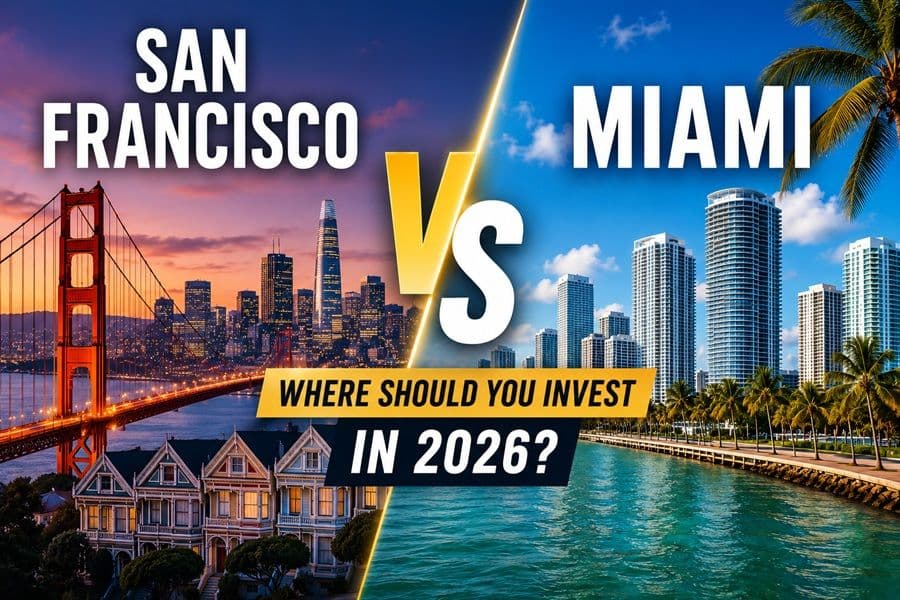
The wrong real estate decision in 2026 could cost investors years of gains.
One market is rebuilding quietly after a painful correction. The other continues riding one of the strongest migration waves in modern U.S. history.
Yet both San Francisco and Miami continue attracting:
Institutional capital,
International investors,
Hedge funds,
Luxury buyers,
Real estate investment trusts, and
High-net-worth individuals searching for the next major opportunity.
This is no longer simply a California vs. Florida debate.
It is a battle between:
Stability vs. Momentum,
Scarcity vs. Velocity,
Long-term appreciation vs. Short-term cash flow.
The San Francisco real estate market and the Miami real estate market now represent two entirely different investment philosophies.
And in 2026, understanding that distinction may determine whether investors outperform or fall behind.
This is where GRAI changes the way modern property investing works.
Unlike traditional research reports that become outdated within months, GRAI operates as a real estate AI platform capable of analyzing:
Real-time migration patterns,
Rental demand changes,
Climate exposure,
AI hiring activity,
Neighborhood sentiment,
Pricing inefficiencies,
Zoning updates, and
Investment risk signals simultaneously.
The investors gaining an edge today are no longer relying on static reports. They are using live intelligence before the broader market reacts.
The international real estate market has fundamentally changed.
During the low-interest-rate era, investors chased aggressive appreciation almost blindly. In 2026, the rules are different.
Today’s investors prioritize:
Rental resilience,
Sustainable cash flow,
Climate-adjusted returns,
Migration trends,
Tax efficiency,
Insurance costs, and
Long-term market durability.
San Francisco and Miami sit at opposite ends of nearly every one of those categories. That contrast makes them the most fascinating property comparison in America today.
AI-driven economic power
severe supply constraints
long-term capital preservation
premium tenants
institutional-grade scarcity
Migration-fueled expansion
Tourism-driven revenue
Tax advantages
Airbnb profitability
International capital inflows
The critical question is not which city is more famous.
The real question is:
Which city aligns with your investment strategy in 2026?
| Metric | San Francisco | Miami |
|---|---|---|
| Investment Style | Long-term appreciation | Cash flow & growth |
| Rental Demand Driver | AI & tech employment | Migration & tourism |
| Airbnb Potential | Moderate | Extremely strong |
| Tax Environment | California state tax | No state income tax |
| Climate Risk | Low to moderate | Moderate to high |
| Supply Constraints | Severe | Increasing supply |
| Commercial Outlook | Selective AI recovery | Business migration growth |
| Ideal Investor | Institutional & long-term | Yield-focused & global |
| Market Personality | Stability & scarcity | Momentum & velocity |
For years, headlines painted San Francisco as a collapsing market.
Office vacancies surged. Tech layoffs intensified. Luxury condos softened. Remote work disrupted demand. But sophisticated investors rarely buy when sentiment is euphoric.
They buy when pessimism creates opportunity.
The San Francisco real estate market correction between 2022 and 2024 may ultimately become one of the most important re-entry opportunities of the decade.
Why?
Because the city still controls some of the strongest structural advantages in the global economy:
Elite AI talent,
Venture capital concentration,
Supply-constrained housing,
World-class innovation ecosystems, and
Extraordinarily high-income demographics.
Markets with rigid supply limitations and powerful employment ecosystems historically recover aggressively after cyclical corrections.
San Francisco fits that pattern precisely.
Artificial intelligence companies continue expanding aggressively throughout the Bay Area.
That matters enormously because AI-driven hiring restores:
Leasing demand,
Luxury rental demand,
Office absorption, and
High-income household formation.
GRAI’s predictive economic forecasting models help investors identify which neighborhoods may recover first based on:
Hiring activity,
Infrastructure development,
Pricing compression, and
Demographic movement.
Unlike rapidly expanding Sun Belt cities, San Francisco cannot easily build outward. That scarcity creates long-term pricing pressure once demand rebounds. For investors focused on wealth preservation, this matters more than short-term volatility.
Rental property in San Francisco continues attracting:
Technology executives,
Startup founders,
AI engineers, and
International professionals.
These renters often:
Pay premium rents,
Stay longer,
Default less, and
Prioritize high-quality urban housing.
This creates a stability advantage many markets cannot replicate.

Strong biotech and AI proximity with increasing luxury demand.
Potential recovery upside tied to office and startup ecosystem revival.
Premium residential demand and walkability continue supporting long-term value.
Growing appeal among families and remote professionals seeking larger living spaces.
Miami’s rise has been extraordinary.
While San Francisco corrected, Miami accelerated rapidly through:
Domestic migration,
International wealth inflows,
Tourism demand,
Crypto wealth, and
Tax-driven relocation.
The Miami real estate market became one of the hottest investment stories in America.
But success creates its own dangers. The biggest risk in Miami may not be collapse.
It may be overheating.
That is why investors must distinguish between:
Sustainable growth, and
Momentum-driven speculation.
Miami continues attracting:
Entrepreneurs,
Hedge fund executives,
Remote workers,
Foreign buyers, and
Digital nomads.
This creates enormous housing demand across:
Luxury condos,
Mixed-use developments,
Rental apartments, and
Short-term rental inventory.
Miami remains one of America’s strongest Airbnb markets. Tourism-heavy zones continue generating exceptional short-term rental income potential.
Areas such as:
Brickell,
Wynwood,
Miami Beach, and
Edgewater
remain highly attractive for Airbnb investors. However, many inexperienced investors make a critical mistake. They model peak-season revenue instead of full-year occupancy.
GRAI helps investors simulate:
Seasonal occupancy,
Insurance expenses,
Tax implications,
Management costs, and
Realistic cash-flow scenarios instantly.
Use GRAI to stress test Miami Airbnb occupancy, insurance costs, and true year-round cash flow before you buy: https://internationalreal.estate/chat
Climate exposure is becoming one of the defining variables in Miami real estate investment.
Insurance premiums, flood risk, and long-term resilience increasingly affect:
Property valuation,
Financing, and
Rental profitability.
GRAI’s environmental assessment capability help investors analyze:
Flood exposure,
Sea-level projections,
Soil stability,
Climate-adjusted risk, and
Sustainability vulnerabilities before acquisition.
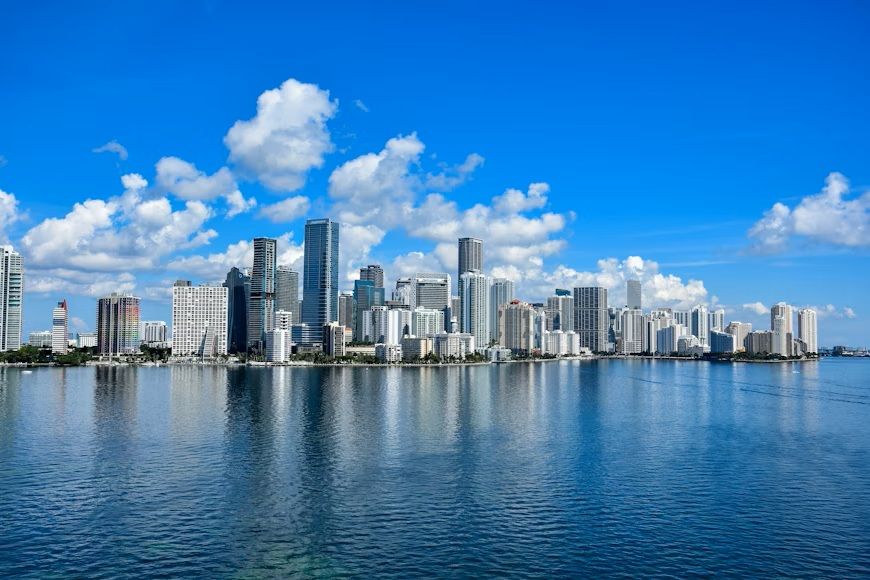
Strong luxury demand with finance and tech migration momentum.
High tourism traffic and strong Airbnb economics.
Rapidly evolving residential market with waterfront appeal.
Still dominant for premium short-term rental income despite rising costs.
| Category | San Francisco | Miami |
|---|---|---|
| 5-Year Trend | Correction + recovery phase | Rapid appreciation |
| Main Driver | AI & tech economy | Migration & tourism |
| Appreciation Outlook | Strong long-term recovery | Strong but moderating |
| Volatility Level | Moderate | Higher |
| Investor Psychology | Fear-driven re-entry | Momentum-driven optimism |
San Francisco may offer stronger long-term appreciation asymmetry because negative sentiment still suppresses enthusiasm.
Miami may continue outperforming in the short term, but pricing acceleration raises sustainability questions.
Best For:
Premium long-term rentals,
Corporate leasing,
High-income tenants.
Advantages:
Stronger tenant quality,
Lower default risk,
Supply constraints.
Weaknesses:
Regulatory complexity,
Lower initial yields,
High acquisition costs.
Airbnb investing,
Seasonal rentals,
Hybrid rental strategies.
Tourism-driven demand,
Migration growth,
Higher short-term income potential.
Insurance volatility,
Climate exposure,
Growing supply pressure.
Airbnb regulations limit aggressive scaling.
The stronger strategy is often:
Luxury furnished rentals,
Executive housing,
Premium long-term leasing.
This creates:
More predictable income,
Lower operational volatility, and
Premium tenant retention.
Miami remains one of the most profitable Airbnb markets in the United States.
However, successful operators must carefully manage:
Occupancy assumptions,
Local zoning,
Operational expenses,
Insurance inflation, and
Seasonal fluctuations.
The investors making the most money in Miami are not simply buying property. They are operating data-driven hospitality businesses.
The commercial real estate market in San Francisco experienced severe disruption after remote work weakened office demand.
But 2026 is showing signs of selective recovery. AI firms, biotech companies, and deep-tech startups still require physical proximity to elite talent ecosystems.
That is driving renewed activity in innovation-focused corridors. The biggest opportunities may emerge precisely where sentiment remains weakest.
Ask GRAI to compare San Francisco and Miami commercial corridors on vacancy, rent growth, and repricing risk: https://internationalreal.estate/chat
Miami’s commercial market continues benefiting from:
Corporate relocations,
Wealth migration,
Luxury hospitality demand, and
Flexible office expansion.
But aggressive development also introduces oversupply risk. This is where AI-powered valuation becomes critical.
GRAI analyzes:
Pricing velocity,
Demand sustainability,
Neighborhood saturation, and
Future revenue potential in real time.
| Category | California | Florida |
|---|---|---|
| State Income Tax | Yes | None |
| Investor Appeal | Wealth preservation | Tax efficiency |
| Regulatory Environment | More restrictive | More landlord-friendly |
| Short-Term Rental Flexibility | Moderate | Higher |
For international investors, Miami’s tax environment often creates stronger net-return appeal. San Francisco, however, remains attractive for long-term dollar-denominated asset preservation.
High acquisition costs,
Office recovery uncertainty,
Regulatory complexity,
Slower short-term momentum.
Supply scarcity,
AI concentration,
Institutional demand,
Global technology relevance.
Flood exposure,
Insurance inflation,
Oversupply risk,
Climate vulnerability.
Migration growth,
Tourism resilience,
Tax efficiency,
International demand.
Prioritize long-term appreciation,
Value scarcity-driven assets,
Prefer premium tenants,
Want exposure to the AI economy,
Seek wealth preservation.
Prioritize cash flow,
Want stronger Airbnb upside,
Seek tax-efficient investing,
Prefer faster-moving markets,
Are comfortable with higher volatility.
You need immediate high yields,
You dislike regulations,
You want lower acquisition costs.
You are highly risk-averse on climate exposure,
You dislike tourism volatility,
You want slower, more stable appreciation cycles.
Traditional real estate research is increasingly outdated before investors even read it.
Modern investors now compete in a market shaped by:
Instant sentiment shifts,
Real-time migration,
Insurance repricing,
Climate risk modeling,
AI hiring cycles, and
Rapidly changing regulations.
That is why platforms like GRAI are becoming indispensable.
GRAI combines:
Predictive appreciation modeling,
AI-powered property valuation,
Rental yield forecasting,
Environmental risk analysis,
Legal document review,
Portfolio simulations, and
Sentiment intelligence into one real-time property intelligence system.
The advantage no longer belongs to the investor with the biggest network. It belongs to the investor with the fastest intelligence.
Evaluate your San Francisco vs. Miami portfolio tilt with GRAI’s appreciation, yield, and climate-risk simulations: https://internationalreal.estate/chat
Yes. Recovery is underway in selective neighborhoods driven by AI-sector expansion, limited supply, and renewed institutional interest.
Yes, particularly for cash-flow-focused investors. However, climate risk, insurance costs, and oversupply risks require careful market selection.
Miami offers significantly stronger Airbnb economics due to tourism demand and short-term rental flexibility.
San Francisco may offer stronger long-term appreciation potential because of severe supply constraints and technology-sector concentration.
Miami appeals to investors seeking tax efficiency and rental income, while San Francisco attracts investors prioritising long-term capital preservation.
Miami carries significantly higher climate and flood exposure risk compared to San Francisco.
There is no universal winner.
San Francisco offers:
Scarcity,
Long-term resilience,
AI-driven economic power, and
Institutional-grade stability.
Miami offers:
Migration-fueled growth,
Strong rental income,
Tax advantages, and
Global lifestyle demand.
The smarter investors in 2026 are not choosing markets emotionally.
They are using real-time intelligence to identify:
Neighborhood-level opportunities,
Hidden risks,
Pricing inefficiencies, and
Future demand shifts before consensus forms.
That is exactly why AI-driven platforms like GRAI are reshaping how global property investing works.


